Honey-infused ginseng combines an approachable taste with active compounds
A slice of fresh Ngọc Linh ginseng has a distinctly bitter taste and a lingering aftertaste, making it difficult for some people to use every day. Honey addresses this sensory barrier through its sweetness, viscosity, and convenient portioning. However, the appeal of the mixture goes beyond flavor: ginseng provides saponins, while honey contains natural sugars and small amounts of phenolic compounds. Properly understanding the benefits, infusion process, and safety limits will help you use these two ingredients more appropriately instead of relying on exaggerated advertising claims.
Essentially, this food combination rests on three foundations: greater ease of use, convenient storage, and potentially complementary components. There is no basis for assuming that infusing them together will produce synergistic effects, and data about each individual ingredient should certainly not be extrapolated into claims about the finished product. Its practical value also depends on ingredient sources, serving sizes, storage methods, and the user’s health status.
Honey softens the natural bitterness of Ngọc Linh ginseng
The sweetness, mainly from glucose and fructose, helps balance the characteristic bitterness of ginseng slices. Honey’s viscosity also coats the surface of the ginseng, creating a smoother sensation when chewed or mixed with water. The ginseng flavor remains noticeable, especially in the aftertaste, but is less harsh than when the fresh root is consumed directly. This is a specific sensory advantage, not evidence of a new health effect.
The infused form also reduces daily preparation. Instead of washing, slicing, and preparing the ginseng root each time, users can take a slice with a small amount of honey using a dry spoon. Labeling the jar with the infusion date also makes it easier to monitor the product’s condition. Nevertheless, convenience is only meaningful when portions are controlled; honey remains a source of free sugars that must be included in the diet.
Saponins and antioxidants provide a basis for the combination
Ngọc Linh ginseng, scientifically known as Panax vietnamensis, is noted for its diverse saponin profile. A study by Nguyễn Minh Đức and colleagues published in the Chemical & Pharmaceutical Bulletin in 1993 isolated dammarane saponins from this species, with majonoside-R2 being a notable compound. These data identify chemical constituents; they do not mean that the ginseng root or honey mixture can treat a specific disease.
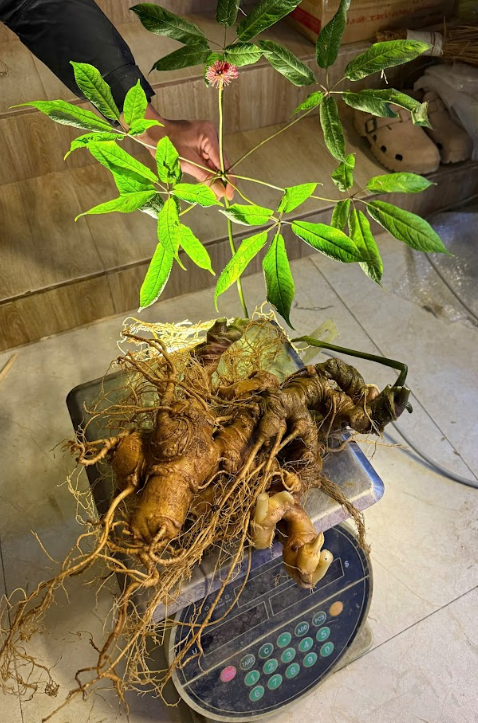
Honey consists mainly of fructose, glucose, and water, while also containing small amounts of organic acids, enzymes, and phenolic compounds. This profile varies according to floral source, geography, heating, and storage time. Therefore, two jars of honey from different beekeeping regions may differ in color, aroma, and antioxidant capacity measured in the laboratory. Those wishing to explore the subject further should read the analysis of saponins in Ngọc Linh ginseng, particularly the distinction between compositional data, preclinical research, and human evidence.
Four benefits of honey-infused ginseng that should be properly understood
Commonly cited benefits need to be separated according to their source. The review by Bogdanov and colleagues shows that the simple sugars in honey are absorbed relatively quickly. For symptoms of acute cough in children over one year old, a 2018 Cochrane review found that honey may reduce cough frequency more effectively than no intervention in some comparisons, but the quality of evidence was inconsistent. These findings do not automatically apply to honey-infused ginseng or to every cause of throat discomfort.
Comparison of potential benefits and limitations of the evidence
Potential benefit | Related component | Evidence | Limitation |
|---|---|---|---|
Provides quick energy | Glucose, fructose | Nutritional composition | Increases sugar intake |
Soothes the throat | Honey | Some studies on acute cough | Does not apply to every cause |
May help reduce feelings of fatigue | Sugars and saponins | Insufficient data on the mixture | Persistent fatigue requires medical evaluation |
May support adaptability | Ginseng saponins | Mainly preclinical | No standard dose has been established |
Pharmacological studies of Panax vietnamensis summarized in scientific monographs mainly describe preclinical findings related to stress and fatigue. These findings cannot be used to conclude that a homemade jar of honey-infused ginseng produces similar effects in humans. This is the most important point: the benefits should be understood as supportive, dependent on serving size and individual physiology, rather than immediate effects or guarantees for everyone.
How to safely infuse Ngọc Linh ginseng with honey
The common risk associated with homemade infusions lies not in a complicated recipe but in a few residual drops of water. Ginseng that has not dried fully, a damp jar, or a wet spoon can locally increase the water content, creating conditions for the mixture to ferment, produce gas, and develop a sour odor. In such cases, reluctance to waste the ingredients and attempts to continue using them may create a food-safety risk.
The solution is to control cleanliness and dryness throughout the process: choose ingredients with documented origins, rinse them quickly, allow them to dry completely, use a dry jar, and monitor any changes. A single absolute storage period should not be applied to every jar because the ginseng’s moisture content, the honey’s composition, the temperature, and sanitation levels all vary.
Choose traceable ginseng and quality honey
For ginseng, request information about the growing region, supplier, declared age or specifications, batch number, and traceability documentation. An unusually low price without supporting documents is a warning sign. Root morphology is only one level of verification; consult the guide on distinguishing genuine and counterfeit Ngọc Linh ginseng by origin, rhizome scars, and root characteristics rather than relying on advertising images.
Suitable honey should not have a sour odor, continuously increasing bubbles, or clearly visible impurities. Authenticity cannot be determined solely by crystallization: Honey may naturally be liquid, viscous, or crystallized. Crystallization depends on sugar ratios, temperature, and floral source; it is not an independent quality test.
Three preparation and infusion steps to limit moisture contamination
Quickly rinse the ginseng root under clean water and use a soft brush to clean the crevices. Place it on a clean rack until the surface is completely dry, then slice it using a sanitized knife and cutting board.
Clean the glass jar and allow it to dry completely. Arrange the ginseng slices in the jar, pour in enough honey to cover the ingredients, seal tightly, and record the infusion date. Do not put ginseng with residual water into the jar.
Observe the jar during the first few days. If the ginseng slices float, adjust them only with a clean, dry utensil; do not use your hands, a wet spoon, or repeatedly open the lid unnecessarily.
The ratio of ginseng to honey should follow the supplier’s instructions or a controlled recipe because fresh ginseng and reduced-moisture ginseng are not the same. Using too little honey may leave ginseng slices exposed above the surface; conversely, using too much increases the sugar in each serving without providing proven additional benefits.
Proper storage helps identify spoiled honey-infused ginseng
Keep the sealed jar in a cool, dry place away from direct sunlight, hot stoves, and areas with substantial temperature fluctuations. If you purchase a packaged product, follow the conditions and expiration date stated on the label because the manufacturer may use an ingredient-processing method different from that used for homemade infusions.
Discard the entire mixture if you notice a sour or unusual odor, continuously increasing bubbles, overflow, or mold. Do not taste it to check, and do not attempt to reheat it. Sugar crystallization or a change in viscosity alone is insufficient to indicate spoilage; however, if accompanied by odor, gas, mold, or swollen packaging, the safe course is to stop using it.
Dosage and 5 groups that should exercise caution
“Use more to get faster results” is an approach that can easily increase sugar intake unexpectedly. A spoonful of honey added to each serving must still be counted alongside soft drinks, pastries, dried fruit, and other sources of sugar consumed during the day. The World Health Organization recommends reducing free sugars to below 10% of total energy intake, with a level below 5% potentially providing additional health benefits.
Because ginseng products differ in ingredient form and declared content, there is no single household dosage suitable for everyone. A safer approach is to use a small serving as directed on the label, monitor your response, and consult a healthcare professional if you are taking medication.
How to use honey-infused Ngọc Linh ginseng appropriately
Start with a small amount according to the product instructions or the advice of a physician or pharmacist; preferably use it in the morning or during the day, and do not increase the dose on your own. It can be consumed directly or mixed with comfortably warm water. Avoid boiling water because high temperatures may alter certain enzymes and heat-sensitive compounds in honey, as noted in the review by Bogdanov and colleagues.
Do not use the mixture to replace a balanced meal. If fatigue persists, recurs, or is accompanied by weight loss, shortness of breath, chest pain, or insomnia, seek medical evaluation to determine the cause instead of continuing to increase the amount of ginseng.
Five groups that should consult an expert before use
The five groups that should take precautions are: children under 12 months old; people with diabetes; pregnant or breastfeeding women; people with underlying health conditions; and people taking medication. The U.S. Centers for Disease Control and Prevention advises that honey must never be given to children under one year old because of the risk of infant botulism. People with diabetes need to account for carbohydrates and monitor blood glucose according to a healthcare professional’s plan.
The U.S. National Center for Complementary and Integrative Health’s monograph on ginseng notes potential interactions with anticoagulants, glucose-lowering medicines, and certain other medications; data for different ginseng species are not fully equivalent, making individual assessment even more important. Do not stop or adjust prescription medication on your own. Stop use and seek medical care if you experience difficulty breathing, a rash, swelling, significant digestive problems, or other unusual symptoms. You may also consult the article on who should not use Ngọc Linh ginseng before deciding.
Four criteria for choosing transparently labeled honey-infused ginseng
Before purchasing, check four points: the ginseng has a traceable origin; the ingredients and declared content are clearly stated; the responsible entity, batch number, and expiration date are fully provided; and specific instructions for use and storage are included. A transparent label is more valuable than subjective testimonials or promises of immediate results.
This food is not a medicine and is not intended to replace medicines used to treat disease. Be wary of products associated with disease-treatment claims or lacking an identified responsible entity. In the past, bitterness and preparation requirements may have made fresh ginseng difficult to use; when properly infused, the mixture becomes more convenient and easier to portion. The bridge between those two states is not advertising, but the selection of traceable ingredients, clean and dry preparation, and considered use.
Before ordering, compare labels, request traceability documentation, and ask about the ingredient ratio. If you belong to one of the five risk groups, take the product information to a physician or pharmacist for appropriate advice.