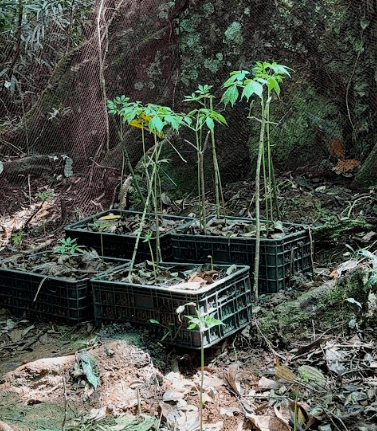
Ngoc Linh ginseng is chosen for its distinctive saponin profile
A long workday, restless sleep, and feeling drained during exercise can lead many men to seek “vitality-boosting” products. However, these symptoms do not always have the same cause. Choosing the wrong product can be costly and delay the detection of an issue requiring medical evaluation. Ngoc Linh ginseng is selected primarily for its distinctive saponin profile, indigenous value, and potential role in physical-performance support formulas.
In this context, Ngoc Linh ginseng is an ingredient worth exploring due to its chemical profile and indigenous origin. Its scientific name is Panax vietnamensis, and it was botanically described by Ha Thi Dung and I. V. Grushvitzky in 1985. Its natural distribution is associated with the Ngoc Linh mountain range in Kon Tum and Quang Nam. Therefore, information about the species, growing region, and traceability is more important than an appealing trade name.
Manufacturers often include this medicinal herb in multi-ingredient formulas intended to support physical performance, adaptation to stress, or overall health. The ingredient’s advantages lie in its dammarane saponins, meaning saponin compounds with a distinctive dammarane chemical structure, together with its identity as a Vietnamese medicinal herb. However, the word ginseng on the front of the box does not reveal the actual dose or the quality of the overall formula. The “standardization” level refers to the amount of active compounds controlled according to a specified criterion and should be clearly stated on the label.
Panax vietnamensis differs from Ngoc Linh dang shen in species and active compounds
Ngoc Linh ginseng belongs to the genus Panax in the Araliaceae family. The ingredient commonly called dang shen or poor man’s ginseng belongs to another genus, usually Codonopsis, in the Campanulaceae family. The place name “Ngoc Linh” may appear in both names, but this does not make them the same species. Therefore, the research data, chemical composition, and commercial value of the two ingredients are not interchangeable.
When reading the label, look for the full scientific name, the plant part used, and the amount of the ingredient in each serving. The phrase “extract from the Ngoc Linh region” without specifying Panax vietnamensis is insufficient to confirm the correct species. Differentiation should also be based on the scientific name, botanical characteristics, and packaging information rather than solely on the root’s appearance or the capsule’s color.
The saponin profile supports its role in formulas
Studies by Nguyen Minh Duc and colleagues published in the Chemical & Pharmaceutical Bulletin during the 1990s described numerous dammarane saponins in Panax vietnamensis. Among them, majonoside R2 is frequently mentioned. This provides a basis for further research on the medicinal herb, but it does not mean that a product containing more types of saponins will be more effective.
Practical significance also depends on the saponin dose, purity, plant part, extraction solvent, and absorption. Therefore, a capsule that merely states it “contains Ngoc Linh ginseng” without disclosing the amount is difficult to evaluate. Preclinical data, meaning results from laboratory or animal studies conducted before human research, currently only suggest biological potential. They do not demonstrate the clinical benefits of commercial finished products for men.
Standardized origin determines the value of the ginseng ingredient
Two batches of ginseng both labeled Panax vietnamensis may still differ. Growing region, plant age, plant part used, harvest season, and processing methods can all affect the chemical profile. Water extracts, ethanol extracts, and pure root powder are also not equivalent in their concentrations of active compounds.
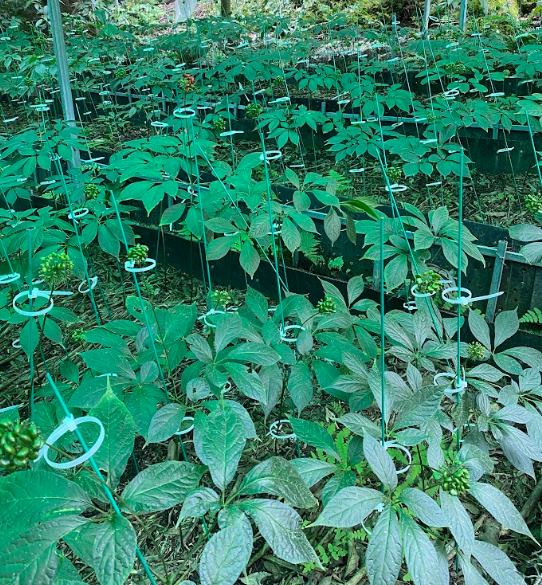
Reliable documentation should identify the responsible entity, growing region, extraction ratio, or standardized saponin content. Microbiological, heavy-metal, and batch-quality test results should also be transparent. A high price or regional story is not evidence of content; effectiveness must be assessed according to the dose and the specific product.
The role of Ngoc Linh ginseng in men’s health
Fatigue, stress, reduced libido, and erectile dysfunction are often grouped under vague concepts such as “low vitality.” However, the causes may be related to sleep deprivation, cardiovascular disease, hormonal disorders, depression, or adverse effects of medication. Erectile dysfunction can indicate an underlying condition and requires appropriate medical evaluation.
Therefore, three goals should be distinguished: maintaining energy and adaptability, supporting sexual health, and recovering after exercise. Evidence should also be differentiated among laboratory studies, animal studies, and human trials. The first two levels help generate hypotheses but do not replace clinical data.
Adaptation to stress supports the maintenance of physical performance
“Adaptation to stress” can be understood as supporting the body’s ability to function under physical or mental pressure. This concept does not mean remedying every form of debility. For Panax vietnamensis, the available data still need to be supplemented by controlled clinical trials.
Supplements cannot compensate for chronic sleep deprivation, an unbalanced diet, or insufficient physical activity. After starting use, you can keep a journal for 2–4 weeks, recording sleep time, the number of awakenings, fatigue on a 0–10 scale, and the ability to complete workouts. This monitoring method is more useful than relying solely on how you feel after one dose.
Data on male sexual health should be interpreted cautiously
Libido, erectile function, testosterone levels, and sperm quality are four different indicators. An ingredient that supports perceived energy does not automatically increase testosterone or improve sperm quality. To evaluate a claim, the research must be conducted directly on Panax vietnamensis using the correct dose, population, and outcome measures.
Research on Korean ginseng, Panax ginseng, cannot be fully extrapolated to Ngoc Linh ginseng because the species and preparations differ. Erectile dysfunction should be evaluated through medical history, examination, and appropriate testing. Male infertility also requires semen analysis and specialist evaluation rather than reliance on claims of “enhanced sexual performance.”
The combined formula determines the practical benefits
Ngoc Linh ginseng may be combined with zinc, vitamins, amino acids, or other medicinal herbs. Zinc contributes to maintaining normal blood testosterone levels. This claim does not mean that zinc supplementation will increase testosterone in everyone. Benefits and risks must be assessed for the entire formula, especially when its ingredients overlap with those in other products being used.
Framework for evaluating formulas for men
Goal | Common ingredients | Required evidence | Limitations | Groups requiring caution |
|---|---|---|---|---|
Maintaining physical performance | Ginseng, B vitamins | Human trials | Does not replace sleep | People taking multiple medications |
Adaptation to stress | Ginseng extract, magnesium | Standardized assessment scales | Does not address the underlying cause of disease | People prone to insomnia |
Sexual health | Zinc, amino acids | Appropriate physiological indicators | Does not automatically increase testosterone | People with underlying conditions |
The same ingredient can be used for various purposes, but claims must be consistent with the data. Weight management, sufficient sleep, and physical activity in accordance with medical recommendations remain the foundation; dietary supplements serve only a supportive role when appropriate for the diet and actual needs.
5 criteria for choosing a safe Ngoc Linh ginseng formula
Faced with shelves full of red boxes, large ginseng-root images, and phrases such as “peak performance” or “kidney tonic,” buyers may find it difficult to know how much Panax vietnamensis a product contains. Names, images, and prices cannot replace quantitative information. Selection should be based on five verifiable criteria:
The correct species name, plant part used, and ingredient form.
Transparent content per serving and standardization level.
Evidence relevant to the dose and marketed formula.
Traceable product-declaration records, manufacturer, and batch.
Safety warnings appropriate for underlying conditions and current medications.
A product with more ingredients or a higher price is not necessarily more suitable. Personal goals, diet, underlying conditions, and interaction risks should form the basis for selection.
The product label must specify the correct species and amount
The label should state Panax vietnamensis, whether it is a powder or extract, the amount in each serving, and the standardization ratio, if applicable. Check the receipt number for the product declaration registration, manufacturer, batch number, expiration date, storage conditions, and directions for use. A traceability label is useful only when it leads to consistent information about the company and batch.
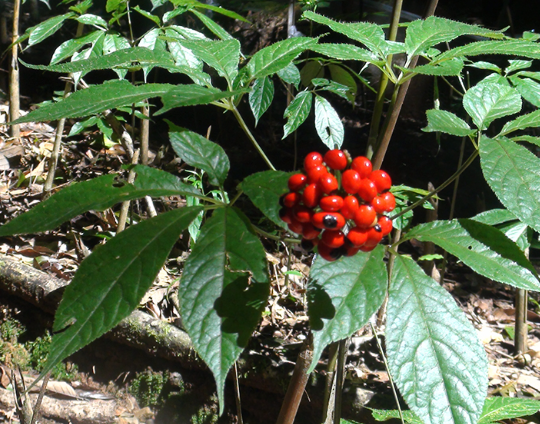
Be wary of advertisements promising rapid effects, using testimonials instead of test results, or deliberately obscuring the amount. Identifying Ngoc Linh ginseng should combine origin documentation, botanical characteristics, and packaging information rather than relying on a single sign.
The evidence must match the marketed dose and formula
Research on ginseng root does not automatically apply to an extract. Research on a single-ingredient extract also does not prove that a combination capsule has similar effectiveness. When reading research, check the participants, sample size, duration, dose, outcome measures, control group, and funding source. Relevant human data should be prioritized over inferences from mechanisms.
Brand introductions or “top product” content are commercial materials, not independent clinical evidence. If a source does not specify the preparation and dose used, there is insufficient basis for applying its results to the product on the shelf.
Contraindications and signs requiring medical attention should not be overlooked
Consult a doctor or pharmacist before use if you have cardiovascular disease, difficult-to-control high blood pressure, blood glucose disorders, liver or kidney disease, a blood-clotting disorder, or are taking multiple medications. The U.S. National Center for Complementary and Integrative Health identifies insomnia as a common adverse effect of Asian ginseng. Although different ginseng species cannot be treated as identical, this information indicates the need for caution regarding the time of use and monitoring for unusual reactions.
Stop using the product and seek medical advice if unusual symptoms occur. Persistent erectile dysfunction warrants medical evaluation. Reduced libido accompanied by severe fatigue, chest pain during sex, or testicular abnormalities also requires medical attention. Difficulty conceiving after 12 months of regular unprotected sex meets the World Health Organization’s timeframe for defining infertility and requires professional evaluation.
This product is not a medicine and is not intended to replace medicines used to treat disease.
Before purchasing, compare the product label against the five criteria in this article: correct species, transparent content, relevant evidence, traceability, and safety warnings. If you are taking medication, consult a doctor or pharmacist before making your choice.