Drug interactions involving Ngoc Linh ginseng leaves have not been fully established
A cup of ginseng leaf tea after breakfast may seem harmless. However, if the user has also injected insulin, taken blood pressure medication, or used an anticoagulant that same morning, the effects on blood glucose, blood pressure, or hemostasis may add up unexpectedly. The risk is even harder to recognize when ginseng leaves are treated as an everyday beverage and are not disclosed on the medication list.

Checking for interactions does not mean that every combination is dangerous. The goal is to identify the exact product, review each active ingredient currently being used, and establish an appropriate monitoring plan. This is particularly necessary with ginseng leaf extracts, extract capsules, or blended products because exposure to active compounds may differ considerably from that of a weak pot of tea.
Ngoc Linh ginseng leaves are the leaves of Panax vietnamensis and are not the same as dang shen, which belongs to the Codonopsis genus. Commercial names that merely state “Vietnamese ginseng” or “ginseng tea” do not provide enough information for an assessment. The exact species, plant part, and preparation must be identified before asking a doctor or pharmacist whether it can be used with medication.
Saponins may create a risk of additive effects with medications
Ngoc Linh ginseng leaves contain saponins and many other biologically active compounds. This provides a basis for hypothesizing interactions, but data specifically concerning the leaves and clinical interaction studies in humans remain limited. It is therefore important to distinguish among three levels: interactions documented in humans, potential interactions based on pharmacological mechanisms, and precautionary warnings for high-risk groups.
An additive effect occurs when ginseng leaves and a medication both affect the same parameter. For example, if both lower blood glucose, their combined effect may be stronger than expected. Active-compound levels also vary according to leaf age, growing region, harvest time, extraction method, and whether the product is a tea, powder, extract, or capsule. Therefore, a leaf dose cannot be inferred from the dose used for the root, nor should two products bearing the same name be considered equivalent.
Taking ginseng leaves 2–4 hours apart from medication only separates the times at which they pass through the stomach. This measure cannot reliably rule out an interaction because biological effects may last much longer. This is the most important point: spacing out the doses does not replace a full review of medications and underlying medical conditions.
Limited evidence requires cautious interpretation of warnings
When evaluating a warning, the most relevant data should involve the correct species, Panax vietnamensis, the correct plant part—the leaves—the correct product form, and human studies. Findings from other ginseng species, roots, animals, or laboratory studies are useful only for generating hypotheses. A hypothesis should not be turned into a conclusion that a combination will definitely cause harm; conversely, a lack of data does not mean that it is completely safe.
Descriptions such as “supports circulation,” “helps maintain blood glucose,” or “helps improve general well-being” are not sufficient grounds for assuming that a product will make medication more effective. Ginseng leaves also provide no basis for reducing a dose, stopping medication, or changing a treatment regimen. Any medication adjustment must be decided by the treating doctor based on actual measurements and the individual’s condition.
4 medication groups requiring caution with Ngoc Linh ginseng leaves
The issue often begins with a simple assumption: ginseng leaf tea is merely a beverage. When a user is also taking several medications that affect blood glucose, blood pressure, or blood clotting, even a small change may be amplified. The appropriate approach is not to create a list of absolute prohibitions, but to review the active ingredients, underlying conditions, and signs that require monitoring.
The table below helps identify four groups that warrant attention. The risks listed include both the inherent effects of the medications and possible pharmacologically additive effects; they do not mean that an interaction will occur in every case of combined use.
Checklist for medications used with ginseng leaves
| Medication group | Examples | Main concern | Signs to monitor | Action |
|---|---|---|---|---|
| Glucose-lowering medications | Insulin, metformin, sulfonylureas | Excessively low blood glucose | Trembling, sweating, confusion | Check blood glucose and seek professional advice |
| Blood pressure-lowering medications | ACE inhibitors, ARBs, beta blockers | Low or fluctuating blood pressure | Dizziness, fatigue, near-fainting | Record readings and dosing times |
| Anticoagulants and antiplatelet agents | Warfarin, apixaban, aspirin | Increased concern about bleeding | Extensive bruising, black stools | Seek prompt medical care for abnormalities |
| Groups requiring individual assessment | NSAIDs, SSRIs, antibiotics | Direct data remain lacking | Bleeding or new symptoms | Review each active ingredient |
This table is a screening tool, not guidance for stopping medication on your own. In particular, decisions to continue, temporarily stop, or adjust the dose of prescription medication must be made by the doctor managing the condition.
Glucose-lowering and blood pressure medications may have additive effects
People using insulin, metformin, sulfonylureas, or other glucose-lowering medications should exercise caution when starting ginseng leaves. The risk to monitor is excessively low blood glucose if the product also affects metabolism. Common signs include trembling hands, sweating, intense hunger, palpitations, dizziness, and confusion. Seizures or loss of consciousness require emergency care.
With blood pressure medications, the main concern is low or fluctuating blood pressure. Before taking a reading, rest quietly for at least 5 minutes, sit with your back supported, place your feet flat on the floor, and keep your arm at heart level. Record the time the medication was taken, the time the ginseng leaves were used, and any accompanying symptoms. A single abnormal reading is not enough to draw your own conclusion or reduce the dose yourself.
Anticoagulants and antiplatelet agents heighten concerns about bleeding
Warfarin, heparin, apixaban, rivaroxaban, aspirin, and clopidogrel are commonly encountered examples. It cannot be concluded that every combination with ginseng leaves causes an interaction, but because the consequences of bleeding can be serious, a precautionary approach is reasonable. Users should disclose prescription medications, low-dose aspirin, and herbal products alike.
Seek prompt medical care if you develop extensive bruising, a nosebleed that is difficult to stop, blood in the urine, black stools, vomiting blood, or an unusually severe headache. Heavy bleeding, fainting, or altered consciousness requires emergency care. Do not stop medication, change the dose, or adjust warfarin based on INR results on your own; the testing schedule and anticoagulation target must be established by the treating facility.
NSAIDs, antidepressants, and antibiotics require active-ingredient-specific assessment
Ibuprofen, naproxen, and diclofenac can inherently increase the risk of gastrointestinal irritation or bleeding, especially in people with a history of ulcers or those taking anticoagulants. Direct interaction data concerning ginseng leaves remain lacking, but the overall risk still needs to be considered. For antidepressants, the specific class and active ingredient should be checked; SSRIs or SNRIs warrant greater attention when used with aspirin, NSAIDs, or anticoagulants.
Antibiotics should likewise not be grouped under a single blanket warning. There is no basis for automatically assuming that ginseng leaves create a “synergistic effect” that helps antibiotics work more powerfully. Patients must still take the prescribed dose at the correct times and complete the full course. If nausea, a rash, severe diarrhea, or new symptoms occur after combined use, contact a healthcare professional to determine the cause.
A 4-step process for using Ngoc Linh ginseng leaves safely
After identifying the risks, the next goal is not to diagnose an interaction yourself but to provide enough information for a doctor or pharmacist to weigh the benefits and risks. This process should be followed before the first use, whenever a medication or dose changes, when switching from tea to an extract, or when unusual symptoms arise.
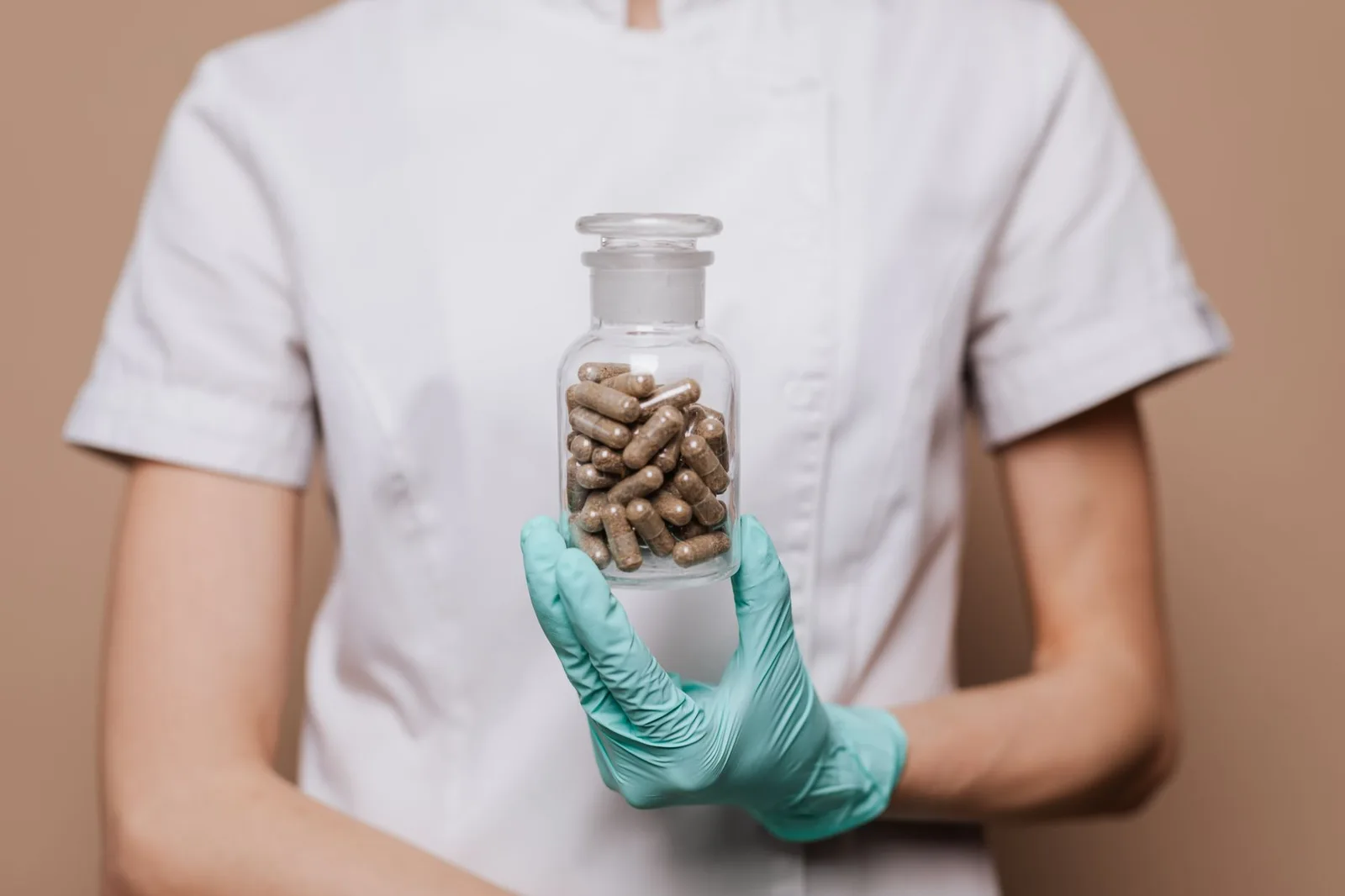
Do not simply say, “I am taking ginseng.” A clear photo of the label, a list of active ingredients, and a log of health readings are far more useful. Do not stop prescription medication on your own, and do not assume that spacing doses several hours apart guarantees safety.
5 groups who should consult a doctor before use
The five groups who should seek advice beforehand are people receiving treatment for diabetes; people using anticoagulants or antiplatelet agents; people with low blood pressure, high blood pressure, or cardiovascular disease; people with liver disease, kidney disease, or bleeding disorders; and pregnant or breastfeeding women, children, and people preparing for surgery.
Advanced age, the simultaneous use of multiple medications, and impaired liver or kidney function can alter metabolism, exposure levels, and tolerance of adverse effects. People about to undergo a procedure must fully disclose all herbal products. If ginseng leaves need to be temporarily discontinued, the timing must be individualized; a single standard number of days should not be applied without medical advice.
Four steps for checking the product, medications, and monitoring parameters
- Verify the product: look for the name Panax vietnamensis, the leaf as the plant part, the content or extraction ratio, recommended dose, batch number, expiration date, manufacturer, and traceability information.
- Make a list: record the active ingredient, strength, dose, and dosing time of prescription medications, over-the-counter medicines, vitamins, and herbal products.
- Ask before combining: send the list and label photos to a doctor or pharmacist, especially if the product contains multiple ingredients.
- Follow a monitoring plan: if use is approved, record blood glucose, blood pressure, signs of bleeding, and new symptoms according to the recommended schedule.
If suspicious symptoms appear, you may stop the ginseng leaf product and contact a healthcare facility for assessment. However, do not stop medication used to control an underlying condition on your own.
What to do when ginseng leaf side effects are suspected
Before seeking medical care, record when the ginseng leaves were used, how much was taken, any accompanying medications, meals, measured readings, and how the symptoms progressed. These details help distinguish among a side effect, a drug interaction, disease progression, and an unrelated cause.
Seek prompt medical care for recurrent dizziness, abnormal blood pressure, low blood glucose, or bleeding. Call emergency services in the event of fainting, seizures, difficulty breathing, confusion, uncontrollable bleeding, vomiting blood, or black stools accompanied by extreme weakness.
Before a cup of ginseng leaf tea becomes a habit, make checking for interactions your first habit.
Initially, a user may have only a product of unknown strength and a medication list scattered across multiple prescriptions. After a review, they will have a clear record with which to obtain appropriate advice. The bridge between these two situations is very practical: photograph the product label, make a complete list of all medications, and bring a log of health readings when consulting a doctor or pharmacist. This is more reliable than any dosing interval or word-of-mouth ginseng leaf dosage.
This product is not a medicine and is not intended to replace medicines used to treat disease.