How Does Dried Ngoc Linh Ginseng Differ from Fresh Ginseng?
A small, dark slice of dried ginseng may leave first-time buyers with a host of questions: Is this really Ngoc Linh ginseng, why does it look different from the fresh root, and is the price reasonable? Once the water has been removed, many natural characteristics become difficult to observe; buyers can easily make an incorrect assessment if they rely only on size or promotional claims. Properly understanding the product form, drying process, and traceability information will help you make a more careful choice while using and storing it appropriately.
Dried Ngoc Linh ginseng is the root or rhizome of the species Panax vietnamensis that has been cleaned, left whole or sliced, and then reduced in moisture using an appropriate method. The main purposes of this process are to extend shelf life, reduce shipping weight, and make portioning more convenient. However, being dried does not automatically prove that the product is better, older, or more valuable than fresh ginseng.
Dried ginseng should be clearly distinguished from blended teas, ginseng powder, extracts, and health supplements containing ginseng. Ginseng slices are raw materials whose cross-sections can still be observed; powder has lost nearly all morphological features; extracts have undergone extraction; and capsules or instant packets may contain many additional ingredients. Referring to all of these as “dried ginseng” can cause confusion when comparing prices and methods of use.
The Drying Process Determines Color, Aroma, and Moisture Content
The standard process consists of cleaning, removing unsuitable parts, slicing or leaving the root whole, drying it to the target moisture level, and then packaging it. Temperature, duration, and equipment type can all affect color, aroma, shrinkage, and crispness. Producers should therefore clearly disclose the drying method, raw-material specifications, and storage conditions rather than using only general descriptions such as “high technology.”
Heat drying usually produces a distinctly dry product at a more affordable cost. Cold drying may preserve shape, color, and aroma differently, while freeze-drying generally creates a light, porous structure but costs more. These sensory differences are not sufficient to conclude that one method is superior. Evaluation also requires data on moisture content, quality indicators, and the stability of the specific product batch.
The Characteristics of Dried Ngoc Linh Ginseng Vary by Product Form
The three common forms differ greatly in convenience and ease of inspection:
| Form | Ease of Inspection | Convenience | Adulteration Risk | Storage |
|---|---|---|---|---|
| Whole root | Relatively easy | Requires preparation | Lower | Airtight, dry container |
| Dried slices | Cross-section visible | Easy to portion | Moderate | Airtight bag or jar |
| Powder | Very limited | Easy to mix and use | Higher | Strict moisture protection |
Water loss reduces weight, shrinks the surface, and changes the color. The amount of reduction is not fixed because it also depends on the initial moisture level, the plant part used, slice thickness, and drying technique. Therefore, one kilogram of fresh ginseng should not be arbitrarily converted into a fixed quantity of dried ginseng.
In particular, a large root does not necessarily indicate greater age or superior quality. When buying, prioritize the scientific name, plant part used, growing region, net weight, and batch documentation. These are verifiable details and are more useful than subjective judgments about size.
Identifying Dried Ngoc Linh Ginseng Through 5 Groups of Indicators
The more finely a product is sliced or ground, the harder its natural structure becomes to identify. This is the central issue: buyers worry about incorrect origin yet often make decisions based on advertising images, aroma, or sellers’ assurances. The consequence is not only paying a disproportionate price but also being unable to verify the actual ingredients.
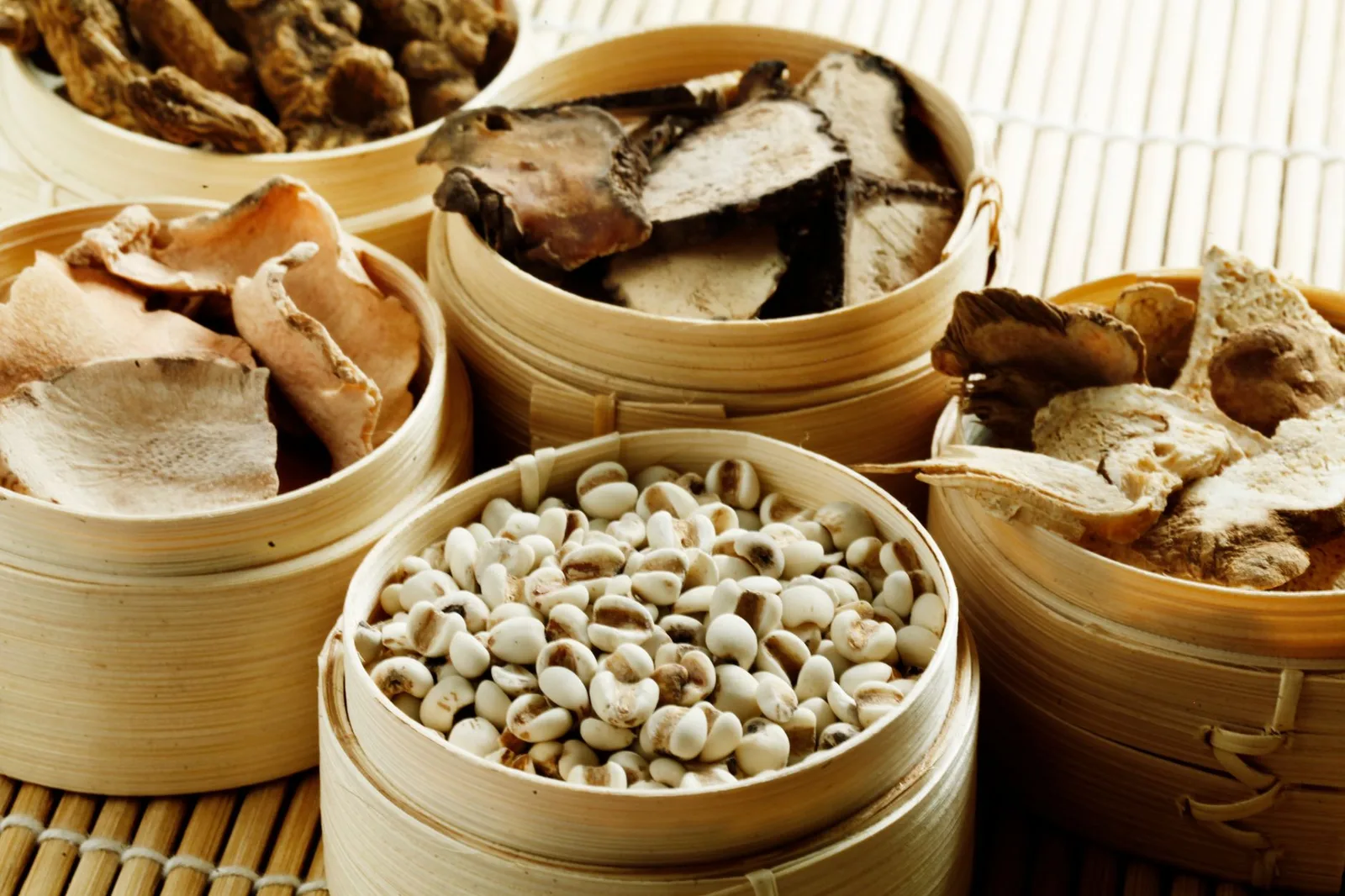
The appropriate approach is to cross-check five groups of indicators: morphology, cross-section, sensory characteristics, traceability labels, and test certificates. No single indicator is sufficient for authentication. The number of scars, nodes, or size after drying also cannot accurately determine the age of the ginseng, especially for sliced products.
Morphology and Sensory Characteristics Only Support Initial Screening
On an intact rhizome, the nodes, scars, secondary root marks, and cross-sectional structure may be observed. However, heat and dehydration can cause the rhizome to shrink, bend, darken, or lose definition. Therefore, a uniformly “attractive” ginseng slice is not evidence of its species or the age of the raw material.
The characteristic aroma and bitter taste followed by a sweet aftertaste are only useful as references because they also depend on the plant part, drying method, and storage duration. Do not taste a product suspected of spoilage. Warning signs include unusual softness or dampness, a sour or pungent odor, mold, mottled coloring, insects, damaged packaging, and a missing batch code.
Origin and Testing Strengthen Reliability
The label should state Panax vietnamensis, the growing region, the responsible business, packaging date, expiration date, batch code, and storage instructions. A traceability code is useful only when the displayed data match the product name, specifications, and batch number on the packaging; scanning a code alone does not guarantee authenticity.
For high-value products, retain the invoice and traceability documents, and review the test certificate corresponding to the correct batch number. Notable items include identification, quality, microbiological, and heavy-metal indicators. If species authentication is required, a specialized organization and an appropriate analytical method must be used.
An unusually low price, promises of rapid effects, or claims to cure disease are warning signs, not purchasing advantages.
Uses and Storage of Dried Ngoc Linh Ginseng
Ngoc Linh ginseng is commonly regarded as an ingredient that may support health. However, the strength of evidence varies according to the raw-material form, content, dosage, and user group. Data on saponin composition or preclinical findings do not equate to guaranteed effectiveness in humans and should certainly not be turned into claims of curing disease.
Most importantly, use should follow the label instructions for each product or professional advice. Two boxes both labeled “Ngoc Linh ginseng” may differ in the plant part used, moisture content, ingredient concentration, and degree of processing, so a single dosage cannot be applied to both.
Use the Correct Form of Dried Ginseng for the Appropriate User
Ginseng slices are commonly mixed with warm water, steeped, or prepared according to the manufacturer’s instructions. Do not increase the amount on your own under the assumption that natural ingredients are always safe, and do not combine multiple teas, capsules, and extracts containing ginseng on the same day.
Pregnant or breastfeeding women, children, people with underlying medical conditions, those preparing for surgery, and anyone taking medication should consult a doctor or pharmacist before use. If insomnia, digestive discomfort, a rash, or any unusual symptom occurs, stop using the product and seek appropriate advice.
Airtight, Dry Storage Helps Prevent Ginseng from Deteriorating
Before purchasing, many people focus only on choosing the right product; after purchasing, however, a jar that is not properly sealed can cause the product to absorb moisture and deteriorate. Ideally, the ginseng slices should remain dry, retain a stable aroma, and show no signs of pest intrusion. The simple process connecting these two states is to handle the ginseng with dry utensils, reseal it immediately, and store it in a cool place away from sunlight, heat, and sources of moisture.
Do not assume that refrigeration is always appropriate, as frequently opening the container may cause condensation. Refrigerate only when required by the label and minimize temperature fluctuations. Buy only an amount you can use, retain the batch records, and periodically check the aroma, color, and dryness. Upon receiving the product, inspect the condition of the packaging, verify the label information, and retain the invoice for convenient cross-checking when necessary. Before purchasing, compare the scientific name, batch code, traceability information, and storage conditions stated on the specific product.
This product is not a medicine and is not intended to replace medicines used to treat disease.