
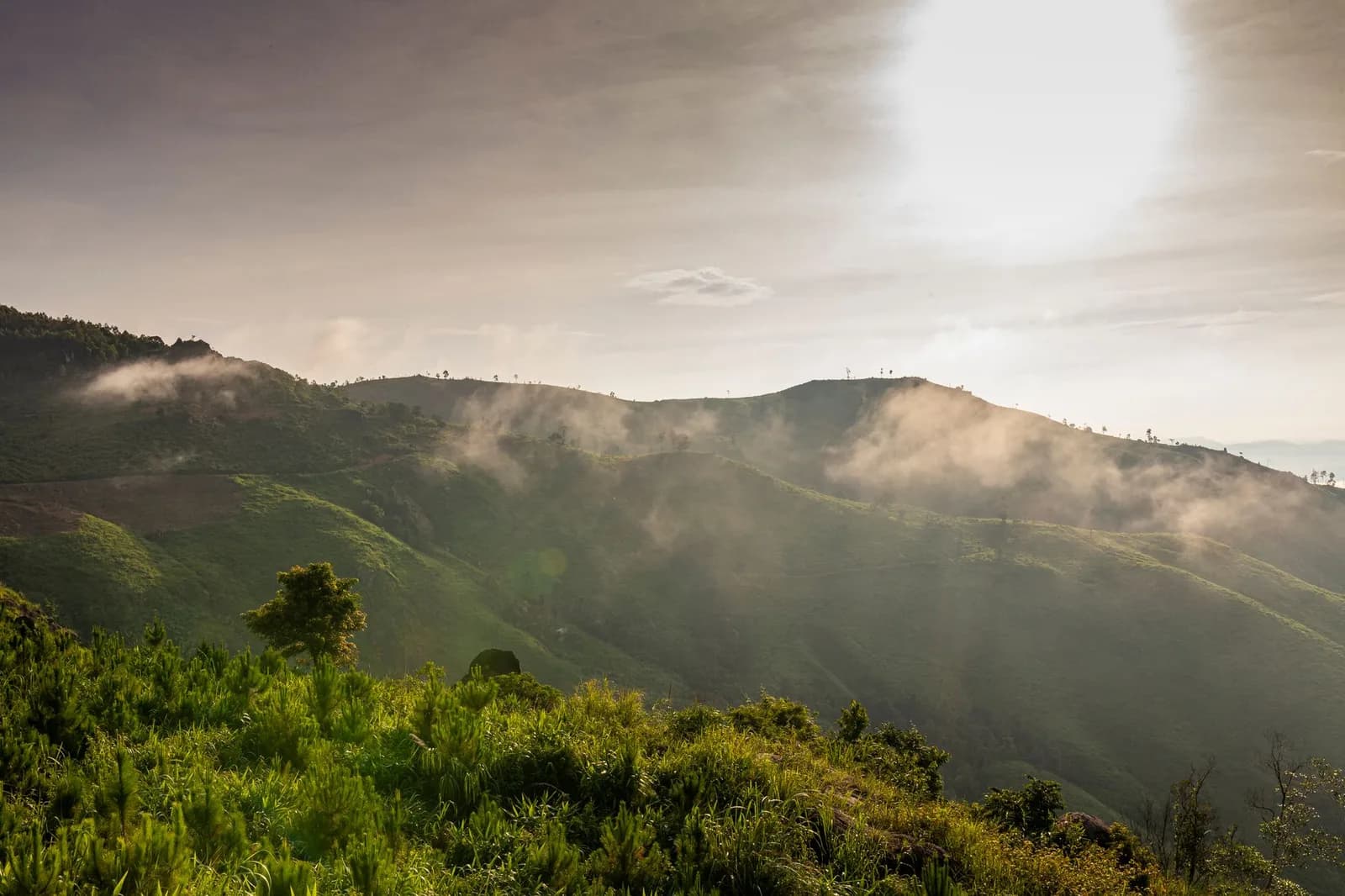
Early Morning in a Ngọc Linh Ginseng Garden Beneath the Forest Canopy
While most of the villages are still asleep, a garden in the Ngọc Linh mountain range has already awakened amid the cold mist. In the early morning, growers leave their villages, follow trails up to the garden, then bend down to inspect each ginseng stem, trace animal tracks, and check the humus around the base of the plants. Behind every mature ginseng plant are many years of quiet labor. From leaving the village to the final patrol before nightfall, the work continues in response to changes in the garden.
Ngọc Linh ginseng thrives in high mountain areas with a cool, humid climate, humus-rich soil, and multilayered vegetation. It is not grown separately from the forest: the tree canopy can help regulate light, leaf litter retains moisture, the terrain channels water, and temperature and fog influence the growing season. In cultivation areas connected with local communities, caring for ginseng often goes hand in hand with protecting the soil, water sources, and surrounding forest trees.
The Journey to the Garden Begins Before the Mist Clears
The journey usually begins early in the morning, when mist still blankets the trail. Steep paths, exposed roots, and wet rocks mean that a few hundred meters through the forest can take far longer than the same distance on level ground. An excessively heavy backpack does more than cause fatigue; it can also make walkers lose their balance on muddy ground or sloping terrain.
Slippery terrain can increase the risk of falls, while rapidly changing weather can leave inexperienced visitors cold and exhausted. Practical preparation includes shoes with good traction, lightweight warm clothing, drinking water, compact essentials, and a manageable pace. Outsiders should not attempt to find their own way into the garden. Trails are often difficult to identify, cultivation areas need protection, and becoming separated from the guide can endanger both visitors and the ginseng beds.
The Climate Beneath the Forest Canopy Determines the Rhythm of Ginseng Cultivation
The forest canopy acts as a natural filter, helping reduce direct sunlight and limit rapid temperature fluctuations. Beneath it, fallen leaves decompose into a soft layer of humus that helps the soil retain moisture and remain loose. However, moisture does not mean standing water. If water flow is obstructed, the soil around the roots may become waterlogged, disrupting the balance of the growing environment.
For this reason, the gardening schedule cannot be as rigid as a time sheet. After prolonged rain, growers usually prioritize checking drainage; during drier days, they monitor the moisture of the humus layer. Dense fog, the rainy season, and the flowering and fruiting stages can also affect the timing of care and patrols. Experience in reading local weather conditions is just as important as tending each garden bed.
Caring for Ngọc Linh Ginseng from Morning to Afternoon
A day of caring for ginseng is devoted mainly to observation and measured intervention, rather than intensive watering and fertilization. After arriving at the garden in the morning, growers inspect mature plants and the soil surface. Around midday, they revisit places where irregularities were found; by afternoon, their attention gradually shifts to the nursery, seedlings, the fruiting season, and security. Every small sign deserves attention because the plant's value accumulates over many years.
As they walk along the beds, growers do not look only at individual ginseng plants. A broken forest branch can alter the amount of light; a newly formed water channel can wash away humus; unfamiliar tracks can indicate animals or intruders. Caring for the plants, preserving the soil, and adjusting the habitat are often three interconnected parts of the same day's work.
Checking Leaves, Stems, and Humus in the Morning
Growers walk slowly along the beds, observing leaf color, stem firmness, bite marks, and leaning or fallen plants. Unusual leaf discoloration may be related to moisture, damage, or lighting conditions; broken stems often appear after heavy rain, strong winds, or impact. Early detection can help growers apply only the necessary treatment and continue monitoring developments.
If they encounter a new water channel after rain, growers usually check its direction of flow first, gently clear away any decaying leaves blocking it, and adjust the drainage route at a suitable distance from the base of the plants, depending on garden conditions. For a plant that is leaning but has not broken, they examine the soil, gently support the plant, and avoid digging deeply, which could affect its roots or rhizome. During the midday inspection, these locations are checked again to assess water flow and plant stability.
Next comes an inspection of the humus around the base of each plant. The covering layer should be moist but not compacted or waterlogged, while still allowing water to drain. Growers avoid digging deeply because this could affect the roots and rhizomes beneath the soil. Recording each bed according to plant age, location, and weather fluctuations makes monitoring more consistent. On the same rainy day, sloping ground and low-lying areas may require entirely different monitoring approaches.
Caring for Seedlings and Protecting the Fruit Crop in the Afternoon
In the afternoon, the nursery is usually inspected more carefully. Young plants are less resilient, so moisture, light, and the condition of weak plants must be monitored regularly. Excessive shading can create a stagnant, overly humid environment, while allowing too much sunlight through can also disrupt the conditions to which the plants are accustomed.
During the flowering and fruiting season, growers may use small nets to protect individual clusters and check for fallen fruit and signs of feeding by animals. At times, guarding against rats continues through the night. Before dark, a final patrol is usually conducted to detect fallen plants, unusual water flow, displaced fencing, or signs of intrusion. Work pauses only when the garden once again becomes quiet beneath the mist.
5 Principles for Visiting a Ngọc Linh Ginseng Garden
For visitors, a ginseng cultivation area is not a mass-tourism destination. It is a sensitive habitat where a single misplaced step can compact the humus or damage small plants that are difficult to see. Controlled visits are therefore essential to protect both the ginseng beds and the security of the cultivation area.
Observing a day's work in the garden provides insight into the cultivation process, but it does not authenticate every product bearing the name Ngọc Linh ginseng. Product selection should still be based on labels, traceability records, and information about the responsible organization.
Controlled Visits Protect the Ginseng Beds
Before the trip, visitors should ask about visiting schedules, physical fitness requirements, and photography rules, as not every garden is open to visitors. When permitted to enter a cultivation area, visitors should follow five principles:
Always stay with a local guide.
Remain on designated paths and do not separate from the group.
Do not touch or uproot plants, or dig into the humus.
Carry all waste out of the forest.
Do not disclose the garden's sensitive location without permission.
Stepping too close to the beds can compact the soil; bending down or placing equipment too near the plants can easily cause accidental contact. Publishing coordinates, images of access routes, or identifiable landmarks can also increase the risk of intrusion. Keeping a respectful distance is therefore not merely courteous but also helps protect the cultivation area.
Protecting the Forest Creates Livelihoods and Enhances the Value of Ginseng
The forest helps preserve the soil, water, and microclimate that the plants need; in turn, livelihoods based on ginseng can give communities additional incentive to maintain the habitat. This reciprocal relationship is sustainable only when cultivation does not degrade the forest canopy and the rights and interests of local people are respected.
After understanding the full day's labor behind every ginseng bed, decisions should be based on evidence rather than solely on garden photographs or claims that are difficult to verify. Before visiting, prioritize checking the garden's rules; before selecting a product, check its label, traceability records, and the responsible organization. Such caution demonstrates respect for the cultivation area and prioritizes products with transparent information.