

Using Sâm Ngọc Linh regularly requires accuracy rather than quantity
After noticing no changes for several days, one user added another slice of ginseng and took it together with another ginseng-containing supplement; when insomnia developed, they could not determine which product or amount was involved. To avoid this situation, this article will help you check labels, follow the correct serving size, and monitor safety before continuing to use a Sâm Ngọc Linh product.
From a legal perspective, Sâm Ngọc Linh products declared as health supplements are foods intended to supplement the diet and must not be understood as medicines. Government Decree No. 15/2018/ND-CP detailing the implementation of several articles of the Law on Food Safety also requires health supplement advertising content not to mislead consumers into believing that the product is a medicine. Individual experiences may vary because of personal physiology, sleep, diet, underlying medical conditions, dosage form, and the actual amount of ingredients in each serving.
Therefore, the answer to the question “Is regular use of Sâm Ngọc Linh beneficial?” must include three conditions: the product has a verifiable origin, the amount used follows the label, and the user does not belong to a group requiring prior professional assessment. Regular use cannot compensate for an unclear label, arbitrary use, or unrealistic expectations. An immediate feeling of alertness should not be used as the sole criterion, and long-term use certainly should not be assumed to prevent or treat a specific disease.
Realistic expectations regarding the effects of Sâm Ngọc Linh
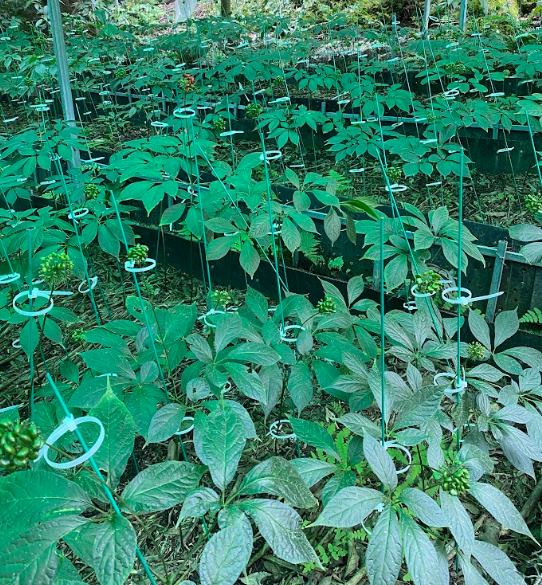
Botanical and chemical studies of Panax vietnamensis have identified numerous dammarane saponins, among which majonoside R2 is often highlighted as a noteworthy constituent. This finding was reported in the phytochemical study by Duc and colleagues, Saponins from Vietnamese Ginseng, Panax vietnamensis Ha et Grushv. Collected in Central Vietnam. I, Chemical and Pharmaceutical Bulletin. However, data on composition or activity from laboratory and preclinical models do not necessarily indicate definite clinical effectiveness in humans. The reported number of saponins also cannot automatically be converted into a level of benefit, the speed at which effects are perceived, or an appropriate dosage.
Monitoring goals should be specific and measurable: time taken to fall asleep, number of awakenings, daytime alertness, digestive comfort, and overall condition. For example, instead of writing “I feel healthier today,” you could rate alertness from 0 to 10 at the same time each day. This record does not prove causality or product effectiveness, but it helps prevent conclusions based on temporary impressions.
Three commitments before using Sâm Ngọc Linh for the first time
Step 1, read the product name, dosage form, ingredients per serving, recommended serving size, warnings, lot number, and expiration date. Do not arbitrarily convert quantities between fresh roots, dried slices, extracts, capsules, and beverages, because their concentrations and combined ingredients may differ completely.
Step 2, record any underlying medical conditions, pregnancy or breastfeeding status, history of allergies, and all medicines or dietary supplements currently being used. The list should include product names, strengths, and the number of doses taken each day so that a doctor or pharmacist can assess it more easily. People being monitored or taking medication for blood glucose, blood pressure, or blood clotting; people preparing for surgery; pregnant or breastfeeding women; and children should not use the product regularly without review by a doctor or pharmacist.
Step 3, select one monitoring goal, one fixed time, and a starting amount that follows the instructions. The most important commitment is not to increase the amount merely because no changes are felt during the first few days. When seeking advice, bring photos of all six sides of the packaging together with a list of medicine names, strengths, and dosing frequency. If surgery is planned, also disclose any products stopped recently so that the healthcare professional can determine the appropriate course of action and timing.
The dosage of Sâm Ngọc Linh must be based on the specific product form
There is no single daily amount suitable for every Sâm Ngọc Linh product. A slice of root is not equivalent to a spoonful of extract, and a capsule cannot be compared directly with a bottle of beverage. The initial quantity of raw material, extraction ratio, concentration, excipients, and combined ingredients may all differ. Therefore, “the daily dosage of Sâm Ngọc Linh” must mean the serving size of the specific product in your hand, not a number copied from a seller or another product.
Points to check for each product form
Product form | Information to read | How to measure | Risk of excessive use | Storage |
|---|---|---|---|---|
Root or slices | Weight, origin | Weigh or count according to the label | Uneven slices | Keep dry, sealed, and protected from moisture |
Extract | Extraction ratio | Measuring spoon | Estimating by sight | Seal tightly after opening |
Capsules | Amount per capsule | Count the correct number of capsules | Overlapping products | Keep in the original packaging |
Beverage | Volume, serving size | Bottle or vial | Drinking multiple bottles | Store at the temperature stated on the label |
The table shows that although these products all bear the name Sâm Ngọc Linh, measurement errors arise in different ways. For extracts, an ordinary tablespoon cannot replace the supplied measuring spoon. For capsules, read the amount of ingredients in one capsule and in the full serving. See how to check the label before choosing a product, especially when you need to verify the responsible entity and declaration information rather than relying solely on word of mouth.
Starting with a low amount helps assess tolerance
Within the range permitted by the label or as professionally advised, you may begin with an appropriate low amount and keep it stable during the observation period. Do not split tablets, open capsules, or crush pills unless the instructions permit it, because doing so may alter the product’s intended use.
A common issue is the desire for quick results. Impatience can lead to increasing the amount or adding another ginseng-containing product, making the total quantity difficult to calculate, reactions difficult to trace, and costs higher. A cautious approach is to change only one factor after each monitoring period. The Asian Ginseng, National Center for Complementary and Integrative Health, United States resource states that Asian ginseng, primarily Panax ginseng, may cause insomnia and may interact with certain medicines. These are data on Asian ginseng, not direct evidence concerning Panax vietnamensis; therefore, it should not be assumed that Sâm Ngọc Linh causes the same reactions or interactions. This information merely reinforces a precautionary principle: do not arbitrarily combine multiple products from the ginseng family or products containing alertness-promoting ingredients.
The timing of Sâm Ngọc Linh use should be compatible with sleep
First, follow the timing stated on the label. If prolonged alertness or newly developed difficulty sleeping occurs after use, stop making repeated adjustments on your own and consult a doctor or pharmacist about possibly switching to morning use. Do not assume that every product must be taken on an empty stomach or after a meal; instructions may vary by formulation.
If the label permits use after breakfast, you can link the dosing schedule to that meal and set an alarm. If you forget, do not take a double dose unless the product instructions or a healthcare professional explicitly directs you to do so. You may keep a diary for 7–14 days, recording the time of use, bedtime, estimated time taken to fall asleep, and number of awakenings. This period is only a suggested personal record-keeping window for generating initial comparison data; it is not a timeframe for assessing effectiveness, a diagnostic test, or grounds for confirming causality.
Labels and storage determine reliability during long-term use
A product worth considering should clearly state the responsible entity, origin of the raw materials, ingredients, amount per serving, lot number, expiration date, and information on the registration of its product declaration under applicable regulations. Be cautious of packaging that emphasizes only the age of the ginseng or the number of saponin types without specifying measurable amounts, as well as advertising that attributes disease-treating effects to the product.
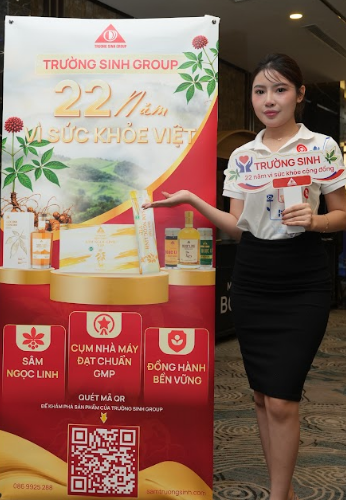
In addition, stability also depends on storage. Follow the temperature, humidity, light exposure, and shelf-life-after-opening instructions on the label; use clean, dry utensils and reseal the product immediately after dispensing. Products that change color, develop an unusual odor, separate abnormally, change in texture, or expire should no longer be used. A high price and recommendations from acquaintances cannot replace transparent documentation of origin.
Six-step checklist for using Sâm Ngọc Linh safely
Instead of relying solely on sales claims and how you feel after each use, follow the six steps below so that every decision has a clear basis and prioritizes safety.
Check the origin, responsible entity, lot number, expiration date, and warnings.
Verify the exact product form, amount, and serving size stated on the label.
Review underlying medical conditions, allergies, pregnancy, medicines, and dietary supplements currently being used.
Use the correct amount at the correct time; do not take a double dose to make up for a missed one.
Record sleep, alertness, digestion, and unusual signs during a personal monitoring period of 7–14 days.
Reassess with a healthcare professional before increasing the amount, combining products, or continuing use if a reaction occurs.
Three monitoring steps during 7–14 days of use
During this personal record-keeping period, try to keep your sleep schedule, coffee intake, and exercise routine relatively stable; if every factor changes at once, the diary will be difficult to interpret. You may use a 0–10 scale at the same time each day, but do not treat one exceptionally energetic or tiring day as a final conclusion. This is not a trial period for confirming that the product is effective.
Prioritize recording any newly developed rash, itching, palpitations, dizziness, headache, digestive discomfort, or insomnia. Stop using the product and seek advice if any unusual sign occurs. If you experience difficulty breathing, swelling of the lips or tongue, faintness, or severe symptoms, call emergency services immediately instead of waiting and monitoring at home.
Three mistakes that increase the risks of using Sâm Ngọc Linh
Three common mistakes are independently increasing the amount or taking a make-up dose, combining multiple ginseng-containing products, and continuing use despite the appearance of unusual physical signs. The cycle often begins with expectations of quick results, followed by repeated changes, and ends with an inability to determine which product or timing was associated with the reaction.
Return to the six-step process and consult a healthcare professional before combining products, especially if you have an underlying medical condition or are taking medication. The NCCIH resource cited above discusses the risk of interactions involving herbal products in general and Asian ginseng in particular, but it does not establish that Sâm Ngọc Linh has the same interactions. This product is not a medicine and is not intended to replace medicines used to treat diseases.
Photograph the complete label and review the six steps before your next use.