

One cold morning, a jar of clear honey suddenly thickens and develops tiny crystals; during hot weather, another jar darkens or begins to foam. Has the honey spoiled, or is it merely undergoing natural changes? The main seasonal difference in storage lies in where the jar is kept and how effectively temperature fluctuations are minimized. The process below helps keep honey stable throughout the year while helping you determine when it is still safe to use and when it should be discarded.
Actual temperature and humidity conditions determine how honey should be stored
Whether it is called the hot or cold season matters less than the actual conditions inside the home. The National Honey Board, “How to Store Honey” recommends storing honey in a tightly sealed container at room temperature; refrigeration is not necessary. Therefore, prioritize a dry, dark location away from heat sources and with minimal temperature fluctuations. If the product label provides specific instructions, follow the information on the label.
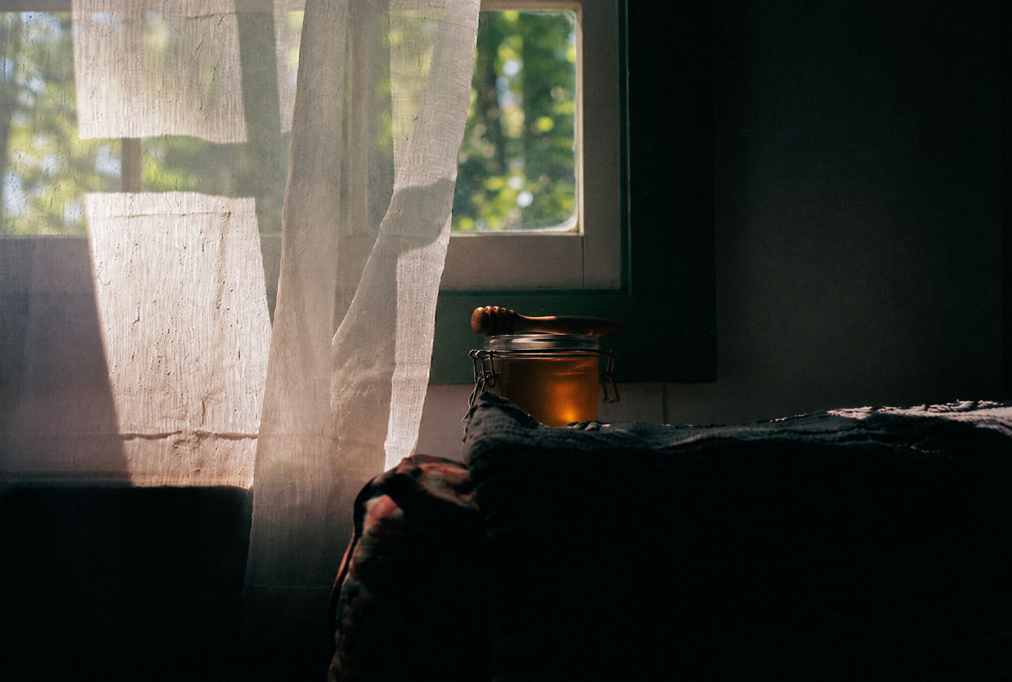
The three factors that must be controlled are temperature, light, and water ingress. Prolonged exposure to high temperatures can alter the color and aroma; direct sunlight causes the jar to absorb heat; and water entering the jar increases the risk of fermentation. The Food and Agriculture Organization of the United Nations, “Value-added products from beekeeping,” FAO Agricultural Services Bulletin No. 124 (1996) notes that osmotolerant yeasts can grow when honey has a high moisture content.
Comparison of seasonal storage conditions
Conditions | Main risk | Suitable location | Locations to avoid | Inspection |
|---|---|---|---|---|
Hot season | Heat buildup, moisture absorption | Dry, dark cabinet | Stove, window, car | Can be checked weekly |
Cold season | Crystallization, condensation | Cabinet with a stable temperature | Damp floors, cold doorways | Odor, foam, lid |
Year-round | Water, contamination | Sealed food-grade jar | Places with constant temperature changes | Before use |
To learn more about shelf life, read “How long does pure honey last?” and the factors affecting its shelf life.
Honey should be stored at a stable temperature away from heat sources
When asked what temperature is best for storing honey, the practical answer is a stable room temperature, as directed on the label. A west-facing kitchen can become noticeably warmer in the afternoon, while the top of a refrigerator also commonly gives off heat. Conversely, a room where the air conditioner is turned on during the day and off at night creates unnecessary hot-and-cold cycles.
The National Honey Board, “How to Store Honey” explains that crystallization is a natural process affected by sugar composition and storage conditions; it does not mean that the honey has spoiled. Meanwhile, the Codex Alimentarius Commission, “Standard for Honey,” CXS 12-1981 (revised in 1987 and 2001) requires that honey not be heated or processed to such an extent that its essential quality is impaired. Therefore, avoiding sunlight and prolonged exposure to heat remains the prudent choice.
A sealed jar and dry utensils help prevent honey from fermenting
Use a clean, tightly sealed, food-grade jar and close the lid immediately after taking out honey. When transferring honey, the bottle, funnel, and spoon must be completely dry; do not pour new honey into old honey that has an unusual odor or foam. A spoon that has touched water, tea, or food should not be put back into the jar.
Honey containing comb may naturally contain pollen and bits of wax, so it should be inspected sooner than filtered honey. Shelf life cannot be determined solely by thickness; the label, date opened, moisture content, and degree of processing must also be considered.
During hot weather, keep honey away from four heat-accumulating locations
Summer creates an easily overlooked problem: the jar of honey heats up every day and cools down at night. Its color and aroma may gradually change, while moisture or a loose lid further increases the risk of fermentation. The solution is not to keep moving the jar into an air-conditioned room, but to find a dark, dry, and stable location.
The four locations to avoid are a sunny windowsill, beside a stove or oven, on top of a refrigerator, and inside a car or its trunk. The temperature inside a closed car can rise sharply when parked outdoors, while areas beside a stove are often exposed to both heat and steam. When hot weather begins, check the lid and move the jar away from heat sources. As a practical habit, the author suggests checking weekly for unusual odors, bubbles, and leaks to detect problems early; this is not a mandatory frequency established by a technical standard.
A dry, dark kitchen cabinet is more suitable than a sunny location
A clean cabinet inside the home is generally more suitable than a conveniently located but sunny countertop. Avoid cabinets next to the stove, dishwasher, hot pipes, or areas under the sink. In homes that remain hot all day, the jar can be placed in a dark, closed container away from heat-absorbing walls or roofs.
If used frequently, transfer a small amount into a separate jar with dry utensils instead of repeatedly opening the large jar. This reduces the time the lid remains open and limits contamination. You can also read about safe containers for storing honey and how to identify fermented honey.
Four signs that help distinguish crystallization from spoiled honey
Crystallization usually produces fine granules, a cloudy layer, or a solid mass, while the characteristic aroma remains unchanged. “How to Store Honey”, the rate of crystallization is related to glucose content, water content, and temperature; it is not a test of whether honey is genuine or adulterated.
Conversely, stop using honey if it has a distinct sour or alcoholic odor, an unusual increase in bubbles, overflow caused by gas production, or visible mold or foreign matter. The Food and Agriculture Organization of the United Nations, “Value-added products from beekeeping,” FAO Agricultural Services Bulletin No. 124 (1996) describes honey fermentation as yeast activity under favorable moisture conditions. If the origin is unknown or contamination is suspected, discard the honey rather than tasting it.
Crystallized honey can still be used during cold weather
During cold weather, the main priorities are managing crystallization and avoiding moving the jar directly from a very cold place to a hot one. Refrigeration does not automatically extend the quality of every type of honey and may cause it to thicken or crystallize. Honey crystallizing in the refrigerator also does not prove that the product is fake.
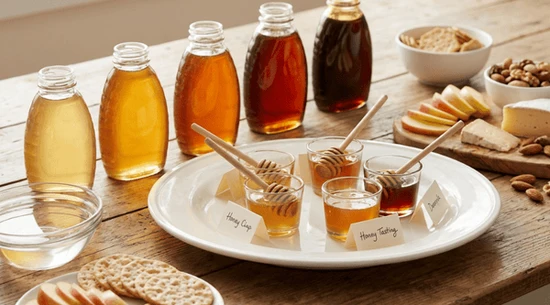
Exceptions include products mixed with additional ingredients, honey containing comb, honey contaminated with water, or preparations with specific storage instructions. In these cases, follow the label and the use-by period after opening.
How to liquefy crystallized honey without high heat
Place the body of the sealed jar in warm water, keeping the lid above the waterline. When the water cools, replace it with another batch of warm water and stir gently using a clean, dry utensil. Liquefy only the amount needed to avoid repeated heating and cooling cycles.
Do not use a microwave, boiling water, or heat the jar directly on the stove. Uneven heat distribution can affect the flavor and deform the packaging.
Five things to do when the weather turns cold
Previously, a jar of honey might have been moved back and forth between a cold window, the refrigerator, and a hot kitchen. Once the proper procedure is followed, the jar is kept in a stable cabinet, tightly sealed, and exposed only to a dry spoon.
Choose a dry, dark location with a relatively stable temperature.
Avoid sunlight, heat sources, damp floors, and cold drafts.
Keep the lid tightly closed after each use.
Use only clean, dry utensils to take out honey.
Check for unusual odors, foam, lid issues, and foreign matter before use.
This provides a simple bridge from uncertainty about a jar of honey changing state to proactive year-round storage habits. See the guide to distinguishing crystallized honey from fermented honey before continuing to use it. This food is not a medicine and is not intended to replace medical treatment.