3 questions to identify your needs when choosing Ngoc Linh ginseng
A box of ginseng may be promoted based on its growing region, age, extract content, and a host of compelling stories. However, if you do not know what you need, you can easily make a choice based on the packaging or pressure from promotions. The risk lies not only in the money spent but also in the possibility that the product may be unsuitable for your health, current medications, or lifestyle.
Before buying, keep three principles in mind: prioritize safety, request verifiable information, and assess suitability rather than trusting claims about benefits. The seven questions below follow the proper decision-making sequence: goals, health, product form, labeling, origin, testing, and budget. This is guidance for choosing health supplements and does not replace a doctor's diagnosis, treatment plan, or personalized advice.
Question 1: Define a specific, trackable goal for use
“Improving overall health” is an understandable desire, but it is too broad to evaluate. Turn it into a more specific goal, such as maintaining a supplementation routine for 30 days or tracking daytime alertness, sleep quality, or tolerability. The indicators should be simple and recordable, without turning short-term impressions into medical conclusions.
Next, compare your expectations with the information on the label. Under Circular 43/2014/TT-BYT, health supplements must display a warning that the product is not a medicine; therefore, advertisements promising immediate results, cures, or identical effects for everyone are signs that you should stop and investigate. If you want to learn more, read further explanations of the benefits, saponins, and limitations of the evidence regarding Ngoc Linh ginseng before deciding.
Question 2: Review your health, medications, and interaction risks
A commonly overlooked issue is that buyers ask only “how much should I take” without mentioning their medical conditions. When underlying conditions, prescription medications, and supplements are left out of the overall picture, the risks of interactions or adverse reactions cannot be fully assessed. The safe approach is to provide your doctor or pharmacist with four pieces of information: your current medical conditions; all medications and supplements you are taking; your history of allergies; and whether you are pregnant or breastfeeding.
Data on interactions involving ginseng species remain limited, while noting that insomnia is a common adverse effect of Asian ginseng. This cannot be directly extrapolated into an identical conclusion for Ngoc Linh ginseng, but it reinforces the precautionary principle: do not stop or change the dosage of prescribed medication on your own.
If you develop a rash, pronounced heart palpitations, persistent insomnia, or unusual symptoms, stop using the product and consult a healthcare professional. Difficulty breathing, swelling of the lips, or a rapidly progressing reaction requires emergency medical assistance; guidance from the UK National Health Service classifies difficulty breathing and swelling around the mouth or throat as signs that may be associated with a severe allergic reaction.
Question 3: Choose a form of ginseng that suits your usage habits
The product form determines how it is measured, stored, and used consistently. The following table helps screen five common options; specific information must still be based on each product's label.
Comparison of Ngoc Linh ginseng forms
Form | Dosage | Storage | Convenience | Who should use caution |
|---|---|---|---|---|
Fresh root | Must be weighed and divided | Keep refrigerated and protected from moisture | Low | People inexperienced in preparation |
Dried ginseng | Requires precise weighing | Keep sealed and dry | Moderate | People who have difficulty chewing or swallowing |
Extract | By spoonful or sachet | As directed on the label | Fairly high | People who need to control sugar intake |
Capsules | By capsule | Keep dry and away from heat | High | People who have difficulty swallowing capsules |
Ginseng-infused liquor | Difficult to standardize | Keep sealed and away from heat | Moderate | People who must avoid alcohol |
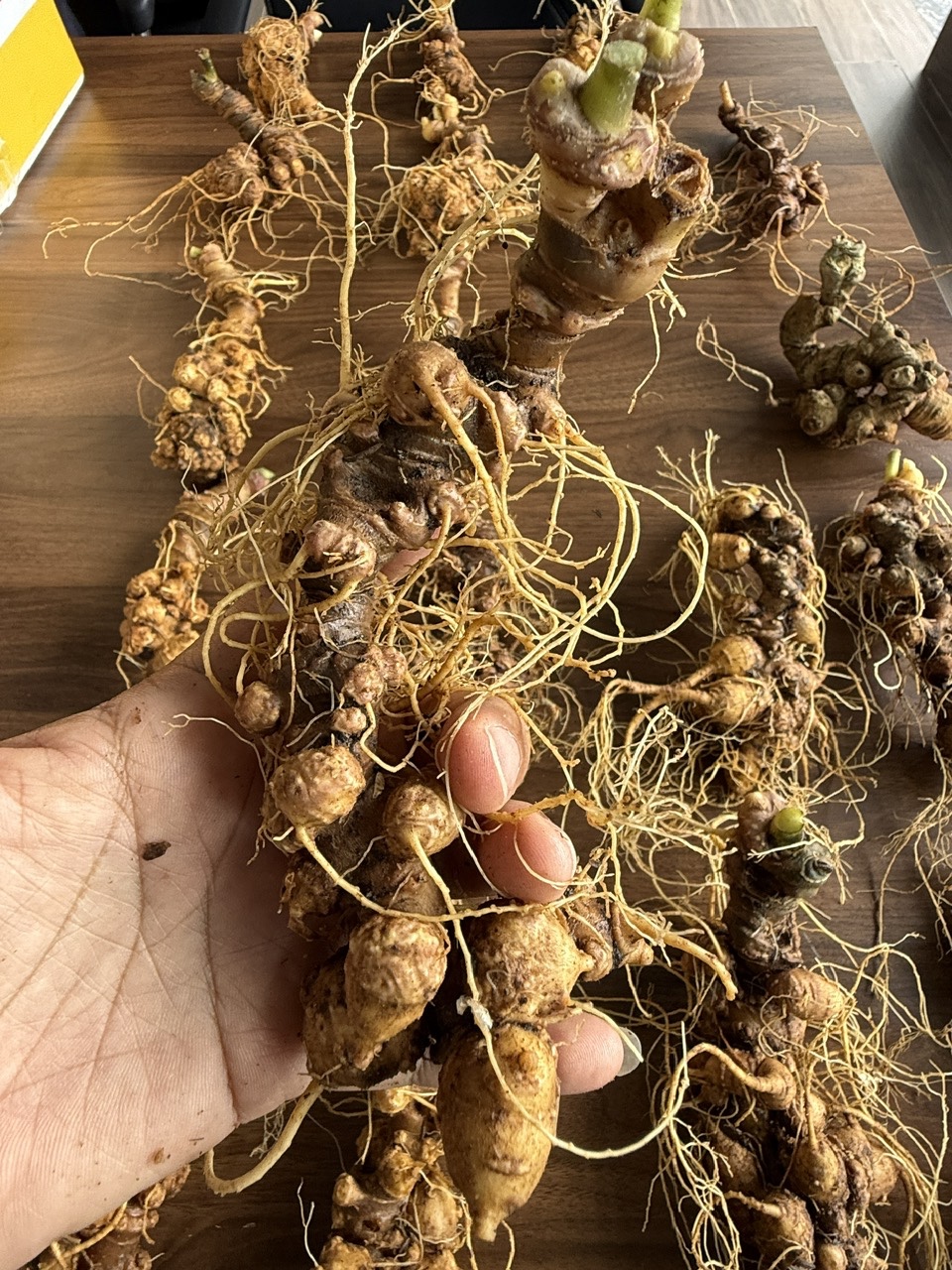
Fresh roots and dried ginseng allow you to inspect the raw material but require proper weighing, preparation, and storage. Extracts or capsules are more convenient for tracking serving sizes, but the figure to check is the actual amount of Ngoc Linh ginseng in each serving, not the total weight of the sachet or capsule.
Ginseng-infused liquor is unsuitable for people below the legal drinking age, pregnant women, drivers, people who need to avoid alcohol, or those taking medications that are incompatible with alcohol. There is no completely risk-free level of alcohol consumption for health; therefore, liquor should not be considered the default way to use ginseng.
3 questions to verify Ngoc Linh ginseng products
After identifying your needs, the focus must shift from the impression that “the box looks attractive and the seller sounds convincing” to data about the specific product. The root's appearance may suggest irregularities, but it is not enough to determine authenticity or quality. Buyers should photograph the label, lot number, and test report for their own comparison rather than merely listening to information recited by the seller.
Documentation helps reduce the risk of making a poor choice but does not guarantee a specific health outcome. This is the important distinction between verifying a product and predicting how an individual body will respond.
Question 4: Correctly read four lines of information on the label
The four groups of information to read are the product name and form; ingredients and amounts; serving size or recommended directions for use; and the responsible entity and declaration information required by regulations. Decree 15/2018/NĐ-CP stipulates that health supplements belong to the category requiring product declaration registration, so sellers must provide sufficiently clear information for verification.
Do not confuse a 700 mg capsule with 700 mg of Ngoc Linh ginseng. That weight may include the capsule shell and excipients. The word “extract” alone also does not reveal the saponin content if the label does not specify the parameter, unit, and basis of measurement. For combination formulas, separately check sweeteners, caffeine, alcohol, and other medicinal herbs because they may be unsuitable for your underlying conditions or current medications.
Question 5: Request four pieces of traceability evidence
The four points to check are the species name Panax vietnamensis, the growing region or source of raw materials, the responsible manufacturer or distributor, and a lot number or traceability code with verifiable data. A QR code that merely leads to an advertising page is not a complete traceability record; the data must be linkable to the product, shipment lot, and responsible entity.
For whole ginseng roots, compare the invoice, seal, documents of origin, and seller information side by side. Root scars, rhizomes, nodes, and internal color are useful only for initial screening because they can be mistaken or counterfeited. You may also consult guidance on identifying genuine and fake Ngoc Linh ginseng, but a definitive conclusion may sometimes require species identification or expert analysis.
Question 6: Cross-check the test report and saponin content
A stamped report alone is not enough. You need to cross-check the product name, sample form, lot number, sampling date, test date, parameters, and testing organization. A test report for an extract does not represent the finished capsules; similarly, results from a previous lot do not prove the quality of the lot currently being offered for sale.
When reading saponin results, check whether the unit is mg/g, percentage, or mg/serving; whether the sample matrix is dried raw material, extract, or finished product; and whether the parameter refers to total saponins or individual compounds. Two figures based on different sample matrices or methods cannot be compared to determine which is better. An in-depth article on Ngoc Linh ginseng saponins and how to read test reports will be useful if you regularly purchase high-value products.
Question 7: Balance costs when buying Ngoc Linh ginseng
Price is meaningful only when considered alongside the amount of raw material, number of servings, traceability evidence, and testing records. A simple formula is to divide the actual price paid by the total number of days of use stated on the label. A box costing VND 1,800,000 and lasting 30 days is equivalent to VND 60,000 per day; this figure is more practical than the listed price.
Time-limited promotions can easily create the feeling that you must buy immediately. That feeling leads buyers to overlook the label, lot number, and budget for the entire intended period of use. The solution is to pause, complete the checklist, and only then make payment.
Verifiable value is more important than the listed price
Compare costs based on the declared amount of ginseng per serving, the number of servings actually used, and the accompanying documentation; do not compare two boxes solely by their selling prices. Three warning signs are claims of curing disease, pressure to make a bank transfer because the product is “almost sold out,” and refusal to provide the label or the report for the correct lot.
An unusually low price is a reason to investigate further. Conversely, a high price, luxurious wooden box, or celebrity endorsement does not in itself prove the product's origin. The value worth paying for lies in a suitable product, transparent information, and a sustainable cost.
7-step checklist for completing your Ngoc Linh ginseng selection
Previously, you may have faced many options without clear comparison criteria. After completing the seven steps below, your decision will be based on clearer data. The bridge between those two situations is a short checklist:
The intended goal is specific and trackable.
Your health, medications, and risks have been reviewed.
The product form suits your usage habits.
The label fully states the ingredients, amounts, and responsible entity.
The source of the raw materials and the lot number are traceable.
The test report matches the exact product, sample form, and lot.
The daily cost is within your intended budget.
Postpone the purchase if it is unclear whether the product is suitable for your medical conditions or current medications, if the seller does not provide the necessary evidence, or if your decision is being influenced by advertising and time pressure. After purchasing, keep the invoice, photographs of the label, and the lot number, and record your reactions during use. If any unusual signs occur, stop using the product and contact an appropriate healthcare provider.
This product is not a medicine and is not intended to replace medicines used to treat disease.
Returning to the original appeal of Ngoc Linh ginseng: what is trustworthy does not lie in the longest sales pitch, but in seven questions answered with verifiable information. Save the checklist, consult a doctor or pharmacist if you have an underlying condition, and only make payment when all seven boxes have been checked.