
A 7-day Ngọc Linh ginseng kit helps minimize disruptions to a busy schedule
A morning of back-to-back meetings, an afternoon trip to the airport, and an evening hotel change are enough to disrupt your ginseng routine. By the time you remember, the product may still be at home, you may lack preparation tools, or you may no longer be sure whether you have taken it that day. Instead of preparing everything again each morning, you can spend about 15 minutes at the beginning of the week assembling a compact 7-day kit. This approach reduces minor decisions while letting you see the remaining servings at a glance.
One point should be clear: a 7-day kit is intended to improve convenience and adherence to label instructions. It does not guarantee any specific health outcome and must not be used as a substitute for medication. Before making a checklist, you should read the article explaining what Ngọc Linh ginseng does and the precautions to take before use so that you correctly understand the scope of health supplements.
It is also important not to confuse the names. Ngọc Linh ginseng is Panax vietnamensis, a species scientifically described by Hà Thị Dụng and Grushvitzky in 1985; meanwhile, the plant commonly called dây ginseng or đảng sâm in the Ngọc Linh region belongs to the genus Codonopsis, most commonly Codonopsis javanica according to the Vietnamese Pharmacopoeia V. The two medicinal materials are not interchangeable simply because both are associated with the Ngọc Linh place name. Your checklist should therefore begin with the species name, product form, serving size stated on the label, number of servings to bring, and storage conditions.
Three obstacles that can disrupt ginseng use when you are busy
The first obstacle is forgetting to take it. You leave a meeting at 11:55 a.m., just in time to move to the next room, and only in the afternoon notice that the ginseng container remains untouched. The second obstacle is missing equipment: you brought a powder sachet, but the temporary office has no clean cup, suitable water, or measuring spoon. Finally, schedule changes can disrupt every plan; a business trip announced two hours in advance may leave tomorrow’s serving in the kitchen cupboard.
These minor inconveniences can lead to inconsistent handling. Users may skip several days and then decide on their own to take extra, estimate servings by eye, or transfer the product into an unlabeled bag. More concerning is the habit of leaving the entire container in a car trunk all day: temperatures inside a closed, parked vehicle can rise above the outside temperature, making it unsuitable for products that must be stored in a cool, dry place. The issue is then no longer merely “remembering or forgetting,” but also following the storage instructions correctly.
A practical solution is to standardize a weekly-use kit: each serving has its own place, the necessary tools are included, and the original label or clear photographs of its information are kept. Once the kit has been assembled, you only need to check the compartment for the current day. If your schedule changes, the entire kit can travel with your work bag instead of requiring you to gather each item in a hurry.
Practical goals of a 7-day Ngọc Linh ginseng kit
A suitable kit must meet four criteria at the same time. First, it must contain enough servings for the planned period, calculated according to the instructions for that specific product. Second, the division method must make it clear whether a serving has been taken, such as seven weekday-labeled compartments or seven date-marked sachets. Third, the packaging must suit the workplace: sealed, compact, resistant to breakage, and not dependent on tools unavailable at the destination. Fourth, traceability information must be retained.
The final criterion is often overlooked when users discard the outer box to save space. Under Decree 43/2017/ND-CP, as amended by Decree 111/2021/ND-CP, product labels must display the applicable mandatory information, including the product name, responsible organization, origin, and other details relevant to the nature of the product. Therefore, if you divide servings, retain the original blister packs or individual sachets, or carry clear photographs of both sides of the label, the lot number, and the expiration date.
There is no single daily amount applicable to every form of Ngọc Linh ginseng. The content in capsules, powder, dried slices, and ready-to-drink products varies by formula; an amount intended for roots or slices cannot be used to infer the number of capsules or bottles. Follow the instructions for the specific product or the advice of a doctor or pharmacist, especially if you take medication or have a health condition requiring monitoring.
Choosing a form of Ngọc Linh ginseng to suit your work routine
The table below compares preparation steps and conditions of use; it is not a ranking of quality or effectiveness.
Product form | Steps | Equipment | Transport and storage | Suitable situation |
|---|---|---|---|---|
Capsules | Open and take as directed on the label | Drinking water | Compact; keep dry | Frequent travel |
Powder sachets | Tear open, mix, or use as directed on the label | Cup, water | Compact; protect from moisture | Office work, business trips |
Dried ginseng slices | Measure a serving and steep | Cup or flask | Requires an airtight container | Fixed break times |
Ready-to-drink products | Open and check the serving size | Usually none | Heavier; follow the label | When fewer preparation steps are needed |
Capsules and powder sachets are often convenient when you change locations frequently; dried slices are better suited to a fixed desk where a cup and preparation time are available. Ready-to-drink products reduce preparation, but you still need to check how many servings each bottle contains, the amount of added sugar, and whether refrigeration is required after opening.
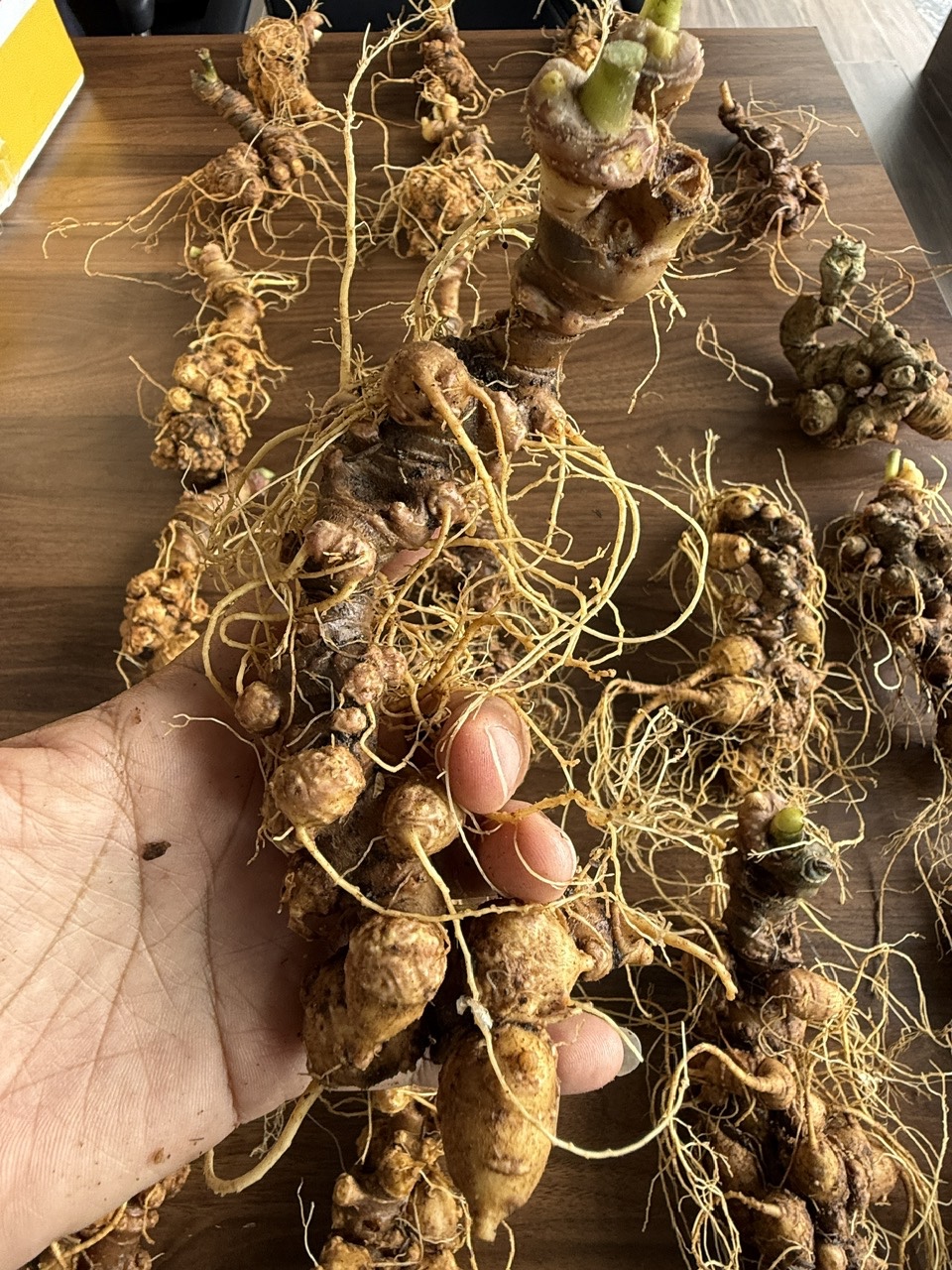
Finally, do not equate “ready to use upon opening” with higher quality. When purchasing, prioritize labels that clearly state the ingredients, content, manufacturer or responsible entity, lot number, expiration date, directions for use, and storage instructions. These details are what allow you to divide enough for seven days, check the product again when your schedule changes, and prevent convenience from turning into arbitrary use.
Preparing Ngọc Linh ginseng in 15 minutes for the workweek
On a morning with an early meeting, you open the cupboard, look for a spoon, reread the dosage, and only then realize that the product was left at home. The issue is not the few minutes of delay but inconsistent preparation: remembering one day and forgetting the next, taking the correct serving one day and estimating in a hurry another day. A preparation session of about 15 minutes at the beginning of the week can substantially reduce such extra steps.
The process should follow exactly three steps: read the label first, divide the daily servings next, and only then place the product somewhere easy to remember. You can spend about five minutes checking the information and packaging, five minutes arranging the seven days, and another five minutes finalizing the storage location and the kit to take to work. This approach does not alter the manufacturer’s directions for use; it merely moves minor decisions from peak hours to a more convenient time.
Prioritize keeping the product in its original packaging, especially when the packaging provides moisture or light protection or states specific storage requirements. If you need to use a smaller container, prepare only enough for a few days or one week and retain clear photographs of the important parts of the label. Before beginning, you can also consult the guide to identifying Ngọc Linh ginseng with a clear origin and checking label information, especially when the product is newly purchased, you have changed brands, or the packaging differs from the previous product.
Step 1: Read the label and determine the correct serving size
Do not begin by opening the container and dividing the doses. Place the product under adequate lighting and read, in order, its name, dosage form, ingredients, directions for use, warnings, expiration date, and storage conditions. Under Decree 43/2017/ND-CP on product labeling, as amended by Decree 111/2021/ND-CP, the label displays mandatory information that helps purchasers identify and use the product. For health supplements, Decree 15/2018/ND-CP also prescribes specialized labeling requirements; this information must therefore be your primary reference rather than word-of-mouth experience.
First, determine whether the product is a capsule, extract, ginseng slice, liquid, tea bag, or powder. Then record the amount per serving, number of times per day, recommended timing, and preparation method. For example, “one sachet per serving” is entirely different from “one measuring spoon”; “mix with 150 ml of water” also does not mean that you can pour it arbitrarily into a large bottle. If the label says to take it after a meal or prepare it at a specific temperature, follow that instruction exactly.
A common mistake must be avoided: applying the number of grams, capsules, or milliliters from one brand to another. Two products both called Ngọc Linh ginseng may still differ in the form of their ingredients, extract ratio, combined ingredients, and serving size. There is no basis for converting amounts based solely on appearance or price. If the label wording is difficult to understand, ask the entity responsible for the product or a qualified professional rather than interpreting it yourself.
Finally, inspect the expiration date, lot number, cap, seal, and product surface. The World Health Organization’s good storage practice guidelines emphasize monitoring packaging condition and signs of quality deterioration during storage. If the product shows obvious discoloration, an unusual odor, moisture-related clumping, leakage, or a broken seal, stop using it temporarily, retain the packaging, and contact the supplier for inspection.
Step 2: Divide the product by day
Once the information is clear, proceed to the seven compartments from Monday through Sunday. Place the organizer beside the original packaging and arrange each day according to the serving size stated on the label. If the instructions call for use twice daily, the organizer should have morning and afternoon compartments, or small sachets should be marked accordingly. Completing an entire row and then checking it again from the beginning is safer than handling the product while talking, because a single lapse in concentration can leave one compartment short and the next one overfilled.
With capsules or premeasured sachets, the process is relatively quick. With powder that is not packaged by serving, do not heap an “approximate” spoonful and treat it as the standard for the entire week. Use the supplied spoon exactly as specified by the manufacturer; if the instructions state an amount in grams but no measuring tool is included, use an appropriate scale or ask the supplier how to measure it. A kitchen teaspoon is not a consistent unit because spoon dimensions, powder compression, and powder density can all vary.
The dose organizer must be clean, dry, tightly closed, and free of odors from food or previous products. After washing it, add the ginseng only when the organizer is completely dry. In its food-safety and labeling principles, the Ministry of Health treats compliance with the product’s stated storage conditions as essential; therefore, a convenient organizer must not compromise the moisture protection, light protection, or temperature limits specified on the label.
This is where you need to stop and consider: not every product is suitable for repackaging. If the label requires storage in the original blister pack or bottle, specialized sealed packaging, or refrigeration, leave it unchanged. You can organize the schedule with a seven-day tracking sheet instead of transferring the product to another container. If you still need to carry a short-term supply, photograph the front, ingredients panel, directions, warnings, expiration date, and lot number. The images must be sharp enough to enlarge and read, not merely photographs that identify the box.
Step 3: Place the product somewhere easy to remember
Even a fully prepared organizer can easily be forgotten if it sits deep inside a cupboard. The solution is to link use of the product to an existing, stable habit. If you always fill a water bottle, prepare a lunch box, or place your computer in your bag each morning, position the kit near that area. When you see the water bottle, you will also see that day’s ginseng serving; remembering then relies on an existing cue instead of adding a separate task.
However, “easy to see” does not mean placing it in every convenient location. The product must remain out of children’s reach and away from direct sunlight, heat sources, damp areas, and locations that do not meet the conditions on the label. A sunny windowsill, hot car trunk, area beside the stove, or space near the sink is not suitable. If the office temperature changes significantly over the weekend, you should not leave the entire seven-day kit there either.
Two locations are usually enough for a flexible work schedule: one fixed location at home and one supply in your work bag. At home, the product can be kept in a dry cupboard near the preparation area, separate from confectionery. In your bag, carry only the day’s serving or a short-term supply in accordance with the storage requirements. Each evening, while putting away your lunch box or charging your devices, check the next day’s serving in less than a minute.
Conversely, scattering individual servings among a desk drawer, vehicle, handbag, relative’s home, and multiple coat pockets creates a more troublesome problem than forgetting: uncertainty about whether you have already taken a serving. To maintain control, use only two locations and mark the serving as completed immediately after use, either in a phone checklist or on the back of an abbreviated label. If your schedule changes suddenly, move one date-marked serving rather than taking an additional unmarked one. This keeps the seven-day schedule traceable despite unexpected meetings, overtime, or travel.
A 5-item Ngọc Linh ginseng work kit
Your work kit should contain everything needed to handle schedule changes without standing in the break room, reading a photograph of the label while estimating powder by eye. Five items should be kept together in a separate bag:
The day’s serving as determined from the label.
A dry, airtight container suitable for the storage conditions.
An abbreviated label containing information needed for quick reference.
A personal water bottle with an easily recognizable capacity.
A suitable storage bag to keep the items together.
This is more than a simple list of supplies. A premeasured serving means you do not need to carry a large container or divide the product in a hurry; an airtight container limits exposure to the external environment during transport; a personal water bottle helps you follow the preparation directions when the label specifies an amount of water. The storage bag provides a single controlled location, preventing ginseng sachets from becoming mixed with keys, cosmetics, food, or bottles that may leak.
The abbreviated label can be a small paper card or an offline note saved on your phone. At minimum, it should include the product’s full name, amount per serving, frequency of use, recommended timing, expiration date, and the telephone number of the entity to contact. This card is only a memory aid and does not replace the original label. If the product has warnings or special storage requirements, reproduce them verbatim rather than abbreviating them in a way that only you understand.
For business trips, bring the original packaging when its size permits. Otherwise, save a set of clear label photographs showing the ingredients, directions, warnings, lot number, expiration date, and temperature requirements. Images stored directly on the device remain available without an internet connection. Before leaving a hotel or changing transport, check the storage bag along with your tickets and documents; this small step helps the product kit follow your new schedule without requiring repackaging along the way.
If the journey is long, includes hot conditions, or the product requires refrigeration, do not assume that an ordinary bag is sufficient. Check the exact wording on the label and ask the supplier about an appropriate transportation method. Finally, place all five items beside your computer bag the night before. The next morning, you only need to pick up the checked kit instead of turning the few minutes before work into an uncontrolled search.
Storing Ngọc Linh ginseng and managing the 7-day plan
Even a complete seven-day kit can be disrupted if the product is left in a hot car trunk, reminders are not confirmed, or the previous day’s serving is taken again. Using Ngọc Linh ginseng while busy therefore requires three layers of control: storage conditions that follow the label, reminders that record each serving taken, and safety checks throughout the week. These three layers support but do not replace one another: a properly stored container may still lead to a duplicate serving, while a consistently maintained schedule cannot remedy a product that has absorbed moisture.

The original packaging should be treated as documentation accompanying the product, not as something to discard to save space. It contains the ingredients, recommended serving, lot number, expiration date, warnings, and storage conditions declared by the manufacturer. Checking these details takes only about a minute but prevents a convenient plan from turning into arbitrary use, especially if you take medication or use other supplements.
Properly storing Ngọc Linh ginseng at work
A suitable storage location is usually a cool, dry cupboard away from direct light and out of children’s reach; the specific temperature must follow the label of each product. Do not leave the container in a car or car trunk, even for only part of a day. Temperatures inside a closed vehicle can rise rapidly in sunlight. If your desk is beside a window, heater, or heat-emitting equipment, move the container to an interior cupboard.
With powders and capsules, a cap opened while you answer the phone can easily remain off for dozens of minutes. Remove only the required serving with clean, dry hands or equipment, then close the container immediately. Do not add a desiccant in direct contact with the product unless instructed by the manufacturer. If powder clumps, capsules change color, an unusual odor appears, or the seal is damaged, stop using the questionable portion and contact the entity responsible for the product for verification.
For products specifically labeled as requiring refrigeration, use a suitable insulated bag during transport and place the product in a refrigerator within the label’s specified temperature range as soon as possible. Do not place it arbitrarily in the refrigerator door if that location does not maintain the required temperature. If the cold chain is interrupted, do not continue using the product unless the manufacturer confirms that the duration and temperature deviation remained within acceptable limits.
Reminders to reduce missed and duplicate servings
A notification that merely sounds and then disappears does not create a control mechanism. Link the recommended time of use to a stable habit, such as placing your water bottle on the desk, and then set a reminder that requires you to mark the serving as “taken.” This confirmation lets you check later when meetings run into calls and your memory of the morning becomes uncertain.
If you miss a serving, do not independently double it, move it to the evening, or make it up the next day, as the total amount may exceed the label directions. A more cautious approach is to read the instructions for missed servings; if the label does not address them, ask a doctor, pharmacist, or the manufacturer’s professional support team. A colleague’s serving is not a valid reference because the dosage form, ingredients, and recommendations may differ.
A seven-day log only needs to record the time, actual amount, and tolerance. A line such as “08:10 – one serving as directed on the label – no abnormalities observed” is enough to trace the schedule. In accordance with label safety warnings and guidance from healthcare professionals, if an unusual reaction occurs, stop use and seek medical advice; for serious symptoms, obtain appropriate emergency care.
Three Ngọc Linh ginseng preparation mistakes to avoid
The first mistake is dividing powder or ginseng slices by eye. A full pinch on Monday and a smaller pinch on Tuesday may look similar but do not provide consistent servings. If the label specifies an amount in grams or another unit, use an appropriate, clean, and dry measuring tool. Manufacturer-premeasured products also reduce morning preparation; an ordinary eating spoon is not a substitute for a standardized measuring tool.
The second mistake is taking extra after a missed serving, which may cause the day’s total amount to exceed the directions. The third is transferring the entire product into an unlabeled bag or container: you immediately lose the full name, ingredients, lot number, expiration date, warnings, and traceability contact. If you need a compact supply, prepare only the day’s serving in a suitable container, retain the original packaging, and do not divide servings in advance when the label does not permit it.
For powder, ginseng slices, extracts, or capsules, you should also consult the guide to storing processed Ngọc Linh ginseng by product form. The same rules for airtightness, temperature, or time after opening cannot be applied to every form. The label information on the specific product you have must always take priority over general guidance.
Checklist for completing a 7-day ginseng plan
Before the beginning of the week, spend 15 minutes placing the product and related supplies on a table and confirm the following eight points:
It is the correct product and identifying information remains available.
The serving matches the label, with a measuring tool available if needed.
There is enough for seven days, without repackaging contrary to the instructions.
The container is dry, airtight, and shows no abnormalities.
The original packaging remains available for checking, comparison, and traceability.
Clean drinking water is available if required by the directions for use.
A reminder is set with an action for marking completion.
A storage plan is in place both on-site and during transport.
Then verify the origin, lot number, expiration date, and groups subject to warnings. The name “Ngọc Linh ginseng” or promotional claims about benefits are not enough to prove the ingredients, quality, or suitability. Rely on the label, verifiable declared information, and sales channels that provide clear traceability data. Expired products, products without labels, or products whose lot cannot be identified should not be included in the seven-day kit.
Finally, people with underlying conditions, those taking medication — especially medication for chronic diseases — and those who are pregnant or breastfeeding should consult a doctor or pharmacist before use. Ginseng may interact with certain medications and that safety data during pregnancy remain limited; because each product has different ingredients, provide photographs of the label, its full name, ingredients, and the intended amount for professional review. Fifteen minutes of preparation today will help you maintain a controlled process instead of correcting mistakes amid a demanding work schedule.
This product is not a medicine and is not intended to replace medicine.