Choosing a Ngoc Linh Ginseng Product for Your At-Home Ritual
Do you constantly neglect self-care because your schedule is too busy? With just a 5–10-minute ritual, you can create regular pauses throughout your day. The key is to choose the right product, follow the serving size on the label, and monitor your reactions to ensure safety.
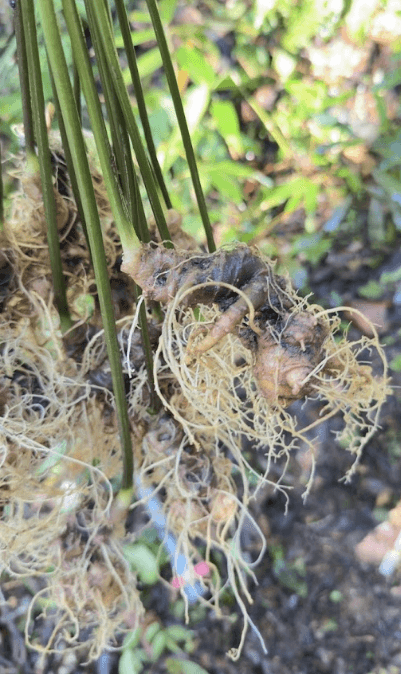
Ngoc Linh ginseng, scientifically known as Panax vietnamensis, has attracted interest because of its saponin content. Phytochemical analyses by Nguyễn Minh Đức and colleagues have identified numerous dammarane saponins in this species, including majonoside-R2. Nevertheless, findings from raw-material analyses should not be extrapolated into guaranteed effects for every commercial product. Actual content also depends on the plant part, the ginseng's age, growing region, processing method, serving size, and quality-control standards.
Therefore, consider Ngoc Linh ginseng products to be health supplements used to support healthy lifestyle habits; they cannot compensate for insufficient sleep, an unbalanced diet, or physical inactivity. Before purchasing, determine your intended purpose, ability to measure servings, and a convenient time of day for use.
Choosing a Product Form That Suits Your Lifestyle
Each formulation provides a different experience. People who work from home may use powder with a measuring tool, while frequent travelers may prefer capsules or lozenges. The table below compares preparation, ease of measurement, and points to check; it should not be used to convert serving sizes between different forms.
Comparison of Four Ngoc Linh Ginseng Product Forms
Product Form | How to Use | Measurement | Convenience | Notes |
|---|---|---|---|---|
Powder | Mix or use as directed on the label | Requires an accurate spoon/scale | Moderate | Protect from moisture |
Capsules | Take as directed on the label | By number of capsules | High | Check the content |
Lozenges | Dissolve in the mouth as directed | By number of lozenges | High | Check the sugar content |
Syrup or Honey | Measure as directed on the label | Requires a measuring tool | Moderate | Include it in your total sugar intake |
Before continuing, compare the product form you are using with the ingredients, content, and serving size stated on the label.
Powders and capsules have an advantage when serving sizes are clearly stated in grams, milligrams, or numbers of capsules. Lozenges are easy to carry, while syrups and ginseng infused in honey have a more palatable taste but must be included in your total daily sugar intake. Free sugars should be reduced to less than 10% of total energy intake; therefore, people managing their sugar intake should read both the ingredients and serving information. Do not independently substitute one spoonful of syrup for one capsule, as the amount of raw material and the standardization of active compounds may be entirely different.
Checking the Label Before Use
The label is the product's “operating manual.” Before opening the package, read the full name, ingredients, content per unit, recommended serving size, frequency of use, intended users, and warnings. Also check the product declaration registration number, responsible entity, lot number, manufacturing date, and expiration date. For products purchased online, promotional images cannot replace clear photographs of the label on the actual packaging.
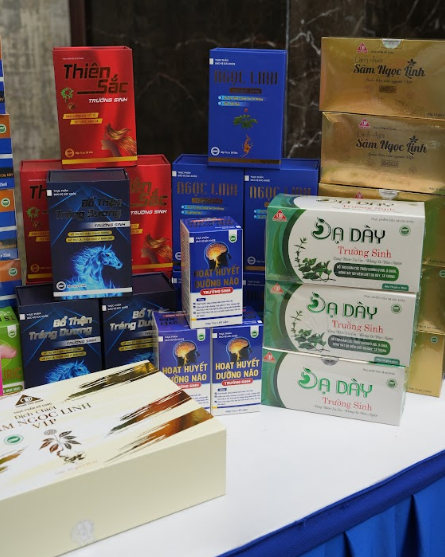
Information declared by the company must also be distinguished from verbal claims of rapid effectiveness. Article 27 of the Government's Decree No. 15/2018/ND-CP governs the registration and approval of advertising content for health supplements; advertising content must be consistent with the declared uses, include mandatory disclaimers, and must not mislead consumers into believing that the product is medicine. The total number of “saponin types” stated in a sales post also provides no information about serving size, purity, or clinical effectiveness. For a deeper understanding, you can read the article explaining Ngoc Linh ginseng saponins and the guide to reading health supplement labels in the same section.
Preparing a Self-Care Corner at Home
A small space on a kitchen shelf can significantly reduce the number of steps you need to remember. You need only three items: the measuring tool specified on the label, a clean cup or spoon, and a notebook or tracking app. An arbitrarily filled “tablespoon” is not a standard unit; capacities vary among spoons, and heaped and level measures of powder also yield different amounts.
Keep the product in its original packaging so that the directions, expiration date, and lot number always remain available. Store it in a dry place, protected from sunlight, heat, and moisture as directed; do not assume that every form must be refrigerated. Moisture inside the refrigerator may be unsuitable for some powders or tablets. In addition, keep the product out of children's reach and separate it from medicine containers with a similar appearance to reduce the risk of confusion.
Following a Morning Ngoc Linh Ginseng Ritual
Once you have selected the right product, the next goal is to turn its use into a short, clear sequence of steps. A 5–10-minute ritual can take place after breakfast or at another fixed time, provided that it complies with the label and professional advice. A familiar cue—such as placing your tracking notebook next to your glass of water—is often more helpful than relying on memory during a busy morning.
There is no single time of use that suits everyone. Food, formulation, current medications, and product-specific directions can all affect how it should be used. Taking ginseng should also be separated from the three-minute relaxation exercise: feeling comfortable while sitting quietly is not evidence of the product's effects.
Step 1: Check the Product Label
Review the serving size, frequency, whether it should be taken with or away from meals, and all warnings. Check whether you have already taken any supplements, drinks, or other products containing ginseng or similar ingredients that day. This takes less than a minute but helps prevent duplicate consumption.
Step 2: Take the Correct Amount as Directed
Take the correct number of capsules or measure the proper amount using a clean tool. If you missed the previous serving, do not double the next one on your own. If the label is unclear, the information on the package conflicts with the seller's advice, or the amount per serving cannot be determined, postpone use and consult a pharmacist, physician, or the entity responsible for the product.
Step 3: Take a Slow Three-Minute Break
After using the product as directed, sit quietly, relax your shoulders, and breathe naturally for three minutes. You can place your phone out of reach so that the break does not turn into a session of checking notifications. This is an independent relaxation activity, not a way to enhance the effects of ginseng.
Those three minutes should connect with a foundational habit: drinking water according to your needs, preparing a breakfast with fruits or vegetables and a source of protein, or scheduling physical activity. Adults should complete 150–300 minutes of moderate-intensity aerobic physical activity each week. This figure is a reminder that supplements are only a small part of the overall picture of healthcare.
How you feel during the day is also related to sleep duration, stress, caffeine, meals, and workload. Your journal should therefore fully reflect these factors.
Step 4: Record Specific Reactions
At the end of the ritual, write one line recording the time, product form, serving size, accompanying meal, and any medications or supplements taken. Add any notable experiences, such as subjective alertness, digestive discomfort, headaches, palpitations, or changes in sleep. Use specific descriptions, such as “it took about 40 minutes longer than usual to fall asleep,” rather than “the ginseng was too strong.”
A single observation does not prove a causal relationship. A journal merely helps reveal the sequence of events and provides information when professional consultation is needed. You can download or copy the seven-day health journal template from the related guide; it takes only about one minute each day to complete.
Using Ngoc Linh Ginseng Safely and Maintaining the Habit After 7 Days
Problems often arise when users become impatient and independently increase the amount in hopes of noticing more pronounced effects. When several factors are changed simultaneously, any discomfort becomes difficult to trace; adding multiple products makes the situation even more confusing. The solution is to maintain the serving size stated on the label, keep consistent records, and consult a professional before making adjustments.

Safety is always more important than feeling obligated to complete the ritual. You may pause it if unusual reactions occur or if the schedule is no longer suitable. The seven-day assessment is not a test intended to prove a health effect.
Avoiding Mistakes That Disrupt the Habit
The first mistake is using more than directed; the second is using it too late in relation to your daily schedule; the third is doubling the amount after a missed serving; the fourth is arbitrarily combining multiple health supplements; and the fifth is storing the product contrary to the directions. All five mistakes reduce your ability to monitor use consistently.
Using it late in the day may make it difficult to assess the cause of changes in sleep, but you should not conclude that ginseng always causes insomnia. Record the exact time and all sources of caffeine consumed during the day. In addition, reviewing the labels of every product helps identify overlapping ingredients such as ginseng, stimulants, sugar, or other active compounds.
Seek Professional Advice If You Belong to a Group Requiring Caution
Pregnant or breastfeeding women, children, people with underlying medical conditions, people preparing for surgery, and those taking medication should consult a physician or pharmacist before use. This precautionary recommendation is consistent with the U.S. National Center for Complementary and Integrative Health's principles for supplement use: herbal products may cause adverse effects or interact with medications.
When seeking advice, bring photographs of the label and ingredient panel, a list of medications and supplements you take, and your medical and allergy history. Stop using the product and seek medical assistance immediately if you experience difficulty breathing, swelling of the lips or face, a widespread rash, chest pain, or dizziness. Mild but persistent discomfort should also be discussed with a healthcare professional rather than addressed by arbitrarily reducing or increasing the amount.
Assessing Whether the Habit Is Sustainable After Seven Days
After seven days, decide based on three criteria: tolerability, meaning whether any unusual reactions or persistent discomfort have occurred; convenience, meaning whether the ritual fits your schedule and is easy to follow consistently; and cost, meaning whether the product suits your long-term budget. You can also consult the article on precautions when using Ngoc Linh ginseng at home and the guide to discussing medication interactions with a pharmacist.
The bridge between being “too busy to take care of yourself” and having an orderly morning does not require a complicated routine. Today, choose a fixed time, prepare a measuring tool, a clean cup, and a tracking notebook, then write your first journal entry. This product is not a medicine and is not intended to replace medicines used to treat disease.