
Which form of Ngoc Linh ginseng suits your lifestyle?
When choosing among ginseng slices that need to be steeped, packaged tea, concentrated extract, and pre-portioned essence, consumers can easily be swayed by prominent product names instead of checking the actual content and serving size. The right form depends not only on convenience but also on daily routines, the ability to read labels, storage conditions, and cost per use. This article compares the four forms based on these criteria.
Panax vietnamensis is the recognized scientific name for Ngoc Linh ginseng, a species in the genus Panax with a natural distribution in central Vietnam, according to data from Plants of the World Online, Royal Botanic Gardens, Kew. However, it is important to distinguish the origin of the medicinal ingredient from the finished product form: the name Ngoc Linh ginseng does not automatically prove a high content, and the ingredient’s origin alone is insufficient to infer benefits.
Phytochemical studies have found that Ngoc Linh ginseng contains numerous saponin compounds, but an analyzed composition does not mean every product or person will experience the same effects. The experience also depends on the plant part, age of the raw material, extraction process, amount per serving, and individual constitution. Therefore, the four forms below are compared by how close they are to the original ingredient, convenience, control over the amount used, and cost, rather than by ranking their benefits.
Ginseng slices preserve an experience close to the original root
Ginseng slices are usually thinly cut from the root or rhizome and used by holding them in the mouth or steeping them in water according to the supplier’s instructions. After opening the container, consumers can inspect the ingredient’s color, cut texture, and shape instead of seeing only a block of extract or a liquid. This form suits people who consider preparing a small pot of water part of the experience and want to adjust how they use it within the provided instructions.
In return, ginseng slices require time for weighing, steeping, and cleaning utensils. Slice size or bitterness does not indicate the exact amount of saponins; quantification must rely on testing records obtained using an appropriate method. Slices that absorb moisture may also soften, develop an unusual odor, or grow mold. A practical tip is to divide them into small packets, avoid repeatedly opening the entire container, and keep them away from the stove, windows, or cabinets exposed to steam. When assessing the ingredient, consult additional guidance on identification through root shape, ginseng bud scars, rhizomes, and traceability records instead of trusting a single sign.
Ginseng tea and extract balance ritual with convenience
Tea creates an easy-to-maintain pause during the day: tear open a packet, steep it in water at the temperature and for the duration stated on the label, and enjoy it as a beverage. However, the name “Ngoc Linh ginseng tea” does not mean the entire tea packet consists of ginseng. Its ingredients may include a tea base, herbs, sugar, or sweeteners. Anyone who needs to control the ingredients should look for the proportion or weight of Panax vietnamensis in each packet and clearly identify the plant part used.
Ginseng extract has already been concentrated, reducing preparation time and generally making it easy to mix with warm water. This feature saves time, but sensory characteristics cannot replace quantitative information and testing records. The number of uses, amount per use, and storage conditions must follow the label of each product; do not use the spoon or directions from one jar of extract for another.
Essence prioritizes precise portions and a fast-paced lifestyle
Essence packaged in ampoules, sachets, or portioned bottles offers a clear advantage on days involving travel: each unit is sealed, easy to carry, and convenient for tracking usage. This is an operational benefit, not evidence that essence always contains more Ngoc Linh ginseng than tea or extract.
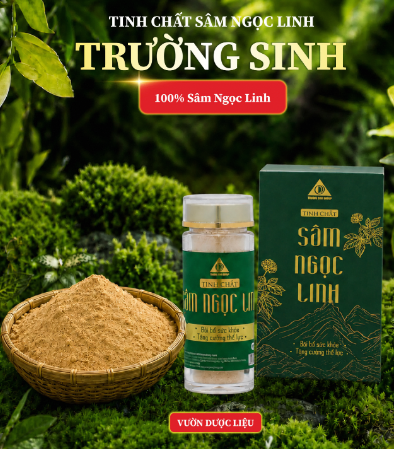
To read the label correctly, distinguish among three layers of information: the amount of liquid in each unit, the equivalent amount of raw material or extract, and the saponin specification if declared by the manufacturer. For example, “20 ml” describes only the volume of the liquid and cannot replace the amount of ginseng extract in the ampoule. If saponins are declared, check whether this refers to total saponins, a specific compound, or a result calculated for the entire bottle. Clearly defined servings, intact packaging, and specific instructions are more reliable than a prominently printed name on the front.
Comparing ginseng slices, tea, extract, and essence
No single form is equally suitable for every routine. The following table places the four options against the same set of criteria; their characteristics may vary according to each manufacturer’s formula and packaging.
Four forms of Ngoc Linh ginseng for different usage needs
Form | Closeness to original form | Preparation | Portion control | Portability | Storage and needs |
|---|---|---|---|---|---|
Ginseng slices | High | Longer | Difficult by sight | Low | Avoid moisture; for those who prefer preparing it themselves |
Tea | Moderate | A few minutes | By individual packet | Fairly high | Keep sealed; for those who prefer beverages |
Extract | Concentrated | Quick | Using a measuring utensil | Moderate | Keep lid closed; for use at home |
Essence | Formulated | Very quick | By serving unit | High | Follow the label; for frequent travelers |
A more convenient product is not necessarily more transparent. If the label does not state the amount of raw material, blending ratio, or equivalent extract content, pre-portioned units only help control the volume. Sensory signs, product names, and packaging appearance cannot replace test reports, declared information, and traceability records. These points should be checked before considering the price.
Three criteria for choosing a form based on your habits
The first criterion is how much time you actually have. Those who can spend ten minutes preparing it at home may consider ginseng slices or tea. Frequent business travelers may find pre-portioned products more convenient, provided the packaging is suitable for transport conditions. The second criterion is sustainability of use: the taste, preparation steps, and schedule must be simple enough to follow the instructions for the intended period, rather than buying an elaborate form and letting it expire.
The third criterion is the required level of control. If you are monitoring sugar intake or want to avoid a particular herb, prioritize products that quantify each ingredient rather than merely listing its name. The choice should therefore begin with the consumer’s habits and limitations, followed by the product form.
Product labels reveal the value of each serving
On the label, look for the scientific name Panax vietnamensis, plant part used, ingredient source, net weight, number of servings, and recommended daily amount. For extracts, the extraction ratio or equivalent amount of raw material provides a sounder basis for comparison. However, two declarations using different units should not be converted arbitrarily if the manufacturer does not provide the necessary data.
For blended formulas, a quantified ingredient list shows how much is Ngoc Linh ginseng and how much is honey, sugar, sweetener, or other herbs. Those seeking more detail should consult an explanation of Ngoc Linh ginseng saponins and how to read active-compound content on labels. Do not automatically assume that “total saponins” fully represents the amount of saponins derived from Ngoc Linh ginseng if the product contains several saponin-rich medicinal ingredients.
Cost per use reflects the practical choice
The basic calculation is to divide the selling price by the total number of servings stated in the instructions. Then compare the amount of ginseng or equivalent extract in each serving. For example, a box of 30 ampoules used 30 times should be compared with the actual number of uses from a jar of extract, rather than directly comparing the volume of one ampoule with the weight of the entire jar.
Cost per serving still does not represent the total cost of ownership. A jar of extract that requires refrigeration may be inconvenient during travel; frequently opened ginseng slices may absorb moisture; and a large bottle may be left unfinished if its shelf life after opening is short. A product with a low purchase price that can only be half consumed before its quality deteriorates may cost more than a suitably portioned option.
Use Ngoc Linh ginseng safely in 5 steps
A common issue is choosing a product based on word of mouth and then adding it to an existing regimen without reviewing medications or other supplements. This may result in duplicate ingredients, use by unsuitable individuals, or spending money on a product with insufficient documentation. A practical solution is a five-step process to follow before and during use.
Identify your intended support goal, health condition, allergy history, and current medications.
Verify the origin, responsible entity, and product declaration records.
Read the ingredients, serving size, amount to use, and warnings on the label.
Follow the instructions, do not increase the amount on your own, and record any reactions.
Stop using the product and consult a healthcare professional if unusual symptoms occur.
Under the regulations on advertising health supplements in Decree No. 15/2018/ND-CP, advertising content must not mislead consumers into believing that a product is a medicine and must include the mandatory warning. Therefore, do not use Ngoc Linh ginseng as a substitute for a doctor-prescribed treatment regimen, and do not expect faster effects by increasing the amount yourself.
Origin and product declaration records must be checked
Valid packaging should display the name and address of the responsible entity, lot number, manufacturing date, expiration date, storage conditions, and security seal. Prioritize official verification channels, keep the receipt, and photograph the lot number before discarding the box. For health supplements, check the product declaration registration number and the mandatory warning; personal testimonials are not evidence of testing.
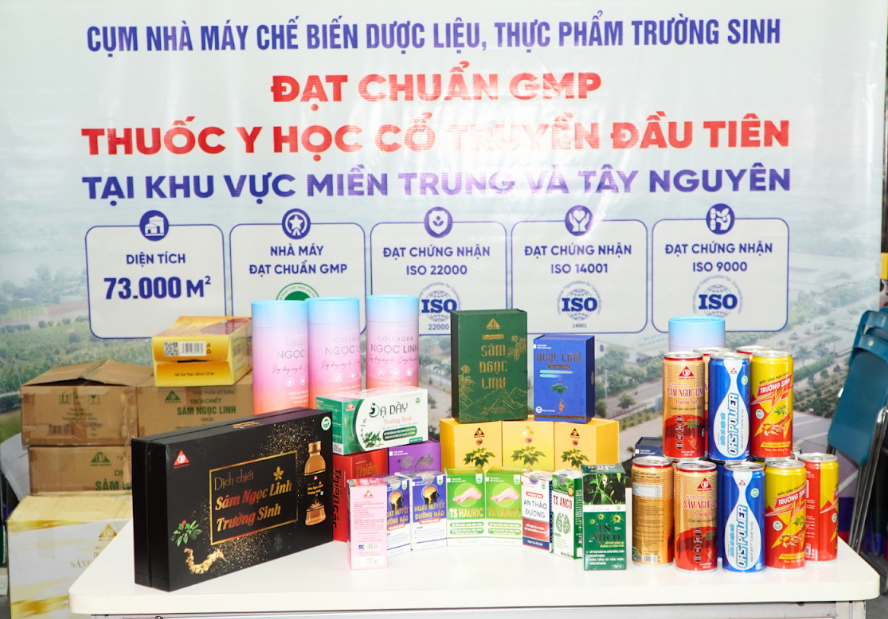
In addition, a QR code is only useful when it leads to verifiable data, not a general promotional page. You may also consult guidance on checking traceability codes and Ngoc Linh ginseng product declaration records to learn which information fields must match.
Groups requiring caution should seek professional advice first
Pregnant or breastfeeding women, children, people with underlying medical conditions, those preparing for surgery, and people taking prescription medicines should consult a doctor or pharmacist before use. Asian ginseng, or Panax ginseng, may interact with medications and that data on the safety of long-term use remain limited. This does not constitute evidence establishing dosage or long-term safety for Ngoc Linh ginseng (Panax vietnamensis).
If you are taking medication or combining several supplements, bring a complete list of the products to a doctor or pharmacist for review before use. If a rash, digestive discomfort, insomnia, or unusual symptoms occur, stop using the product and contact a healthcare professional. Difficulty breathing, swollen lips, or dizziness requires emergency medical attention.
Proper storage preserves the quality of each ginseng form
Ginseng slices must be protected from moisture, heat, and light; tea bags should be tightly resealed after opening. Extract and essence must be stored at the temperature specified on the label, especially products that require refrigeration. Do not use products if the packaging is swollen, leaking, unsealed, has an unusual odor or mold, or has expired; do not transfer them into unlabeled containers either.
Write the opening date and usage schedule directly on the package. The right form of Ngoc Linh ginseng is one that balances the content per serving, convenience, sustainability of use, product documentation, and storage conditions, rather than merely making an impression through its name or appearance.
Take the label of the product you are considering and check these four items in order: serving size, Ngoc Linh ginseng content or equivalent extract content, product declaration records, and storage instructions. If any information remains unclear or you are taking medication, bring the label to a doctor or pharmacist for advice before use.
This food is not a medicine and is not intended to replace medicine.