How Are Lai Chau Ginseng and Ngoc Linh Ginseng Similar and Different?
Two ginseng roots placed side by side may both have multi-segmented rhizomes, a yellowish-brown color, and a slightly bitter aroma, yet they may be presented under two different names and at very different prices. If buyers rely solely on photos or the seller’s claims about the age of the roots, they can easily pay for a raw material source that does not meet their expectations. Notably, mislabeling not only affects commercial value but also undermines traceability and quality control.
Reliable identification requires examining taxonomy, sourcing regions, and chemical and genetic data. Lai Chau ginseng and Ngoc Linh ginseng belong to two closely related taxonomic groups within the species Panax vietnamensis, but they are not identical products. Conversely, taxonomic differences alone are not enough to determine which type is more suitable without considering the specific batch, processing form, and intended use.
Comparison of key characteristics
Criterion | Ngoc Linh Ginseng | Lai Chau Ginseng | Verification method |
|---|---|---|---|
Scientific name | Panax vietnamensis var. vietnamensis | Panax vietnamensis var. fuscidiscus | Taxonomic records |
Typical distribution | Associated with Kon Tum and Quang Nam | Associated with Muong Te and Sin Ho | Cultivation-area records |
Saponin markers | Certain chemical markers may help distinguish it | Certain chemical markers may help distinguish it | Chemical analysis |
Morphology | Many similar features | Many similar features | Whole fresh plant |
Advanced verification | ITS-rDNA, metabolites | ITS-rDNA, metabolites | Laboratory |
Commercial recognition | More widely recognized | Still being established | Does not replace traceability |
The table above shows that a trade name is only a starting point. A label stating “mountain ginseng,” “Vietnamese ginseng,” or even the correct regional name does not prove which taxonomic group the raw material belongs to. To understand why, it is first necessary to examine the taxonomic relationship between these two ginseng sources.
Two Closely Related Taxonomic Groups Within the Species Panax vietnamensis
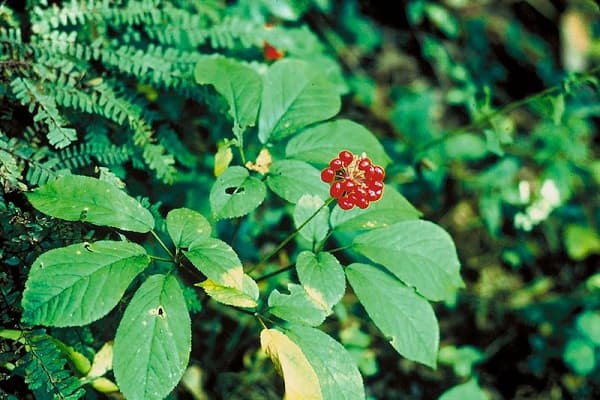
Ngoc Linh ginseng has the scientific name Panax vietnamensis var. vietnamensis, while Lai Chau ginseng is Panax vietnamensis var. fuscidiscus. In this nomenclature, Panax is the genus, vietnamensis denotes the species, and the part following “var.” indicates an infraspecific taxonomic rank. Writing the full name helps distinguish two closely related groups with their own characteristics.
Both belong to the genus Panax, are adapted to high-altitude environments, and share many similarities in their rhizomes, leaves, and chemical composition. Consequently, ordinary buyers may find it difficult to identify them with certainty when holding only a cleaned root. It is incorrect to say that the two types are entirely unrelated; however, it is also inaccurate to assume that belonging to the same species means having the same geographic origin and active-compound profile.
Distribution Areas Associated With Two Vietnamese Ginseng Sources
Ngoc Linh ginseng is commonly associated with the Ngoc Linh mountain region in Kon Tum and Quang Nam. Lai Chau ginseng is commonly recorded in Muong Te and Sin Ho, Lai Chau Province. This is important traceability information because ecological conditions, propagation stock, and cultivation practices may help create a distinct profile for each raw material source.
It is important to distinguish among the place of natural discovery, propagation location, actual cultivation area, and geographical indication coverage. Both ginseng sources may be studied or propagated outside their original distribution areas; the place of sale is also not necessarily the place of cultivation.
Trade Names Do Not Replace Traceability Records
Names such as “Vietnamese ginseng,” “black notoginseng,” or “red notoginseng” are often used inconsistently. In some cases, these are local names, trade names, or names based on the color of the raw material rather than scientific nomenclature. Treating these names as equivalent may cause buyers to mistake the species, plant part, or form of raw material.
When reading a label, buyers should check, in order, the full scientific name, plant part used, sourcing region, processing form, and responsible entity. Only then should they consider the ginseng’s age, specifications, and price. Sample identity and testing evidence should take priority over claims about benefits or experience-based assessments of rhizome segments.
Saponin and Genetic Markers Help Distinguish Vietnamese Ginseng
Metabolite analysis combined with ITS-rDNA sequencing can help compare chemical profiles and taxonomic relationships among sample groups. However, identification capability also depends on the sample set, analytical method, reference data, and quality of the actual samples.
Certain saponin markers may help distinguish the two sample groups within an appropriate analytical scope. These are identification signals; they do not represent total saponin content and should not be regarded as definitive markers applicable to every ginseng sample.
Three layers of evidence serve three different roles. Morphology helps screen fresh plants; ITS-rDNA can support the assessment of taxonomic relationships; and metabolite profiles are useful when the raw material is no longer intact. Chemical differences are valuable for identification, but they must not be extrapolated into claims that one type provides better health support for everyone.
Chemical Markers in the Ngoc Linh Ginseng Group
Certain saponins may contribute to the chemical profile of the Ngoc Linh ginseng group in analyzed sample sets. Their identification value lies in comprehensively evaluating multiple signals and the relationships among them rather than relying on a single compound.
Buyers cannot accurately identify these markers by the color of the root’s interior, aroma, bitterness, or a tingling sensation on the tongue. Turning identification data into claims about benefits also requires appropriate human evidence and content authorized for publication.
Chemical Markers in the Lai Chau Ginseng Group
Certain chemical markers may also help identify the Lai Chau ginseng group when analyzed under suitable conditions and with an appropriate sample set. Results should be evaluated as part of a comprehensive profile rather than presented as a fixed standard for every batch.
However, a single marker is not sufficient to draw a conclusion. Content may be affected by plant age, the plant part sampled, cultivation conditions, harvest time, and processing. Therefore, the question “which type offers greater benefits?” cannot be answered based solely on a saponin profile; suitability also depends on the actual product and the user.
Morphology, ITS-rDNA, and Metabolites Have Distinct Roles
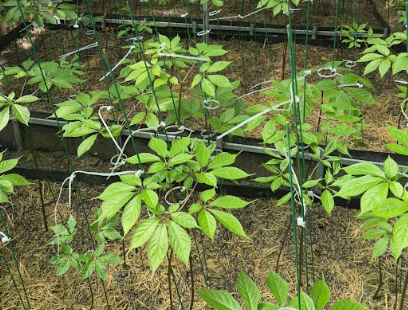
Leaves, stems, flower stalks, and fruits provide initial indicators when the plant is fresh and intact. Meanwhile, the roots and rhizomes of the two groups share many similarities. Morphological identification must therefore be conducted under suitable conditions and combined with traceability records.
Sequencing the ITS-rDNA region can support assessment of a sample’s taxonomic relationship. Metabolite analysis is useful when ginseng has been sliced, dried, powdered, or processed so that its morphology is no longer visible. Both techniques require a laboratory, suitable comparison methods, and appropriate reference samples; results should not be applied categorically to every batch without corresponding data.
5 Steps to Choosing the Right Lai Chau or Ngoc Linh Ginseng
Confusing product names are the first problem; high transaction values make the consequences of buying the wrong product even more significant. Buyers may receive a genuine ginseng root from the wrong taxonomic group, the correct group from the wrong cultivation area, or a correctly labeled product accompanied by documents from another batch. The practical solution is to move from “identifying ginseng by looking at the root” to a verifiable inspection process.
Verify identity: request the full scientific name and the plant part used as raw material.
Confirm origin: review the cultivation area, production facility, and geographical indication information, if available.
Track the batch: check the batch number, production date, packaging date, and the raw material’s journey through the supply chain.
Review the test report: ensure it matches the batch and sample name and includes criteria appropriate for the intended identification purpose.
Verify the seller: request an invoice, a return policy, and a clearly defined complaint-handling channel.
Payment should only be made when the information on the label, invoice, test report, and sales consultation is consistent. A high price cannot compensate for a missing link in traceability.
Check the Cultivation Area and Geographical Indication Before the Price
Ngoc Linh ginseng enjoys greater commercial awareness and clearer geographical recognition, while Lai Chau ginseng is still developing an identity associated with Muong Te and Sin Ho. Nevertheless, geographical indication information must be checked against the scope of protection and does not automatically prove root age, saponin content, or the quality of an individual batch.
When comparing prices, ask the seller to explain the difference based on propagation stock, cultivation area, harvest age, actual weight, whether the product is fresh or dried, and the accompanying documents. One kilogram of fresh ginseng cannot be compared directly with one kilogram of dried slices or concentrated extract. A well-known name may influence the price, but it should not be the sole criterion.
Batch Numbers, Test Reports, and Documents Must Be Cross-Checkable
The batch number on the packaging should match the test report and invoice. Buyers should also cross-check the sampling date, sample name, plant part, sample-submitting entity, and tested criteria. A microbiological or heavy-metal test report only reflects the safety criteria tested; it does not independently verify the taxonomic group. For ginseng slices, powder, extracts, or capsules, chemical or genetic identification evidence must clearly state the method and correspond to the correct batch.
Intended Use Determines the Choice of Ginseng
Before choosing, determine whether the purchase is a botanical specimen for a collection, a traceable raw material, or a processed product for use. Then consider its identity, dosage form, traceability, directions for use, and budget. People who are pregnant, breastfeeding, taking medication, or being monitored for a medical condition should consult a doctor or pharmacist before using products containing ginseng.
At first, two similar-looking ginseng roots may lead buyers to base their decision on the seller’s claims and the price. After completing the verification process, buyers can take control of the decision: knowing what the sample is, where it came from, and which documents verify it. The bridge between these two situations is a final purchase checklist consisting of the correct scientific name, a clearly stated sourcing region, a matching batch number, appropriate testing, a complete invoice, and a responsible seller. Before paying, immediately cross-check these six details on the label, invoice, and test report for the correct batch.
This product is not a medicine and is not intended to replace medical treatment.