Decoding Its Origin: Is Sâm Ngọc Linh an Immutable “Exclusive Treasure” of Vietnam?
Have you ever wondered whether Sâm Ngọc Linh (scientific name: Panax vietnamensis) truly grows only in Vietnam, or whether it has been secretly propagated in countries with advanced medicinal herb industries? The direct and proud answer is: Sâm Ngọc Linh is an endemic species that grows naturally and develops its full medicinal properties exclusively in Vietnam. No other laboratory or forest anywhere in the world can cultivate this ginseng with its original quality intact.
Traveling back in time to the spring of 1973, amid the majestic Trường Sơn mountains shrouded in mist and scarred by warfare, a Region 5 Civilian Medical Service team led by pharmacist Đào Kim Long embarked on a historic journey. Their mission was to find valuable medicinal resources for the soldiers. There, in the Ngọc Linh mountain region, they discovered a magnificent population of wild ginseng. This event not only marked the discovery of a new plant species but also awakened an intense sense of national pride. From a plant hidden beneath layers of ancient humus, Sâm Ngọc Linh emerged into the light and astonished the international academic community.
But wait—the value of this ginseng did not become known only in 1973. Before it was recognized by the Ministry of Health and the world as Vietnam’s “National Treasure,” this plant already had a profound cultural legacy. For generations, the Xơ Đăng ethnic people living on Ngọc Linh Peak had preserved it as a secret traditional “hidden medicinal plant.” They used its roots and leaves to aid recovery after long journeys through the forest, stop bleeding, and help relieve internal pain. It was the protection afforded by indigenous culture that kept this precious genetic resource intact for centuries.
Where Does Sâm Ngọc Linh Grow Geographically?
The extraordinary value of Sâm Ngọc Linh stems first and foremost from its extremely limited geographical distribution. Unlike agricultural crops that can be cultivated on a large scale, Sâm Ngọc Linh chooses only one place to take root: the sacred Ngọc Linh mountain range. This region extends across two provinces, specifically Tu Mơ Rông District in Kon Tum Province and Nam Trà My District in Quảng Nam Province. Any attempt to move the ginseng outside these coordinates severely reduces the concentration of medicinal compounds in its roots.
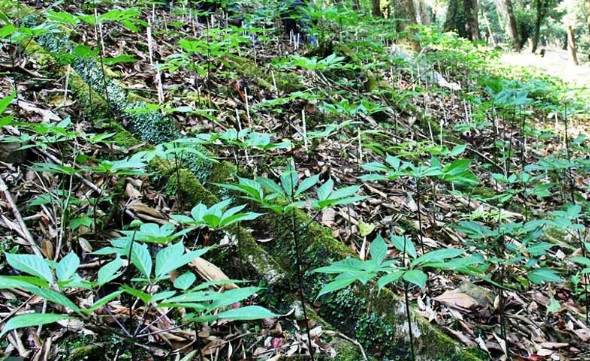
To survive, flourish, and produce its invaluable medicinal compounds, this ginseng requires exceptionally stringent growing conditions:
Ideal elevation: It grows only at elevations ranging from 1,200 to 2,100 meters above sea level. At these heights, mist blankets the area almost year-round, creating an ethereal atmospheric layer. The light reaching the ginseng canopy consists only of extremely faint, scattered rays, yet this is perfect for the slow photosynthesis that takes place beneath the forest canopy.
Organic humus soil: Sâm Ngọc Linh grows only in yellowish-red soil formed from granite and covered by a thick layer of natural organic humus. This humus is the product of thousands of years of decomposed fallen leaves and contains an immense supply of trace minerals that allows the roots to accumulate nutrients year after year. If you have explored the feature A Journey to Discover the Sâm Ngọc Linh Capital in Nam Trà My, you will have seen how rigorously local people protect every centimeter of forest soil here.
Temperature and microclimate: The ginseng requires a very large difference between daytime and nighttime temperatures to stimulate its biological defense mechanisms—the key factor behind its medicinal properties—yet the annual average temperature must remain between 14 and 18 degrees Celsius. At the same time, both air and soil humidity must consistently stay above 85%.
Why Can Sâm Ngọc Linh Not Be Grown in Any Other Country?
At this point, a very logical question often arises: “If Sâm Ngọc Linh is so valuable, why do countries with world-leading agricultural technology, such as Japan and South Korea, not bring the seeds home and grow them in smart greenhouses?” In fact, attempts have been made to transplant this precious ginseng beyond Vietnam’s borders, but they have all failed or produced “empty” roots—ones that have the right appearance but lack medicinal properties.
The scientific secret behind this exclusivity lies in an exceptionally complex microbial symbiosis. According to botanists, Sâm Ngọc Linh cannot synthesize all its nutrients by itself. It depends on a distinctive microbial ecosystem found only beneath the primary forest canopy of the Trường Sơn range. These indigenous microorganisms interact with the roots and help them transform humus into valuable Saponin compounds. Even the most advanced machinery in overseas laboratories or greenhouses cannot replicate or simulate this complex microbial ecosystem.
Furthermore, the inability to precisely reproduce the stringent microclimatic conditions of temperature and humidity described above creates another barrier to every attempt at propagation abroad. Even a slight rise in temperature or drop in humidity below natural standards can cause the roots to stop developing or rot. This demanding and selective nature has earned Vietnamese ginseng its status as a “one-of-a-kind” treasure.
Exclusive Not Only in Location: Sâm Ngọc Linh Possesses a World-Class, “One-of-a-Kind” Composition
Harsh geography is not a punishment imposed by nature; it is actually the perfect “forge.” The struggle for survival under distinctive climatic and soil conditions has produced a chemical composition that no other ginseng in the world can match. Sâm Ngọc Linh is not famous because of enormous media campaigns; it has won over the global medical community through empirical data.
To assess the value of a type of ginseng, scientists examine its total Saponin content—the primary active compounds responsible for ginseng’s benefits. The total Saponin content in Sâm Ngọc Linh ranges from 10.8% to 18%. This is two to three times higher than that of the most renowned ginseng varieties currently on the market. This explains why Sâm Ngọc Linh consistently ranks among the world’s most expensive ginseng varieties; its price accurately reflects its genuine value and is by no means the result of hype or speculation.
The scientifically grounded valuation of Sâm Ngọc Linh has completely transformed the global medicinal herb landscape. Vietnamese ginseng has risen to affirm its status, inspiring health-conscious individuals to invest in acquiring the essence of the Trường Sơn mountains.
A Record 52 Types of Saponins: Fierce Competition and Superiority over Korean Ginseng
Let us compare Sâm Ngọc Linh with Korean ginseng (Panax ginseng), the most commercially successful ginseng in history. Phytochemical analysis shows that Korean ginseng contains approximately 26 types of Saponins. In contrast, in-depth studies by the National Institute of Medicinal Materials have confirmed that Sâm Ngọc Linh contains as many as 52 different types of Saponins. This represents an enormous difference in the diversity of medicinal compounds.
Interestingly, among these 52 types of Saponins, 26 are known compounds commonly found in Korean and American ginseng, while as many as 26 have entirely novel structures. These new compounds have never been documented in any scientific literature on other ginseng species worldwide. What does this diversity mean?
“In pharmacology, Saponins are the most authoritative measure of ginseng’s value. The more types of Saponins a ginseng possesses—and the higher their concentrations—the more comprehensive and powerful its ability to support cellular repair and protect multiple organs throughout the body.”
Put simply, if each type of Saponin is considered a “warrior” tasked with protecting a particular organ in the body, then Sâm Ngọc Linh possesses an army that is twice as large and elite. For a clearer perspective, many experts recommend that consumers consult the Detailed Comparison of the Nutritional Content of Sâm Ngọc Linh and Korean Ginseng to understand why the world is so eager to obtain this endemic Vietnamese ginseng.
Majonoside-R2 (MR2), the Heart of the World’s Most Expensive Ginseng Root
It would be a major omission to discuss Sâm Ngọc Linh without mentioning Majonoside-R2, commonly abbreviated as MR2. This compound is the “soul” of the ginseng and the strongest foundation for its title as a National Treasure. MR2 accounts for nearly 50% of the total Saponin content in Sâm Ngọc Linh. The overwhelming presence of MR2 creates an absolute divide in pharmacological benefits between Vietnamese ginseng and every other variety in the world.
MR2 has a remarkable ability to help protect healthy cells. Experimental reports indicate that MR2 helps inhibit the growth of tumor cells while also helping reduce pain and side effects in patients undergoing chemotherapy and radiotherapy. In addition, MR2 has been shown to act as an extremely effective regulator of the central nervous system, helping reduce psychological stress and combat chronic fatigue.
And this is the most important point: MR2 is virtually absent—or present only in extremely small, negligible amounts—in Korean, American, and North Korean ginseng. Its enormous MR2 content is Sâm Ngọc Linh’s exclusive hallmark, elevating it to the pinnacle of medicinal plant biology.
Health Benefits of Authentic Forest-Grown Sâm Ngọc Linh
Thanks to its “one-of-a-kind” composition, authentic natural Sâm Ngọc Linh provides practical health benefits recognized by both traditional and modern medicine. Its most significant effects include:
Supports liver protection and detoxification: Thanks to its rich array of Saponins, Sâm Ngọc Linh actively supports the recovery and regeneration of liver cells. It helps enhance the liver’s ability to eliminate toxins, making it particularly beneficial for people who regularly consume alcohol or work in hazardous environments in Vietnam. The active compounds in the ginseng help reduce metabolic pressure on liver cell membranes and protect the liver against damage from free radicals.
Helps stimulate the natural immune system: Experts highly value Sâm Ngọc Linh for its ability to help increase red and white blood cell counts. For people recovering from illness, post-surgical patients, or older adults with weakened health, using the appropriate dosage may support a noticeable restoration of vitality within just two to four weeks. The body becomes more resilient, while its ability to withstand common infectious diseases also improves.
Supports antioxidant defenses and sexual health: In addition to Saponins, Sâm Ngọc Linh is a treasure trove containing as many as 17 essential amino acids and 20 diverse trace minerals, including iron, zinc, and potassium. This combination provides powerful antioxidant support, helping protect cells against premature aging. Moreover, these nutrients help regulate hormones and naturally and sustainably support sexual health in both men and women.
The Threat of “Foreign Ginseng” and How to Incorporate Vietnamese Ginseng into Your Healthcare Routine
We have just explored the unparalleled value of Sâm Ngọc Linh. Yet the brighter the light, the deeper the accompanying shadow. Its natural scarcity and immense economic value have made Sâm Ngọc Linh a lucrative target for profiteers. Today, the market is flooded with thousands of counterfeit, inferior, and untraceable ginseng products masquerading as the “National Treasure.”
The harm suffered by consumers extends beyond losing tens or even hundreds of millions of đồng in hard-earned money on counterfeit roots. More frighteningly, consuming chemically treated “foreign ginseng” directly introduces toxins into the body. Instead of improving health, users may expose themselves to an increased risk of liver failure, kidney failure, and severe metabolic disorders. This is an extremely troubling reality.
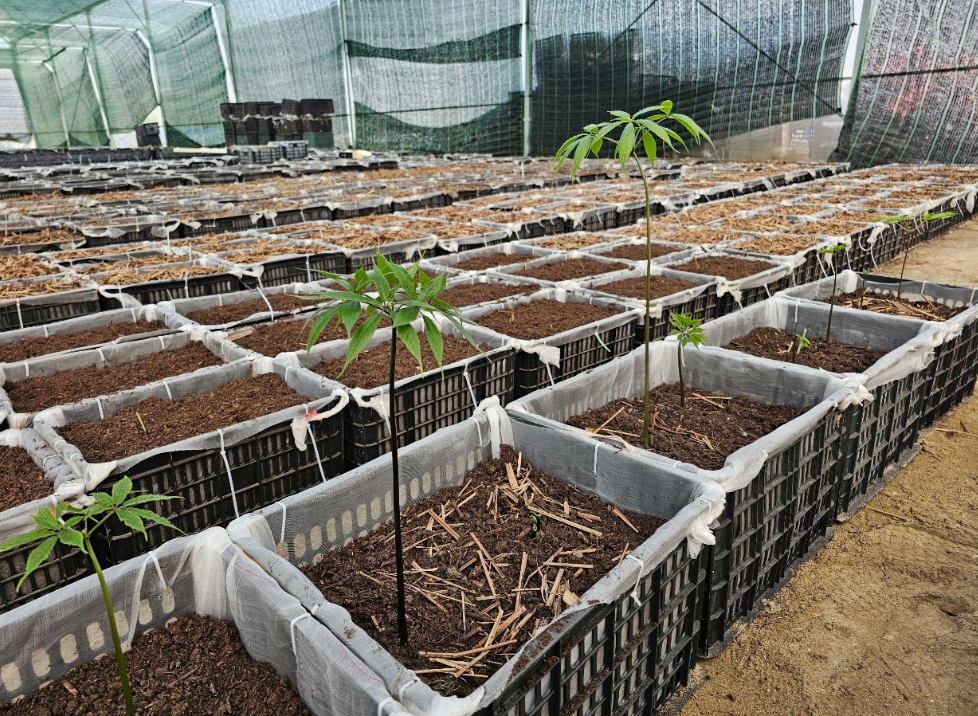
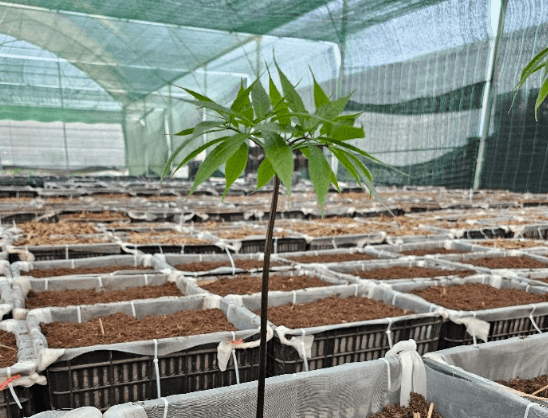
A Vietnamese ginseng plant
To protect your family and yourself, you cannot purchase products based on trust alone. It is essential to equip yourself with a set of golden rules for identifying authentic ginseng and preparing it properly. The solution lies in the knowledge and smart consumer skills we are about to share below.
Exposing the Tricks Used to Pass Off Foreign Ginseng as Sâm Ngọc Linh
Today’s ginseng counterfeiters use extremely sophisticated techniques that can deceive even experienced medicinal herb buyers. The most common counterfeit ingredients are wild notoginseng purchased from northern border provinces or smuggled into the country, Lai Châu ginseng—which belongs to the same Panax genus and looks very similar but has a far inferior active-compound profile—or, even worse, similarly shaped wild taro tubers.
To deceive buyers’ senses of smell and taste, fraudsters often boil these counterfeit ginseng roots or taro tubers in a small amount of water infused with genuine Sâm Ngọc Linh leaves. This allows genuine ginseng essential oils to penetrate the outer layer of the fake roots, temporarily creating the characteristic earthy aroma. More dangerously, to create the appearance of “numerous nodes and many years of age”—a key criterion for pricing ginseng—they unscrupulously use 502 instant adhesive or other toxic industrial glues to join fake ginseng segments together.
The consequences of these tricks can be devastating. Numerous patients have been admitted to major hospitals with acute poisoning, vomiting, and cardiovascular collapse after drinking liquor infused with toxic roots or chemically treated taro tubers sold under the guise of wild Sâm Ngọc Linh. A strong warning for you: Never buy ginseng from unregulated, uncertified roadside sellers.
Core Criteria for Identifying Sâm Ngọc Linh with a Transparent Origin
No matter how sophisticated the deception, nature’s true treasures still possess distinguishing features that cannot be counterfeited. To confidently select authentic Sâm Ngọc Linh, you need to understand the identifying criteria relating to its appearance, flavor, and legal documentation.
Examine its external appearance: Genuine Sâm Ngọc Linh grows naturally in humus and therefore usually has a rough texture and an earthy-brown or grayish-yellow color. Its most important feature is that the root segments generally grow in an alternating zigzag pattern rather than in a straight line. The nodes are distinctly indented. In particular, the stem scars, or “ginseng eyes,” left when the aerial stem falls away each year are spaced relatively evenly, with only one new segment forming annually.
Check its distinctive flavor: This is the most difficult characteristic to counterfeit. When you cut a thin slice of genuine Sâm Ngọc Linh and chew it, you will immediately notice a sharp, slightly pungent bitterness. After only a few seconds, however, the bitterness disappears and gives way to a mild, smooth sweetness that lingers deep in the throat—bitter at first, sweet afterward. The ginseng’s aroma also lasts for a long time. Genuine ginseng has a crisp, crunchy texture when chewed and contains none of the tough fibers found in wild tubers.
Use technology for verification: Visual inspection alone can still carry risks. The safest approach is to require the seller to provide scientific evidence. A traceable ginseng root should be accompanied by plant DNA test results, microbiological certification, and, most importantly, a quantitative MR2 analysis from a medicinal materials research institute or a reputable government testing center.
If you are new to this medicinal herb, do not hesitate to read the Beginner’s Five-Step Guide to Distinguishing Genuine and Counterfeit Sâm Ngọc Linh to develop the skills needed to inspect every detail around its stem scars.
How to Use Sâm Ngọc Linh to Nourish Your Body Every Day
Obtaining authentic Sâm Ngọc Linh is difficult, but knowing how to use it without wasting a single drop of its medicinal compounds is even more important. Below are three traditional preparation methods that help maximize the ginseng’s benefits for everyday health:
1. Sâm Ngọc Linh infused in honey—a symphony of recovery:
This is considered the optimal method for preserving and using ginseng over the long term for people of all ages. Wash the ginseng thoroughly, allow it to drain and dry completely, and then cut it into very thin slices, approximately 1–2 mm thick. Place the slices in a clean glass jar, fully submerge them in pure forest honey, and seal the jar tightly. After about 30 days, the active compounds in the ginseng will have blended with the honey. Early each morning, while your stomach is still empty, holding and chewing one or two slices with a small spoonful of honey can invigorate the body, support digestion, and strengthen resistance throughout the day.
2. Wellness tea made with Sâm Ngọc Linh—for cleansing and relaxation:
This method is particularly suitable for older adults and people experiencing chronic insomnia or unstable blood pressure. Each day, simply place 2–3 g of thinly sliced ginseng in a teapot and steep it in boiling water. Wait approximately 10–15 minutes for the nutrients to infuse into the water. The resulting tea is pale yellow, highly aromatic, and combines bitter and sweet notes. Better still, you can add boiling water another three or four times until the slices lose their color and flavor, then chew and swallow the remaining ginseng pieces to make full use of their fiber and minerals.
3. Whole-root Sâm Ngọc Linh liquor—a precious traditional remedy for men:
For men seeking to support vitality and maintain performance, ginseng liquor is an excellent choice. After washing, the root is left whole, placed in a premium glass jar, and infused with authentic yellow-flower glutinous rice liquor with an alcohol content of approximately 40–45%. The ideal infusion period is three to six months, allowing the Saponins to be fully extracted into the liquor. Consume no more than 30 ml—approximately one small cup—with a meal each day. Never overconsume ginseng liquor, as doing so may be counterproductive.
* Important note: This product is not a medicine and is not intended to replace medical treatment. Sâm Ngọc Linh should be regarded as a long-term nutritional supplement used in conjunction with a scientifically balanced diet and healthy lifestyle.
Before reading this article, you may still have doubted whether Sâm Ngọc Linh truly deserved the title of “National Treasure,” or whether its reputation was merely exaggerated hearsay. Now, however, with clear scientific evidence, its superior Saponin profile, and its unique MR2 content, you can proudly affirm that Vietnam possesses one of the most world-class biological medicinal resources on the planet.
The core value of Sâm Ngọc Linh lies not only in measurements taken in laboratories, but also in its genuine ability to nourish and protect life. Be a smart consumer who knows how to evaluate information and reject counterfeit ginseng so that you can bring the true essence of the Trường Sơn mountains home to care for the health of your loved ones.
Contact hotline 0869 925 288 now or visit https://samtruongsinh.com/ for advice on choosing Sâm Ngọc Linh with verified origins and protecting your family’s health in the safest, most effective way!