
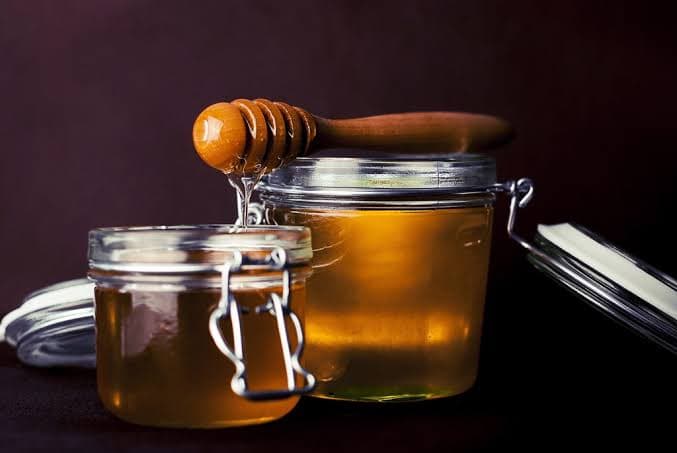
Heat, light, and water can change honey’s color and aroma
A jar of honey that once had a clear amber color and distinct floral aroma may suddenly become darker, less fragrant, or even foamy after a few months. Has the honey spoiled? Not necessarily. These changes may result from where it is stored, how tightly the lid is sealed, or a spoon with water still on it. Properly understanding how to store honey and recognizing each sign will help you avoid mistakenly discarding naturally crystallized honey while identifying products at risk of fermentation. Below is an easy-to-follow process for preserving honey’s color, aroma, and flavor in the home kitchen.
Heat and light accelerate changes in honey
The product should not be heated or processed to such an extent that its essential composition is changed or its quality impaired. At home, this principle means avoiding sunny windowsills, the top of the refrigerator, areas beside the stove, and places near the oven. These locations are both warm and subject to substantial temperature fluctuations: the jar may heat up during cooking and then cool down at night.

Prolonged exposure to heat and light can promote reactions that darken honey while making its floral aroma less distinct. However, a darker color or weaker aroma is not enough to conclude that the honey has spoiled. A sour smell, foam, gas released when the lid is opened, and storage history must also be assessed. By contrast, thickened honey with uniform granules is usually simply crystallized.
Water and air increase the risk of fermentation
Honey is hygroscopic. Moisture content is an important factor in honey’s susceptibility to fermentation. Therefore, a loose lid, wet spoon, or water vapor entering during transfer can make conditions inside the jar more favorable for osmotolerant yeasts to grow.
Another easily overlooked issue is a shared spoon: crumbs, milk, tea, or food odors may enter the jar even when the honey shows no obvious external change. The longer the lid remains open, the more opportunity the honey has to absorb moisture and odors from the kitchen. The practical solution is not complicated: use an airtight jar, choose a location with stable conditions, and keep all utensils that come into contact with the honey completely clean and dry. To determine how long the product may be used, read the expiration date and instructions for storing honey after opening on the label rather than relying on word of mouth.
5 steps for storing honey
For honey used daily, you can follow a five-step process without specialized equipment. Choose a dry, cool place with a stable temperature and follow the conditions stated on the label. The key is to avoid sunlight, heat sources, and constant temperature fluctuations.
Steps 1 to 3: prepare the jar and storage location
Check the packaging: read the expiration date, storage conditions, and instructions for after opening. Check the lid’s seal and look for signs of leakage, unusual odors, or abnormal foam when first using the product.
Prepare the container: keep the honey in suitable original packaging or use a clean, completely dry, odor-free glass jar with an airtight lid. Do not use a rusted metal lid. If you have a large quantity of honey, you can divide it among smaller jars to reduce how often the entire product is exposed to air.
Choose a location: store the jar upright in a closed cabinet, away from windows, cooking stoves, and heat-emitting appliances. Transfer the honey only after the bottle, funnel, and spoon are completely free of moisture.
One useful tip is to inspect the inside of the jar under a light before pouring. Even a few drops of water clinging to the sides indicate that the container is not ready. When cleaning food jars and bottles, let them air-dry completely or dry them according to appropriate instructions rather than hastily wiping them with a linty or odorous cloth.
Steps 4 and 5: dispense the honey and inspect it periodically
Dispense honey correctly: use a dedicated clean, dry spoon, take only as much as needed, and close the lid immediately. Wipe away honey from the outside of the jar’s rim to limit moisture absorption, odor contamination, and ants. Do not return unused honey to the jar.
Monitor periodically: record the date the jar was opened and occasionally check its color, aroma, foam, and lid seal. When dividing honey among jars, continue to record the original opening date rather than restarting the count from the transfer date.
Should honey be refrigerated? Honey should not be refrigerated by default. Cold temperatures promote crystallization; this is a physical change and does not automatically prove that the product has spoiled. If the label requires refrigeration because the honey is blended with other ingredients, follow the product-specific instructions.
4 signs that distinguish crystallized honey from fermented honey
When a jar of honey changes, look at a combination of signs rather than relying on a single one. The table below is intended only as an initial sensory screening tool for two conditions that are often confused.
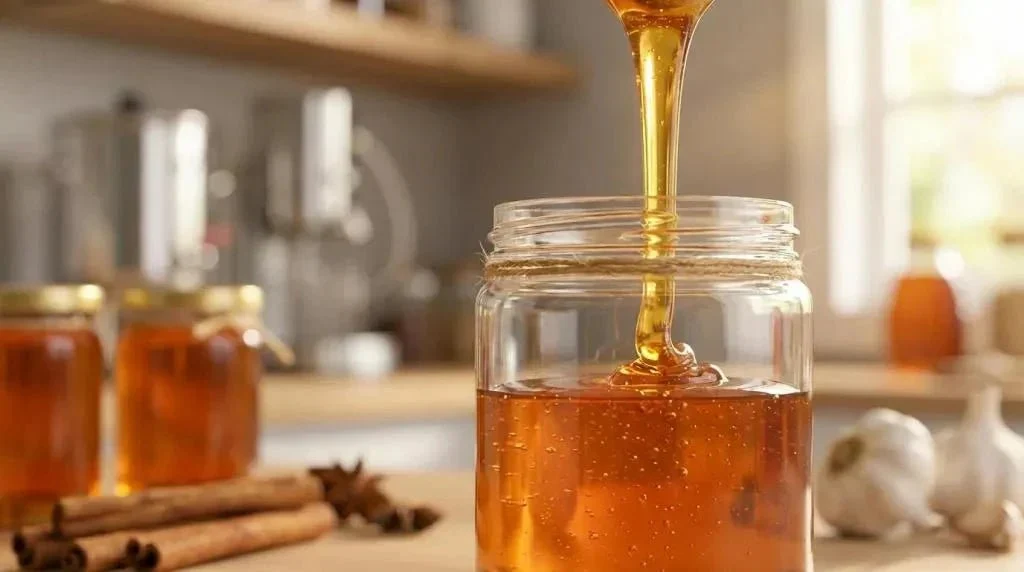
Comparison of natural crystallization and fermentation risk
Sign | Natural crystallization | Fermentation risk |
|---|---|---|
Texture | Uniform granules, thick honey | Unusually runny, separated layers |
Aroma | Sweet, characteristic | Sour or yeasty odor |
Foam | Does not persist | Reappears and gradually increases |
Taste | Little change | Sour or distinctly different |
The table is intended only for sensory screening and cannot confirm that honey has fermented. Do not draw a conclusion based solely on a runny consistency, layer separation, or taste. If the honey has an unusual odor, persistent foam, or gas pressure when the lid is opened, do not taste it for confirmation. Stop using it and check the manufacturer’s information.
Uniform crystals usually indicate natural crystallization
Crystallization is a natural process influenced by the proportions of different sugars and by temperature. Honey may thicken and develop fine granules or a layer of crystals while retaining its characteristic sweet aroma and producing no persistent foam.
To liquefy it, place the sealed jar in warm water and wait for the crystals to dissolve gradually. Avoid boiling water, direct heat, or a microwave because the temperature is difficult to control; also prevent water from entering through the lid. Before proceeding, you can consult more detailed information about the causes of crystallization and safe liquefaction methods.
A sour odor and persistent foam warn of fermentation
Previously, a jar of honey kept beside the stove may have been repeatedly exposed to heat, left open for long periods, and touched by a damp spoon. After moving it to a closed cabinet, using a dedicated spoon, and checking the lid periodically, the risk of sensory changes can be significantly reduced. The bridge between those two situations is the simple five-step storage process above.
Check the storage location, jar lid, and spoon today. If there are signs of possible fermentation, stop using the honey and contact the manufacturer. This food is not a medicine and is not intended to replace medication.