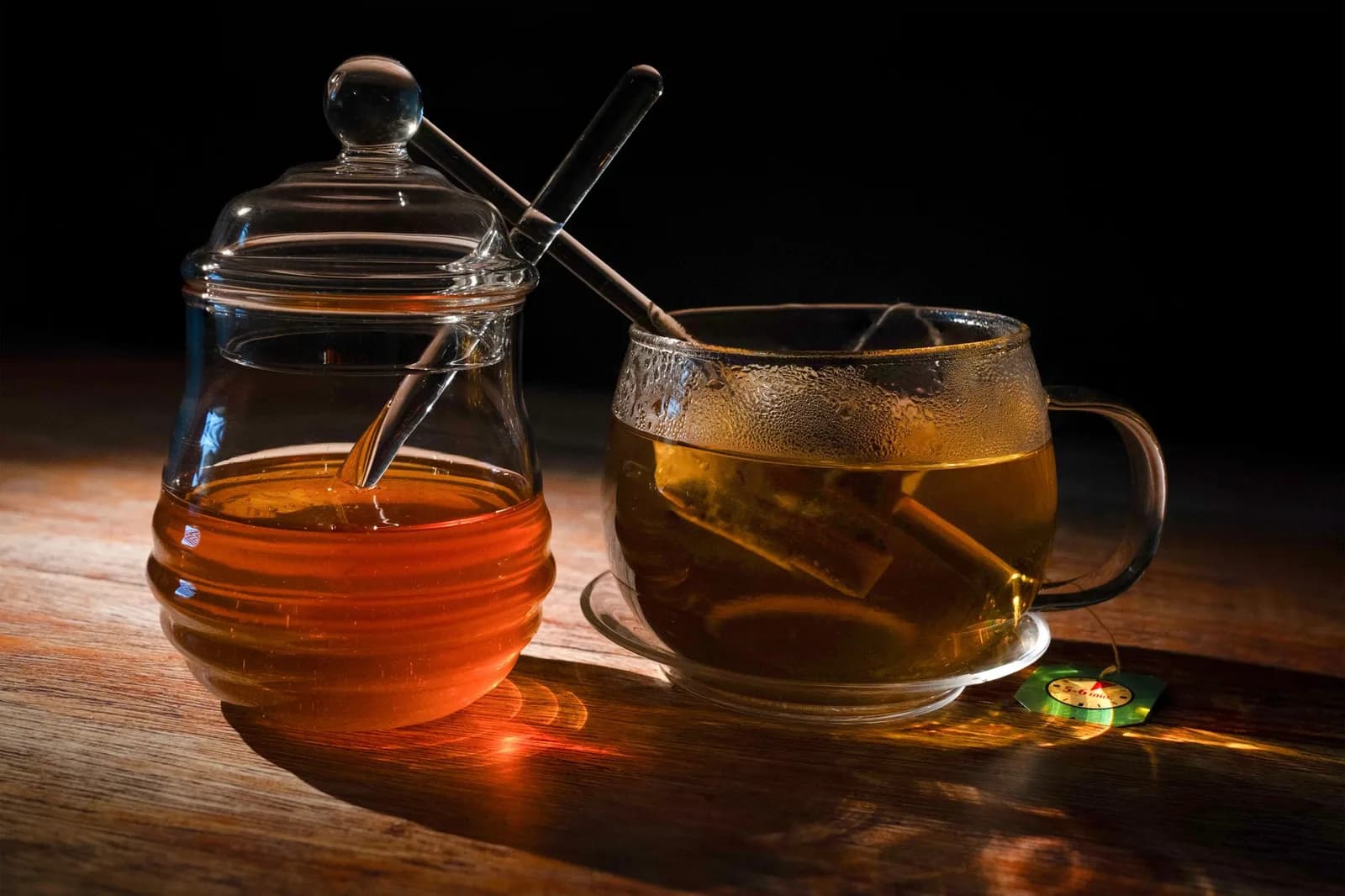
This article guides you through selecting ingredients, drying, soaking ginseng, and recognizing signs that a soaking jar has spoiled.
Moisture determines the quality of Sâm Ngọc Linh soaked in honey
A properly prepared jar of Sâm Ngọc Linh soaked in honey typically has a natural color, ginseng slices fully covered, and is easy to serve from. However, even a small amount of water trapped in root crevices or at the bottom of the jar can cause the mixture to bubble, develop a sour smell, or form an unusual film. With such a valuable ingredient, this small mistake can make the entire jar unsafe to use.
Honey has relatively low moisture content, but this characteristic cannot replace proper sanitation. Water left on the ginseng, jar, knife, or spoon changes the mixture's environment and enables yeast and microorganisms to grow. Therefore, the key goal is not merely to “pour in enough honey,” but also to reduce clinging moisture and limit contamination throughout the entire process.
Three common causes of spoilage are ingredients carrying too much water, utensils that are not clean or dry, and ginseng slices floating above the honey's surface. When bubbles appear, people often repeatedly open the lid to check, stir with wet utensils, or taste the mixture. These actions further increase the risk. A more effective solution is to control moisture from the time you choose the roots, prepare the honey, and dry the utensils.
Intact fresh ginseng and clean honey reduce the risk of spoilage
Choose firm Sâm Ngọc Linh roots with intact surfaces, free from bruising, soft rot, leaking fluid, unusual odors, or mold spots. Appearance is only the first step; origin should be verified through batch information, growing location, and the supplier in Kon Tum or Quảng Nam. Do not simply trim away suspicious portions and use the rest, as deterioration may have spread deeper than the visible area.
Honey should come from a reliable source, with no added water and no unusual sour smell. Naturally crystallized honey usually forms uniform granules or a consistent thick layer, often starting from the bottom, without an off odor. In contrast, patchy surface films, fuzzy spots, increasing bubbles, or a fermented smell are concerning signs. The belief that “honey is naturally antibacterial” is not a reason to neglect sanitizing the jar and ingredients.
A dry glass jar prevents honey-soaked ginseng from becoming moldy
The glass jar should be intact, with an opening wide enough to arrange and observe the ginseng, and a tight, rust-free lid. Its capacity should exceed the mixture's volume to leave some headspace, but it should not be so large that the surface has unnecessarily greater exposure to air. Avoid cracked or chipped jars, or materials with unclear food-contact suitability.
Wash the jar and lid thoroughly, rinse well, then turn them upside down to air-dry until there are no water droplets or internal fogging. Do not wipe the inside of the jar with linty cloths or cloths retaining detergent odors. Knives, cutting boards, tongs, and spoons must also be clean and dry; ideally, set aside a dedicated set of utensils. This helps prevent drinking water, saliva, and food crumbs from entering the jar during preparation or serving.
Air-drying ginseng with a gentle breeze helps reduce residual moisture
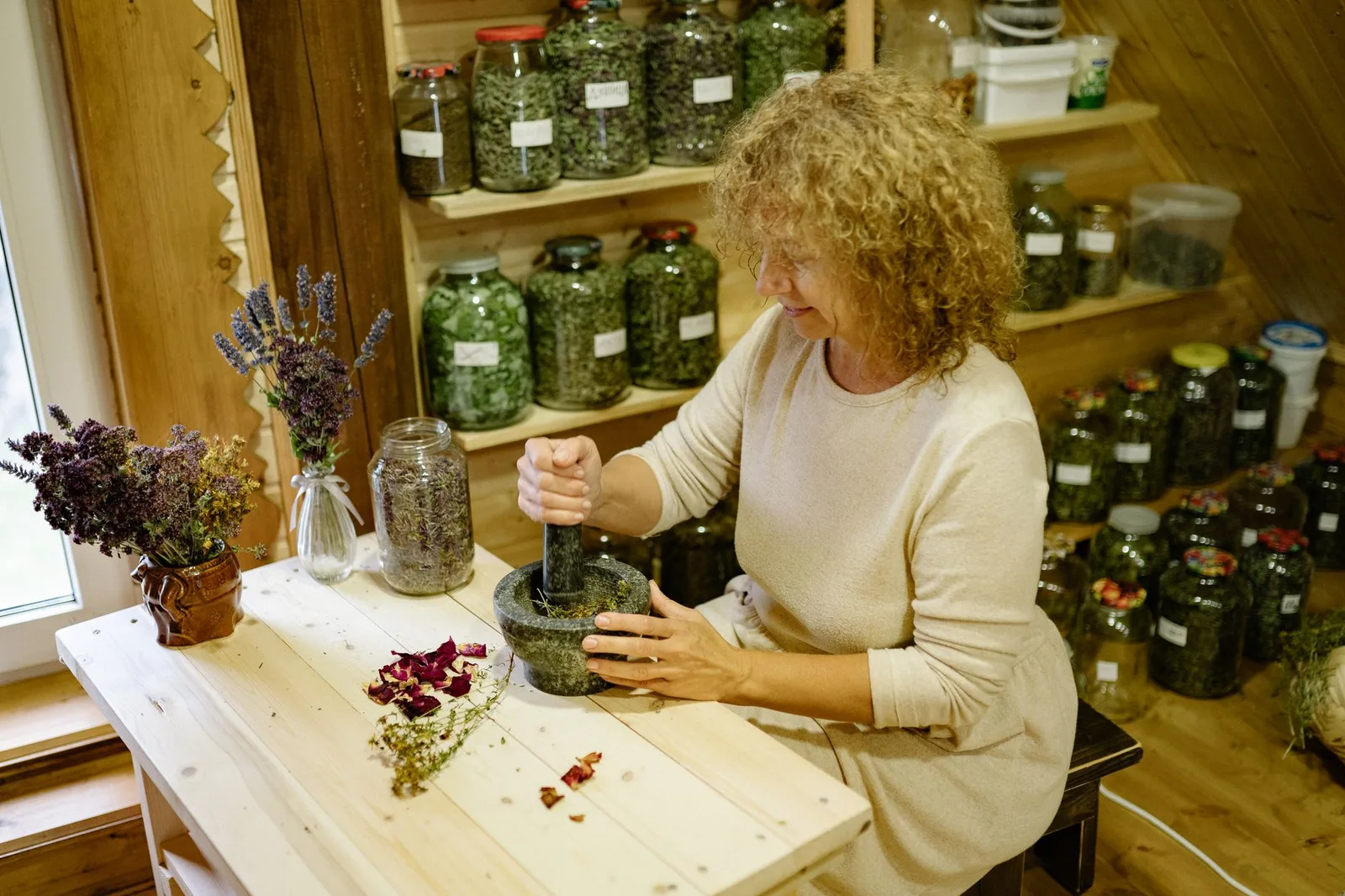
Rinse the ginseng quickly under clean running water, using a soft brush to remove soil from every crevice, especially around the eyes, nodes, and fine roots. Do not soak the roots in a basin for a long time, as ginseng may retain additional water in small gaps. After washing, inspect again under good lighting to remove remaining soil and identify bruised, discolored, or unusually scented areas.
Place the ginseng on a clean surface to drain completely. It can be air-dried with a gentle breeze, avoiding high heat; do not expose it to harsh sunlight or hot drying that can harden the surface and affect its sensory quality. Slice only after the roots are fully dry. A practical tip is to gently touch the crevices with clean paper: if the paper still shows a damp mark, do not put the ginseng into the jar yet.
Soaking Sâm Ngọc Linh in honey in 5 steps
The soaking process should be carried out continuously on a clean work surface, rather than while handling other foods. Before starting, weigh the ingredients and prepare the jar, utensils, and an information label. Wash your hands thoroughly, then dry them.
The ratio of 1 part ginseng to 2 parts honey by weight is only a reference, not a fixed formula for every jar type and slice size. The more important practical criterion is that the final amount of honey must fully cover all of the ginseng. Do not add water, alcohol, milk, or other fresh ingredients, as each component may alter the moisture level and stability of the mixture.
Usable time cannot be determined solely from the soaking date. Shelf stability also depends on the initial quality, sanitation level, storage temperature, and how the ginseng is removed after opening. Therefore, recording its actual condition is more important than applying a commonly repeated time limit to every home-prepared jar.
Steps 1 and 2: Weigh the reference 1:2 ratio and arrange the ginseng in the jar
In step 1, weigh the fully drained ginseng and honey separately. For example, 100 g of ginseng may use about 200 g of honey; prepare extra clean honey if this amount does not fully cover the slices. Weighing by mass is more accurate than estimating by sight, especially when honey has different thicknesses.
In step 2, arrange the ginseng in a dry jar without packing it tightly or touching the ingredients with wet hands. Leave space at the top for the honey to move and for easier observation. Three common mistakes are slicing ginseng while it is still damp, filling the jar to the rim, and pressing slices tightly together; all three make it difficult for honey to penetrate gaps, for air bubbles to escape, and for changes to be detected.
Step 3: Pour in honey to completely cover the ginseng
Pour the honey slowly along the side of the jar so it flows down between the slices. Wait a few minutes for air bubbles to rise, then add more until all ginseng is below the surface. If slices float, gently push them down with tongs. Do not dilute honey with water or use ice, metal, or non-specialized weights.
A small amount of bubbles appearing immediately after pouring is usually air trapped between ginseng slices and then released. This type of bubbling tends to decrease after the jar sits undisturbed. Bubbles that increase over the following days, especially with a sour odor, overflowing liquid, or pressure under the lid, require caution.
Steps 4 and 5: Seal tightly and record the soaking date
In step 4, wipe the jar rim clean with a dry material, check the threads and gasket, and close the lid tightly. Do not open the jar repeatedly just to stir or smell it. In step 5, record the soaking date, ratio, weight, and a brief description of the initial color, odor, and bubble level. This label makes monitoring more objective than relying on memory.
Before sealing the lid, check all six points:
- The ginseng is firm, intact, and completely dry.
- The honey is clean, contains no added water, and has no sour odor.
- The glass jar is clean, dry, and uncracked.
- The knife, tongs, or spoon are all clean and dry.
- All ginseng slices are fully covered with honey.
- The label includes the date, ratio, and initial condition.
Storing Sâm Ngọc Linh and monitoring it during the initial period
Monitor the jar closely during the initial period, as changes such as increasing bubbles, rising ginseng, unusual odors, or a surface film are easier to notice. You can observe through the jar according to a suggested schedule on days 1, 3, 7, 14, and 30, recording any changes.
Place the jar in a dry, cool area away from sunlight, cooking areas, and heat-emitting appliances. Stable conditions matter more than frequently moving the jar from hot to cold locations. Temperature fluctuations can change the honey's viscosity, causing ginseng to shift or creating more air bubbles, which makes assessment difficult.
After opening, remove only the needed amount each time using utensils reserved for the jar, then close the lid immediately. Do not apply one universal storage period to every jar; combine the ingredient guidance, actual conditions, and sensory signs.
A few bubbles differ from signs of spoiled honey-soaked ginseng
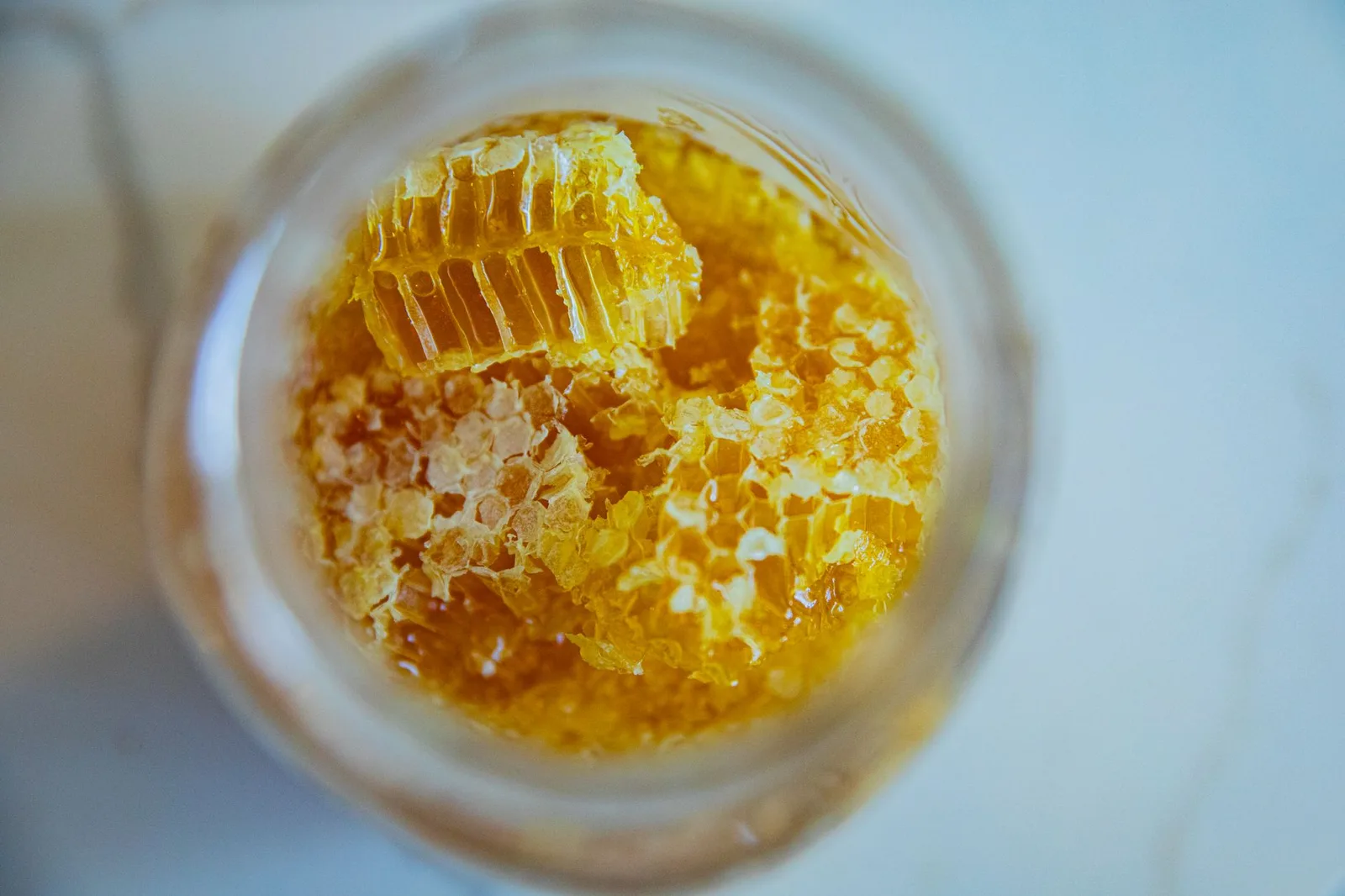
Scattered air bubbles after pouring or around the edges of ginseng slices are not enough to conclude that the jar has spoiled. Check whether the bubbles are decreasing or increasing, whether the lid is bulging, whether liquid is overflowing, and whether the smell has become distinctly sour or unusual. Uniform honey crystallization is also different from a surface film or spots developing on the surface.
Stop using the product if bubbles continue to increase, the lid bulges, liquid overflows, or a sour smell, unusual film, or mold appears.
Do not scoop out the moldy part and use the remainder, and do not taste it to determine whether the jar has spoiled. If you cannot distinguish natural crystallization from spoilage, keep the jar unchanged, separate it from other food, and ask the supplier or a qualified professional.
How to store Sâm Ngọc Linh after opening the lid
Take only the required amount using utensils reserved for the jar. A spoon that has touched the mouth must not be returned to the jar; the portion removed should also not be poured back in, even if it has not all been used. This is a small principle that helps limit the entry of saliva, moisture, and food crumbs.
Record the opening date and any changes in color, smell, and bubble level. The ingredient's high value is not a reason to persist in using a jar showing signs of spoilage; safety should take priority over reluctance to discard it.
Use Sâm Ngọc Linh honey in small portions
Before use, start with a small serving according to the product instructions or professional advice to monitor tolerance. Pregnant or breastfeeding women, children, people with underlying health conditions or taking medication, and those allergic to honey or bee products should consult a doctor or pharmacist before use.
An inadequately controlled jar can change from clear and fragrant to bubbly and oddly scented simply because residual water remains or utensils are damp. Conversely, when ingredients and handling are well controlled, monitoring becomes clearer and more proactive. Before sealing the lid, check the six checklist points immediately and schedule jar inspections for the suggested milestones of days 1, 3, 7, 14, and 30; also stop using it immediately if there is a sour smell, mold, or any unusual sign.