Ngoc Linh ginseng conveys health and cultural values
At a longevity celebration, the most memorable moment often lies not in the size of the gift box, but in what the giver says when opening it: where the gift comes from, who it was prepared for, and why it is suitable. With Ngoc Linh ginseng, that story begins beneath the humid forest canopy of the Ngoc Linh mountain range, where a ginseng plant requires many years of care before it can be harvested. Its origin, the time invested, and the effort involved give the gift its cultural significance.
However, a high price does not automatically mean the right choice. Buyers often face three concerns: products that are difficult to trace, widely varying quotations, and product forms unsuitable for the recipient. If they focus only on the wooden box, the stated age of the ginseng, or claims about its benefits, a prestigious gift may become an inconvenience. A safer approach is to assess the recipient, product form, and provenance documentation together. To understand the fundamentals before making a choice, readers can also consult the overview of Ngoc Linh ginseng and the characteristics of its growing regions in Kon Tum and Quang Nam.
The story of the great forest begins in the Ngoc Linh mountains
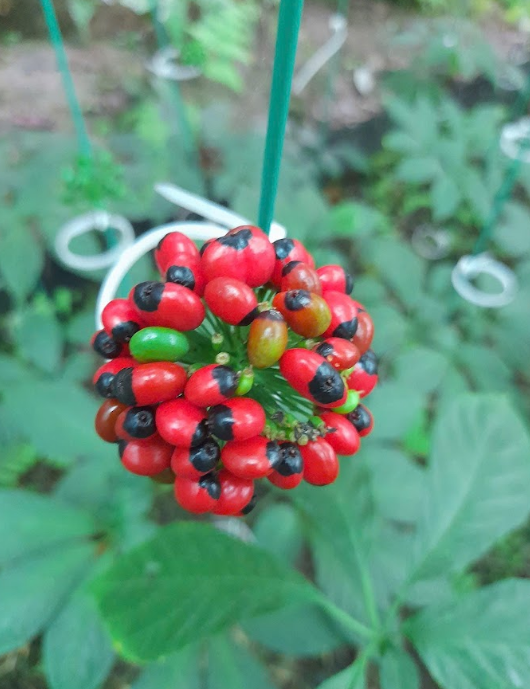
Ngoc Linh ginseng has the scientific name Panax vietnamensis. This name is recorded in the Royal Botanic Gardens, Kew’s Plants of the World Online database. The plant is associated with the Ngoc Linh mountain region spanning Kon Tum and Quang Nam; therefore, the presence of “Ngoc Linh” in an advertised name is not sufficient proof that the ginseng root was grown in this area. The batch origin, production facility, and accompanying documents are the information that must be cross-checked.
The gift’s depth of meaning also comes from its growers. Materials introducing the ginseng-growing region published by the Quang Nam authorities note that the Xo Dang community in Nam Tra My District participates in cultivating, tending, and protecting ginseng beneath the forest canopy. Their work involves more than simply placing a plant in the soil: growers must monitor canopy cover, retain moisture, minimize disturbance to the soil layers, and protect the garden for many years.
A short card can therefore be more valuable than a lengthy promotional message. It should state the verified growing region, the supplier, the age of the ginseng if supported by documentation, and a few lines about the people who tended it. A specific story helps recipients understand that they are receiving years of time, labor, and appreciation, rather than merely an expensive product.
The meaning of a gift varies by recipient and occasion
For parents or older adults, convenience is often more important than elaborate presentation: easy-to-read labels, clear serving sizes, and packaging that is easy to open. For partners or honored guests, provenance documentation, invoices, elegant design, and the option to print a personalized card carry greater significance. A Tet gift emphasizes wishes for peace and well-being; an appreciation gift expresses recognition; and a longevity gift should prioritize suitability and safety over appearance.
Whatever the occasion, the presentation message should not turn a health supplement into a promise of medical outcomes. It is appropriate to say that the gift expresses concern for the recipient’s well-being and a balanced lifestyle; it is not appropriate to promise that the product will produce a specific change in a medical condition.

Presenting an entire ginseng plant as an award is one example worth considering carefully. The symbolism may be impressive, but recipients living in cities generally lack the highland climate, humus-rich soil, canopy cover, and corresponding cultivation skills. In such cases, a root or processed product with complete instructions is more practical. A gift’s value is fully realized only when the recipient can use it appropriately.
Choose Ngoc Linh ginseng as a gift based on 4 criteria
A sound decision should follow four criteria in order: recipient, product form, budget, and evidence of origin. This order prevents buyers from being swayed by a large box or a standalone claim about the ginseng’s age. An age of 8 to 15 years may affect rarity and price, but it is meaningful only when it matches the batch records, growing location, and the supplier’s supporting verification.
The table below helps screen four common gift forms. The budget column does not provide fixed prices because costs depend on weight, ginseng proportion, ginseng age, and timing; buyers should obtain same-day quotations from sellers.
Comparison of Ngoc Linh ginseng gift forms
Product form | Suitable recipient | How to use | Storage and precautions | Budget range |
|---|---|---|---|---|
Fresh root | People knowledgeable about ginseng | Prepare according to instructions | Temperature must be controlled | High, depending on the root and documentation |
Honey-infused ginseng | People who value convenience | Follow the serving size on the label | Check sugar and ingredients | Medium to high |
Ginseng tea | Home and office users | Brew according to instructions | Keep dry and check the content | Easy to adjust |
Ginseng liquor | Adults who consume alcohol | Consume in moderation | Not for people who abstain from alcohol | Based on volume and ginseng proportion |
The table shows that no gift form is suitable for everyone. Convenience, storage conditions, and usage restrictions must be considered before price. This is also why sellers should advise customers based on the recipient’s profile rather than starting with the highest-priced product.
The product form should suit the recipient’s habits
Fresh ginseng root retains the appearance of the raw ingredient and makes an impression when the box is opened, but it requires the recipient to know how to prepare, portion, and store it. Honey-infused ginseng or tea is more convenient; in return, buyers must read the ingredient list, net weight, ingredient proportion or content, and recommended serving size. The word “ginseng” in a product name does not indicate how much of the ingredient is actually contained in each serving.
Ginseng liquor should not automatically be regarded as a prestigious gift for every partner. Alcoholic beverages carry health risks and that there is no completely risk-free level of consumption. Therefore, this product is unsuitable for pregnant women, people who abstain from alcohol, those who must drive, or anyone advised by a healthcare professional to avoid alcohol. For gift sets containing liquor, honey, and tea, check whether each item is likely to be used; the number of bottles and jars does not reflect their practical value.
The budget should prioritize quality over gift-box size
The budget should be allocated among three areas: a product with clear documentation, packaging that meets storage requirements, and after-sales service. A thick wooden box, metal clasp, or large bag is meaningful only if it does not reduce the budget available for the core product. Before comparing prices, request quotations based on the same specifications: packaging format, weight or volume, ingredients, quantity, documented ginseng age, and return policy.
For large-volume corporate gifts, a sample set should be ordered for inspection first. The purchasing department should agree on invoice details, shipping arrangements, cards, and the timeframe for resolving defects. The message should focus on appreciation and the cultural character of the Ngoc Linh region, avoiding health claims that exceed what is permitted on the label.
Verify authentic Ngoc Linh ginseng before presenting it
An effective verification process has three layers: read the label and documentation, inspect the actual product, and then verify the seller and after-sales policy. Authenticity should not be determined solely by skin color, the number of stem scars, root shape, or bitterness. Sensory characteristics may vary with age, growing conditions, and storage, and they can also be imitated.
And this is the most important point: verification does not end at payment. The giver should also provide usage instructions, storage conditions, and appropriate warnings. People taking medication, pregnant or breastfeeding women, and those with underlying medical conditions should consult a doctor or pharmacist before using products containing ginseng, because suitability also depends on the individual’s condition and current medications.
Provenance documentation must be traceable to the product
On the label, check the product name, responsible entity, address, ingredients, weight, batch number, production date, expiry date, and storage instructions. These details must be consistent with the invoice and supplied documentation. Decree No. 43/2017/ND-CP on goods labels, amended by Decree No. 111/2021/ND-CP, is an important legal basis for checking label content in Vietnam.
For health supplements, check the product declaration information and warning statements required under current regulations. For fresh roots, request documents showing the batch origin, growing region, and seller. When scanning a QR code, check whether the domain name, entity name, and specific batch data match the product. A code that merely opens a generic promotional page is not sufficient proof of traceability. Readers can also use the guide to distinguishing genuine and fake Ngoc Linh ginseng to create a detailed checklist.
Packaging and after-sales service protect the gift’s value
Before accepting delivery, inspect the seal, bottle caps, signs of leakage, the condition of the box, and materials that come into direct contact with the product. For fresh roots, the seller should provide specific temperature requirements, storage duration, and handling instructions after opening based on their packaging specifications; vague directions such as “store in a cool place” should not be accepted. The article on storing fresh ginseng roots after purchase can also be consulted before the gift-giving date.
Prioritize suppliers that issue invoices, provide clear contact details, allow product inspection, and disclose how they handle torn labels, broken seals, or products that do not match their descriptions.
Previously, buyers may have been attracted by large boxes and claims that were difficult to verify. After a clear selection process, the gift will be more suitable, more transparent, and better reflect the original appreciation. The bridge between these two situations is highly practical: create a short recipient profile, choose the product form, cross-check documents against a checklist, and only then decide. When working with a seller, request advice based on needs and conditions of use, not on promises of benefits.