
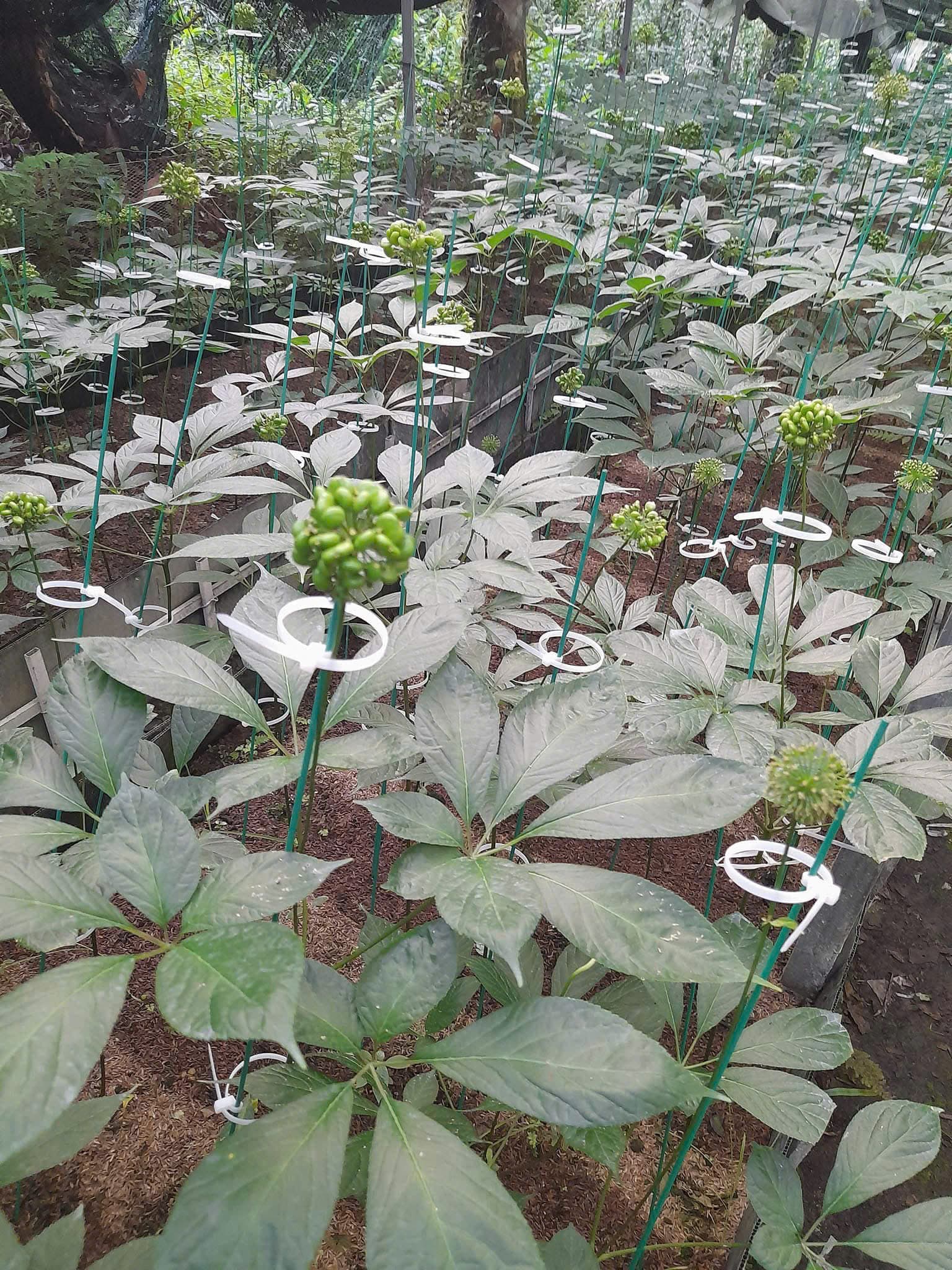
How Many Years Does Sâm Ngọc Linh Take Before It Can Be Harvested?
Sâm Ngọc Linh—the "national treasure" of Vietnam—requires at least six years of growth before it can be harvested. However, the ideal harvesting age for peak levels of valuable medicinal compounds and optimal root weight is between 8 and 10 years.
In the world of medicinal herbs, Sâm Ngọc Linh (Panax vietnamensis) consistently ranks among the rarest and most expensive ginseng species in the world. Unlike short-term crops, producing a Sâm Ngọc Linh root with a full range of active compounds requires extraordinary patience and stringent soil conditions beneath old-growth forest canopies at elevations above 1,500 meters. So exactly how long does Sâm Ngọc Linh take to meet harvesting standards?
1. Standard Harvesting Ages for Sâm Ngọc Linh
Sâm Ngọc Linh (Panax vietnamensis) is a slow-growing medicinal plant. From planting until it becomes eligible for commercial harvesting, it generally requires at least 5–6 years of development under the distinctive climatic and soil conditions found beneath natural forest canopies. According to research institutions and ginseng-growing regions, root quality, active-compound content, and economic value tend to increase with the plant's age.
Below are the key growth milestones of Sâm Ngọc Linh:
Under 5 years old: Growth and nutrient accumulation stage
During the first 3-4 years, the plant primarily develops its root system, rhizome, and foliage to adapt to its habitat. The root remains small, its structure is not yet fully developed, and its weight is still insignificant. This is also when the plant gradually accumulates biologically active compounds, including the saponins characteristic of Sâm Ngọc Linh.
Because root yield remains low and medicinal value is not yet high, Sâm Ngọc Linh under five years old is generally not selected for commercial harvesting. Harvesting too early not only reduces its economic value but also diminishes growers' return on investment.
From 5-6 years old: Beginning to meet harvesting requirements
By the fifth or sixth year, the root has become more stable in size and structure. This is considered the minimum age for harvesting under cultivation procedures in many Sâm Ngọc Linh-growing regions.
At this stage, the root has accumulated enough active compounds to meet the requirements for processing products such as ginseng tea, ginseng extract, health supplements, or raw materials for research and extraction. In terms of commercial value, however, 5–6-year-old ginseng generally remains less valuable than roots cultivated for longer periods.
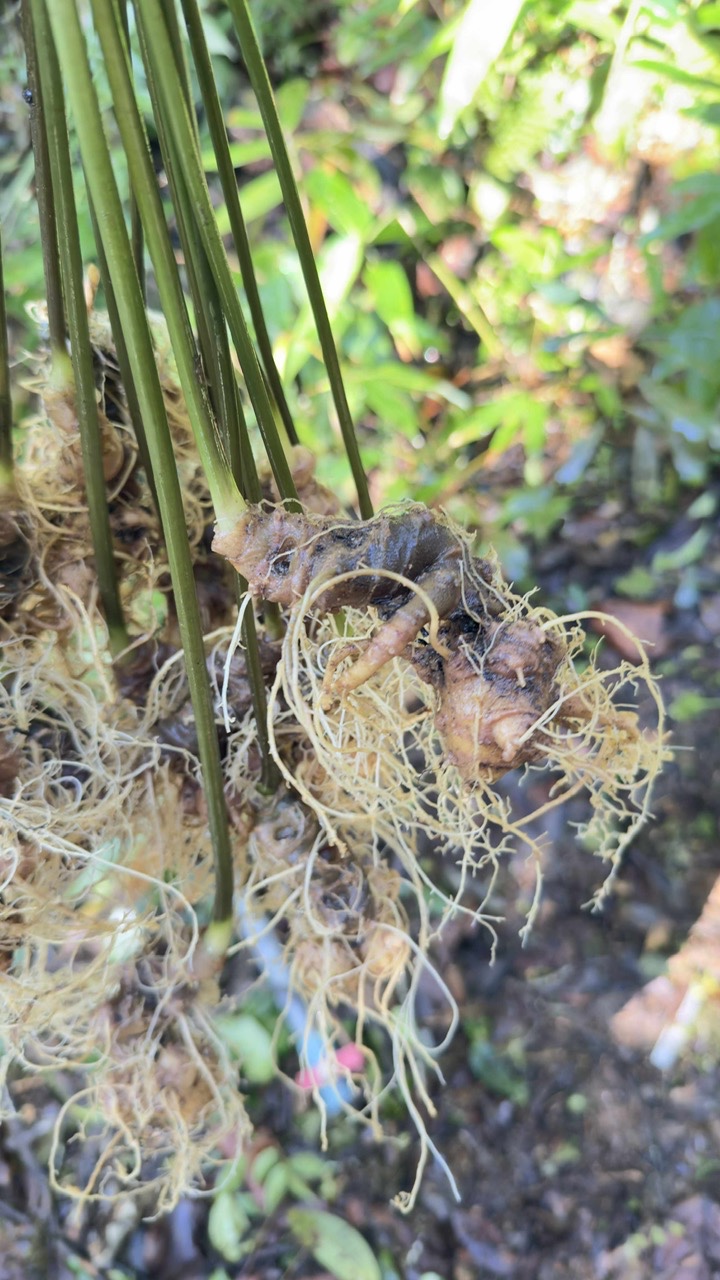
A 6-year-old Sâm Ngọc Linh root
From 8-10 years old: The stage of high quality and commercial value
Based on the experience of many ginseng farms and assessments by specialists, 8-10 years is considered a suitable harvesting age for most commercial Sâm Ngọc Linh products.
At this stage:
The root is fully developed, with significantly greater size and weight than in its early years.
Levels of biologically active compounds, including many saponins characteristic of Sâm Ngọc Linh, tend to be higher due to their prolonged accumulation over many years of growth.
The root's features become more distinct, with clearly visible nodes and bud scars, while its skin turns a natural golden-brown or grayish-brown, meeting the standards of many premium product segments.
It should be noted that active-compound levels depend not only on the plant's age but also on its variety, growing conditions, soil, elevation, climate, and cultivation techniques. There is currently no scientific basis for asserting that active compounds reach their highest levels at any specific age.
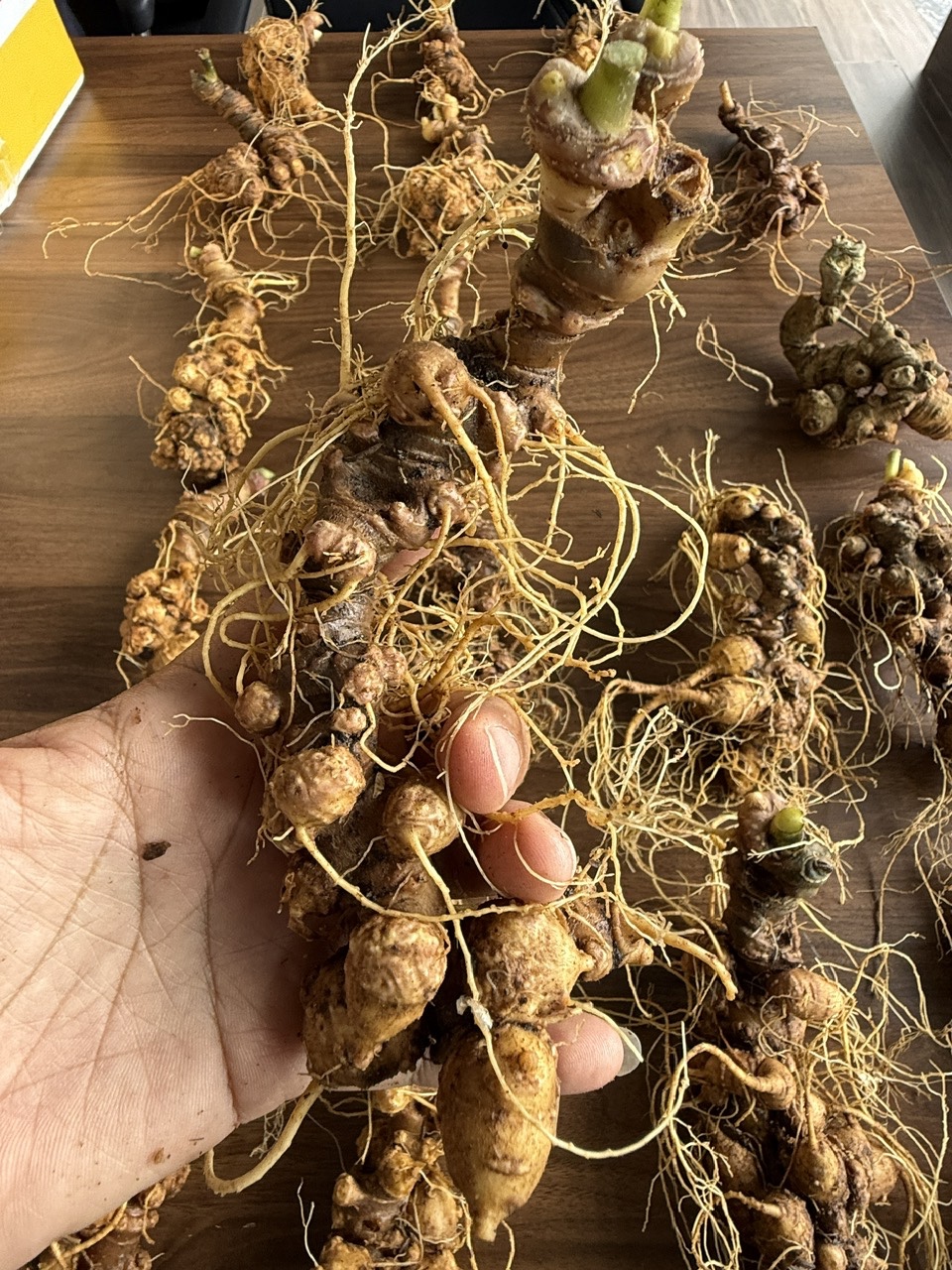
A 10-year-old Sâm Ngọc Linh root
Over 10 years old: Mature ginseng with high value
Sâm Ngọc Linh roots over 10 years old are quite rare due to their long growth cycle and declining survival rate over time. Although the plant's growth slows, the root continues accumulating biomass and active compounds under favorable growing conditions.
Because of their scarcity and large size, Sâm Ngọc Linh roots over 10 years old often command high prices on the market. These roots are primarily used for infusing liquor or honey, as gifts, or in premium products. However, the quality of each root must still be assessed based on multiple factors, such as its origin, cultivation conditions, and storage process, rather than solely on its age.
2. Why Should Sâm Ngọc Linh Not Be Harvested Too Early?
The greatest difference between Sâm Ngọc Linh and other types of ginseng lies in its system of 52 saponin compounds, including 26 saponins with entirely novel structures that have never been found in any other ginseng species worldwide.
Age of ginseng root | Plant physiological condition | Medicinal value & applications |
1 - 3 years | Fibrous roots developing; root small and high in water | Root has no practical value yet; leaves harvested for mild tea |
4 - 5 years | Root begins to firm up and distinct scars form | Basic medicinal potency; used to produce tea and tablets |
6 - 7 years | Ginseng core is dense and firm, with good saponin accumulation | Meets commercial harvesting standards; used for medicinal extraction |
8 - 10 years | Biomass & saponins reach optimal levels | Peak quality; infused in liquor or premium honey |
> 10 years | Slow growth and concentrated nutrients | Ancient, one-of-a-kind ginseng with exceptionally high therapeutic and collectible value |
If harvested while still too young (under five years), the ginseng root will not have had enough time to accumulate sufficient Majonoside R2. Consequently, users may not experience noticeable benefits in terms of enhanced immunity, reduced stress, or support for physical recovery after illness. Therefore, when harvesting Sâm Ngọc Linh, it is important to ensure that the plant has reached sufficient “maturity” to optimize its benefits.
3. The "Golden" Time of Year to Harvest Ginseng
In addition to the plant's age, the time of year when Sâm Ngọc Linh is harvested also has an important effect on root quality. Choosing the right harvesting time helps minimize nutrient loss while ensuring the root reaches its best state of development.
The Sâm Ngọc Linh harvesting season generally falls between October and December each year. This period spans late autumn and early winter, when the plant begins entering its natural dormancy stage.
During this period, the above-ground stems and leaves gradually wither, while the plant shifts into a state of energy accumulation and conservation in preparation for its next growth cycle. Nutrients produced during growth are transported back to the underground rhizome—the part harvested for medicinal use.
Thanks to prolonged accumulation throughout the growing season, ginseng roots harvested at this time generally have a firmer texture and more stable levels of natural compounds than during periods when the plant is focused on developing stems, leaves, flowers, and fruit.
Conversely, harvesting in spring or summer—when the plant is entering a period of vigorous growth—may affect root quality. At that time, the plant's nutrient reserves are being mobilized to develop new shoots, leaves, flowers, and fruit, meaning accumulation in the rhizome has not yet reached an optimal level.
Therefore, combining the appropriate harvesting age with the right time of year is crucial to preserving the value of Sâm Ngọc Linh, particularly for products requiring high-quality medicinal ingredients.
4. How to Estimate the Age of Sâm Ngọc Linh by Its "Bud Scars"
One method used by ginseng growers and specialists to estimate the age of Sâm Ngọc Linh is to observe its bud scars—marks that form on the rhizome after each growth cycle. These are regarded as natural indicators of the ginseng's development over the years, particularly for fresh roots without cultivation records dating back to planting.
As for how they form, during the plant's early years, it grows from a seed and develops above-ground parts consisting of the stem, leaves, flowers, and fruit. At the end of the growing season (usually from late autumn to early winter), the above-ground stem gradually withers and falls away as the plant enters winter dormancy. A scar remains where the old stem met the rhizome, and this is known as a bud scar.
After each growth cycle, the plant sprouts again from the rhizome in the following spring. This process repeats annually, creating a succession of bud scars in a staggered (zigzag) pattern along the root. Over time, the number of bud scars increases, while the rhizome grows longer and develops more distinct segments.
In practice, experienced individuals often use the number of bud scars in combination with the root's morphology to estimate the plant's age. For example, a root with numerous successive bud scars, a long, well-developed rhizome, distinct segments, and a naturally textured surface is generally indicative of a plant that has grown for many years.
However, counting bud scars is only an estimation method, not a standard for determining exact age. Factors such as growing conditions, weather, cultivation practices, or damage sustained by the plant during development may affect the formation of bud scars. Therefore, to accurately determine the age of a Sâm Ngọc Linh root, experts generally combine multiple criteria, such as records from the growing area, cultivation logs, rhizome morphology, and practical assessments by qualified specialists.
For consumers, bud scars remain a useful visual indicator when selecting fresh Sâm Ngọc Linh. However, rather than relying solely on the number of scars, consumers should prioritize products with clear origins, supplied by reputable ginseng farms or certified with a geographical indication, to ensure quality and avoid counterfeit or inferior products.
Advice for Consumers
Sâm Ngọc Linh is a highly valuable medicinal herb, but it is also at risk of being counterfeited or confused with certain roots that have a similar appearance. Therefore, when choosing fresh Sâm Ngọc Linh or processed ginseng products, consumers should pay particular attention to the product's origin, age, and identifying characteristics.
For fresh ginseng, roots aged six years or older should be prioritized because, at this stage, the plant's rhizome is relatively well developed and has accumulated natural compounds over many years. However, the ginseng's age should be determined based on its origin, cultivation records, or an assessment by an experienced individual, rather than solely on its external appearance.
One characteristic commonly used as a reference for estimating ginseng age is its system of bud scars—the marks on the rhizome that form after each growth cycle. Older roots generally have clearly segmented rhizomes, scars arranged in a staggered pattern, a naturally rough surface, and colors ranging from yellowish-brown to grayish-brown. However, this is only an experience-based identification method and not definitive evidence for accurately determining the root's age or quality.
Consumers should also exercise caution with products of unclear origin, particularly roots that closely resemble Sâm Ngọc Linh. Certain species in the notoginseng group or other types of ginseng may be confused with it in the marketplace if they are not carefully inspected. Therefore, consumers should choose products from regulated growing regions with clear traceability information, particularly areas granted geographical indications, such as Kon Tum and Quảng Nam.
In addition, it should be noted that Sâm Ngọc Linh and ginseng products are health supplements or supportive products, not medicines, and cannot replace medical treatment. Users should select products suited to their individual needs and seek professional advice when necessary. To ensure quality, choose Sâm Ngọc Linh products from reputable suppliers such as Trường Sinh Group.