
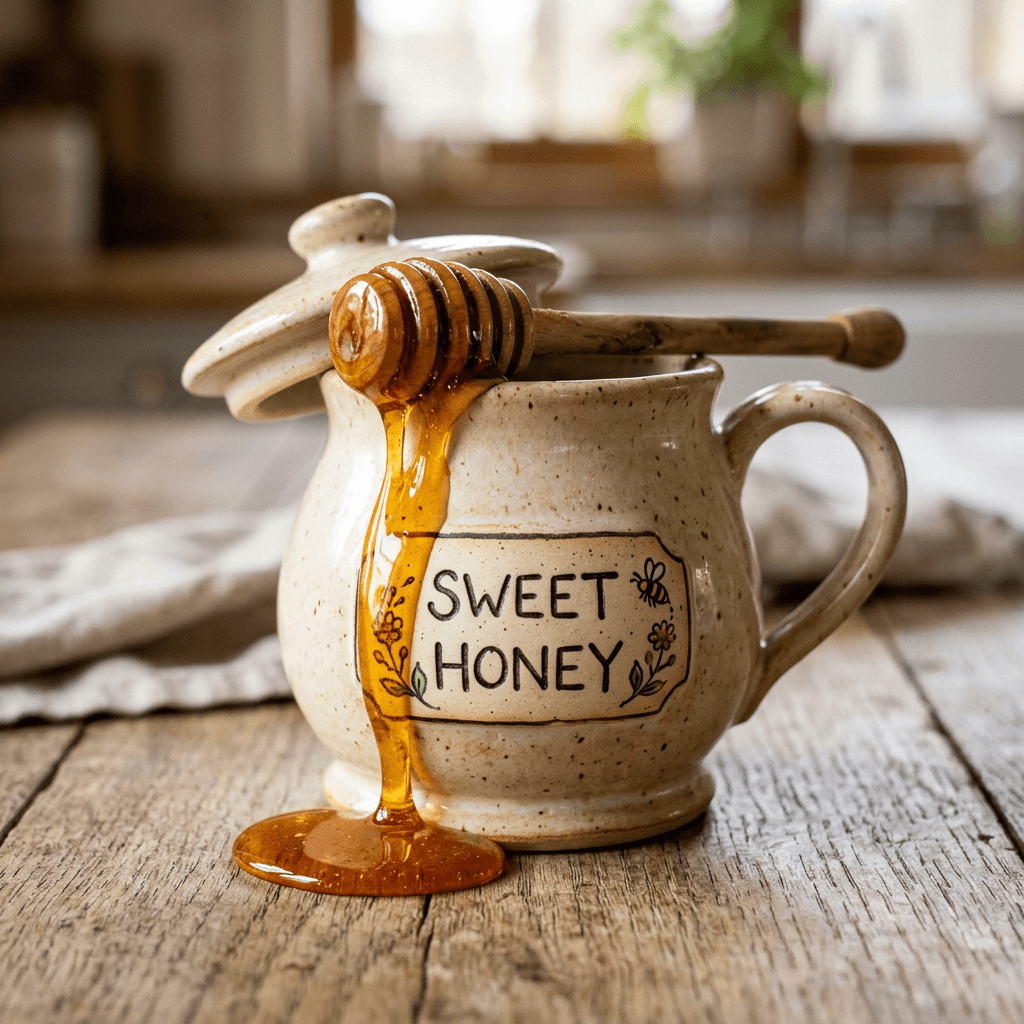
Calories in honey come mainly from free sugars
Two tablespoons of honey provide about 128 kcal. If you often pour honey directly into tea, yogurt, or sauces, it is very difficult to know how much you have used. Therefore, correctly understanding how many calories honey contains, measuring the amount used, and including it in your daily intake will help preserve the familiar flavor without unintentionally exceeding your energy and sugar budget.
100 g of honey provides about 304 kcal; one teaspoon contains about 21 kcal, and one tablespoon about 64 kcal. These are reference values: actual values vary depending on weight, water content, and the specific product. Therefore, the nutrition label and a kitchen scale are more reliable than visual estimates.
Most of the energy comes from glucose and fructose. Honey contains small amounts of micronutrients, but FoodData Central data show that the protein, vitamins, and minerals in a typical serving are not substantial. Recommendations on free sugars, sugars naturally present in honey are classified as free sugars. Therefore, “pure” does not mean it can be consumed without limits.
Three units of measurement show how many calories honey contains
The three common units serve different purposes. The 100 g value is suitable for comparing labels; a teaspoon is convenient for preparing beverages; and a tablespoon is appropriate for recipes. A tablespoon serving of honey weighing about 21 g contains nearly 17 g of carbohydrates and about 64 kcal.
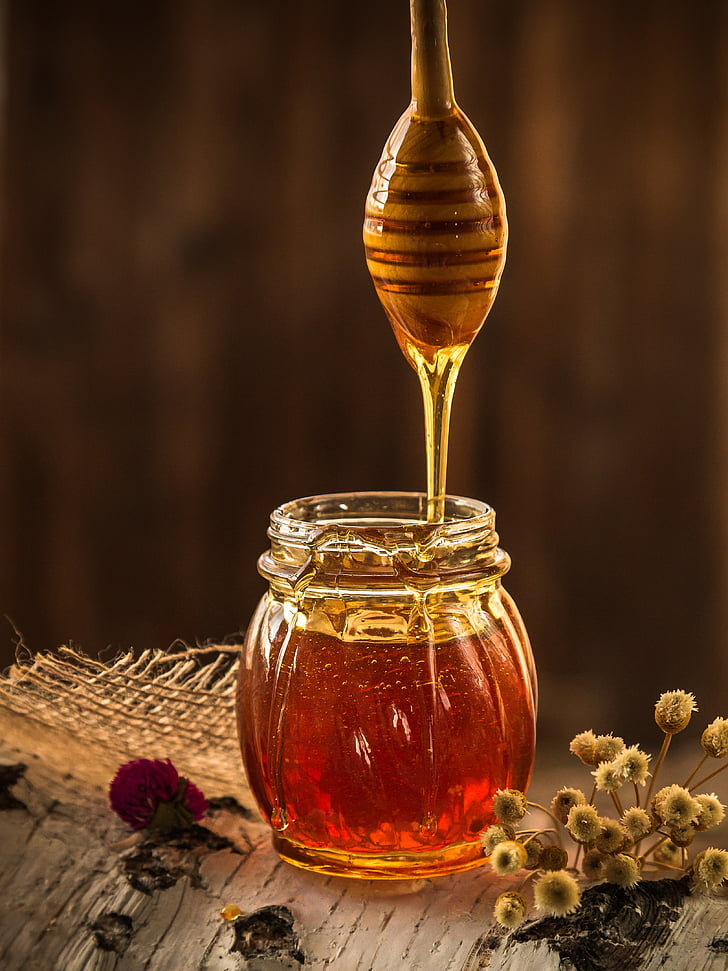
However, household spoons are not standardized measuring tools. A spoon described as “20 ml” may hold different amounts of honey depending on the depth of the spoon and how it is poured. A heaping spoonful, with thick strands of honey stretching over the rim, is always harder to control than a level measuring spoon. A practical tip is to place the bowl on a scale, reset it to 0, and then add the honey.
Natural honey can still lead to excess energy intake
Honey does not automatically increase body fat. However, weight may increase when energy intake regularly exceeds energy expenditure. Adding two tablespoons to your daily diet is equivalent to about 128 kcal if no calories are reduced from other sources.
You should also not assume that pure honey contains fewer calories. Thick honey with a low water content may weigh more in the same spoon. Prioritize the weight in grams and the information on the label rather than color, consistency, or advertising claims. Once you have determined the correct amount, the next step is to place that figure within your overall diet.
How to calculate honey calories in a 2,000 kcal diet
WHO recommends keeping free sugars below 10% of total energy intake and states that reducing them to below 5% may provide additional health benefits. For a reference diet of 2,000 kcal, these two levels are equivalent to about 50 g and 25 g of free sugars per day, respectively. This is not a separate limit for honey; it includes sugar in cakes, milk tea, soft drinks, sauces, and other sweeteners.
One tablespoon of honey contains nearly 17 g of sugar, accounting for about 34% of the 50 g threshold or 68% of the 25 g threshold. This becomes significant when you have honey coffee in the morning, use sauce at lunch, and drink lemonade in the evening. And this is the most important point: each serving may seem small, but the total at the end of the day determines your intake.
Individual needs also depend on age, activity level, weight goals, and health status. The 2,000 kcal level is only a common example used on nutrition labels, not a universal standard. People with medical conditions or specialized diets should consult a doctor or dietitian.
Three steps to convert a serving of honey into calories
Weigh or measure: use a kitchen scale or a level measuring spoon rather than pouring freely.
Convert: multiply the number of grams by about 3.04 kcal/g, or use the information directly from the product label.
Record: add both the energy and carbohydrates from each serving to your food diary.
For example, 10 g of honey provides about 30 kcal. If you use 10 g in yogurt and add another 10 g to coffee, the total to record is about 60 kcal. Honey in lemonade, marinades, or dipping sauces must also be counted, even though it is no longer separately visible after mixing.
Honey servings should align with weight-management goals
People who want to lose weight can start with one teaspoon, about 21 kcal, and use it to replace some of another sweetener rather than adding it on top. This change only contributes to weight management when total energy intake actually decreases; consuming it in the morning or evening does not create an energy deficit by itself.
Honey is also not a substitute for a balanced meal. WHO’s healthy-diet recommendations prioritize fruits and vegetables, whole grains, and appropriate protein sources while limiting free sugars. In other words, honey should be a measured flavoring component, not the nutritional foundation of the diet.
4 mistakes and groups that should exercise caution with honey
4 mistakes when calculating calories from honey
The problem often lies not in one spoonful of honey, but in four unrecorded instances of adding “just a little.” Small amounts can accumulate and significantly disrupt an energy plan. The solution is to recognize four mistakes: using heaping spoonfuls, forgetting honey in beverages, viewing natural foods as unlimited, and believing that the time of consumption determines fat loss.
Groups that should exercise caution when consuming honey
Some groups need to be especially careful. The U.S. CDC advises not giving honey to children under 12 months old because of the risk of infant botulism, even when honey has been mixed into food. Carbohydrate-counting guidance, honey is still a source of carbohydrates; people with diabetes need to include it in their meal plan and consult healthcare professionals. People with a history of allergies to bee products should also check the ingredients and seek professional advice before use.
Accurate measurement helps prevent four sources of calories from being overlooked
Use one consistent measuring spoon or a kitchen scale and record each separate addition of honey. For honey lemonade, the energy from honey must be added to that of the other ingredients; warm water, lemon, or ginger does not remove the sugar already mixed in. Likewise, replacing granulated sugar with honey only reduces calories if the total amount of sweetener or energy in the recipe actually decreases.
Three short answers about daily honey intake
Pure honey still provides about 304 kcal/100 g. Replacing sugar with honey does not automatically create an energy deficit. It can be consumed daily if appropriate for your health status and kept within the free-sugar limit, but there is no universal amount for everyone; children under 12 months old are an absolute exception.
This food is not a medicine and is not intended to replace medication.
The next time you use honey, place the container on a scale, reset it to 0, and then weigh your serving. Record the number of grams used and compare it with your total free-sugar intake at the end of the day to adjust your honey consumption to your personal nutritional budget.