Pure honey and adulterated honey differ in 6 criteria
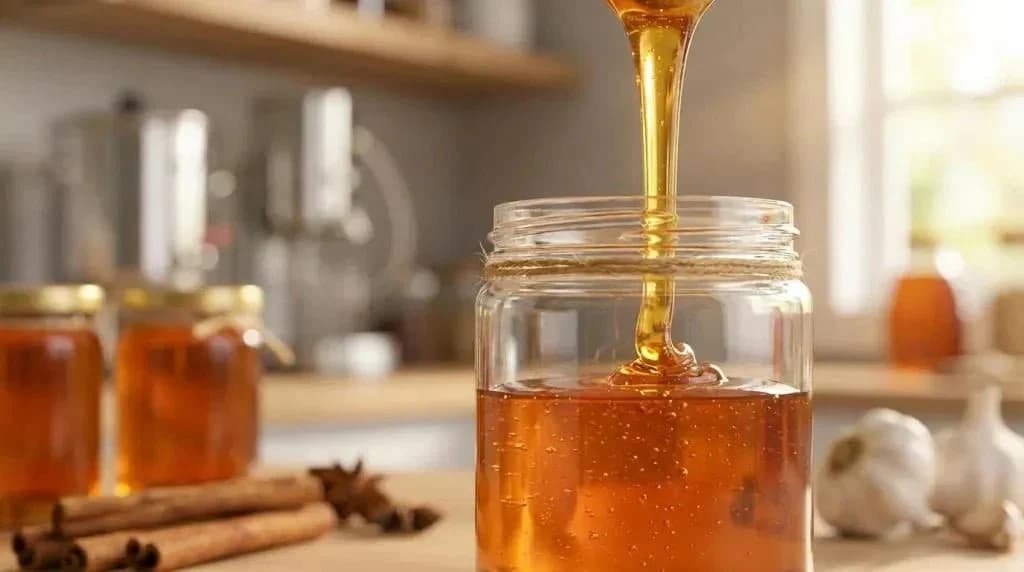
A bottle of golden, lightly fragrant honey that flows smoothly may still contain sugar syrup undetectable to the naked eye. If buyers rely solely on color or claims such as “forest honey,” they can easily pay a premium for a product that does not meet their expectations. To avoid buying the wrong product, compare 6 criteria together: ingredients, flavor, viscosity, crystallization, traceability, and testing.
Honey is a natural sweet substance produced by bees from flower nectar or plant secretions, which they then transform and store in honeycombs. In ordinary commercial terms, pure honey must not have water, sugar, or coloring added. However, “pure” does not mean “raw honey”: raw honey is generally minimally processed, while filtered honey can still be pure if no other ingredients have been added.
Comparison of pure honey and adulterated honey
Criterion | Pure honey | Adulterated honey |
|---|---|---|
Ingredients | Contains only honey | May contain added water or syrup |
Flavor | Varies by floral source | May have a one-dimensional sweetness |
Viscosity | Depends on water content and temperature | Can be adjusted to appear similar |
Crystallization | May occur naturally | May still crystallize |
Traceability | Has origin information and a batch code | Information may be missing or vague |
Testing | Matches its product declaration | Exogenous sugars may be detected |
“Adulterated honey” may refer to honey with added water or sugar syrup, undisclosed blends, or sweetening products with potentially misleading names. Nevertheless, not every blended product should automatically be considered unsafe: the key issue is whether its ingredients are honestly declared and comply with applicable standards. For a deeper understanding, read more about the nutritional composition and natural sugars in honey.
Ingredients and origin determine whether honey is pure
Genuine honey does not have a standard color. Honey can range from nearly colorless to dark brown, while its aroma and flavor depend on its botanical source. Longan blossom, coffee blossom, and mint honey therefore have different hues and aftertastes, which also vary by season, production region, and storage conditions.
The problem is that buyers are often persuaded by difficult-to-verify descriptions such as “aged forest honey.” This ambiguity increases the risk of buying the wrong type or paying an unjustifiably high price. A practical solution is to read the ingredient list and check the name of the responsible business, the packing location, and the batch code instead of relying solely on origin stories.
Viscosity and crystallization are insufficient to identify fake honey
Viscosity is affected by both temperature and water content. The same bottle of honey may flow slowly on a cold morning but become runnier in a warm room. Therefore, observing a “long strand of honey” provides only a sensory clue and does not prove its composition.
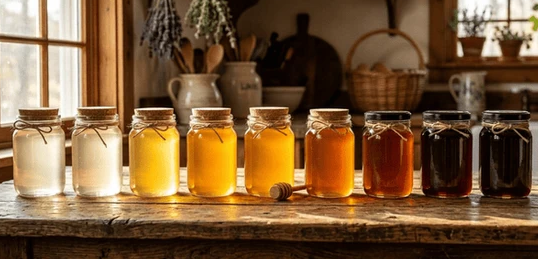
Crystallization is related to sugar composition, water content, and storage temperature. Honey with a favorable glucose ratio generally crystallizes faster than fructose-rich honey. Pure honey may become granular, while syrup-adulterated products with a suitable consistency may exhibit similar characteristics.
4 at-home honey tests are useful only for preliminary screening
A glass of water, absorbent paper, refrigeration, and sensory evaluation can help detect overly diluted samples or unusual signs. But wait: none of these four tests can conclusively confirm purity. When testing, use small quantities, keep all samples at the same temperature, record the time, and compare multiple indicators.
Tips involving ants, scallions, vinegar, bread, or heating lack specificity. Results may vary depending on the ant species, bread moisture, temperature, viscosity, or ordinary physical reactions. Therefore, a result that “matches popular belief” still does not reveal which types of sugar the sample contains.
A glass of water and absorbent paper indicate dilution
For the water test, place equal amounts of honey into water at the same temperature and observe how quickly they disperse. Thick honey generally sinks and dissolves more slowly, but thick sugar syrup can produce a similar result. This is merely a comparison of viscosity at the time of testing.
With absorbent paper, a rapidly spreading wet ring may suggest high water content. However, paper cannot identify syrup with a consistency similar to honey. Absorbency also varies between types of paper, so a single drop of honey cannot support a purchasing decision.
Refrigeration, aroma, and aftertaste provide additional clues
You can place a sealed jar in the refrigerator and monitor changes in viscosity or crystallization. Different floral sources crystallize at different rates, so honey that does not crystallize or crystallizes quickly is not proof of authenticity or adulteration. A guide to storing honey and handling crystallized honey is more useful than trying to “break down the crystals” with high heat.
When tasting a small amount, pay attention to its floral aroma, sweetness, acidity, and aftertaste. A fermented smell, sharp sourness, increased bubbling, or a bulging lid suggests a risk of fermentation; stop using the product and contact the manufacturer. Do not burn or heat honey as a test because this risks burns and alters the sample without determining whether it has been adulterated.
Testing and traceability help consumers choose pure honey
While at-home tests merely raise suspicions, an appropriate laboratory can provide comparable data, particularly when verifying a shipment or resolving a dispute. Selection should be based on three principles: prioritize verifiable evidence, trace the correct batch code, and evaluate the product according to your needs rather than its advertised name.
Moisture, HMF, and sugar profiles clarify quality
Codex CXS 12-1981 stipulates that the moisture content of most honey must not exceed 20%, with exceptions for certain varieties. This indicator primarily reflects maturity and storage stability; it does not automatically prove that water or sugar has been added.
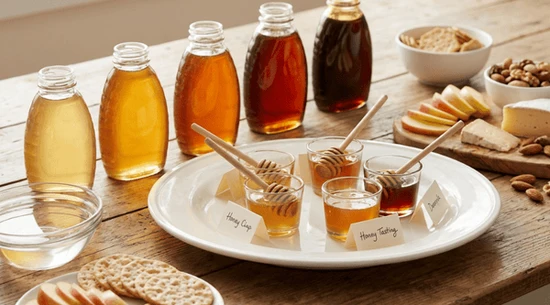
HMF levels may increase when honey is exposed to heat or stored for a long time. Meanwhile, laboratory analysis of sugar profiles and carbon isotope ratios can help detect certain sources of exogenous sugars. The results must be interpreted comprehensively by an expert; a low HMF level does not necessarily mean that the product is unadulterated.
Labels, batch records, and packaging reduce the risk of buying the wrong product
Before paying, check the product name, ingredients, origin, responsible business, packing date, expiration date, batch code, and traceability channel. Choose a tightly sealed bottle with no leaks or bulging lid; after opening, close it tightly and store it in a cool, dry place away from sunlight.
The U.S. CDC recommends that honey not be given to children under 12 months of age because of the risk of infant botulism. People who need to control their blood sugar or have previously experienced allergies to bee products should consult a healthcare professional. This food is not a medicine and is not intended to replace medical treatment.
A bottle that is difficult to verify forces buyers to guess; a product with a clear label, matching batch code, and appropriate documentation supports a more informed decision. The bridge between these two situations is simple: check at the time of purchase and contact the manufacturer if the traceability information is unclear.