

A day packed with meetings can end with a rushed dinner, a few more hours in front of the screen, and a promise to “live healthier tomorrow.” But health care for busy people does not necessarily have to start with an hour of exercise or an elaborate meal plan. Small changes built into your existing routine can help create a steadier rhythm of movement, eating, and rest. Over the next 14 days, choose one action small enough to do today; this article will guide you step by step.
Being busy does not mean having absolutely no time. The obstacle often lies in goals that are too big: exercising 60 minutes every day, cooking all three meals, or going to bed two hours earlier. When unexpected commitments arise, the plan is interrupted and feelings of failure emerge. The cycle of rushed eating, prolonged sitting, and then fatigue makes restarting even harder. A more practical solution is to create a fixed “anchor point” and prepare your environment so that healthy habits require fewer decisions.
Step 1: Choose one healthy habit for 14 days
Choose one small action that can be observed and checked off as “done” or “not done.” For example: drink a glass of water after waking up, walk for 10 minutes at the start of your lunch break, or place your phone out of reach 30 minutes before bed. Do not change your diet, exercise, and sleep all at once. One clear goal helps you identify exactly what is working.
Next, attach the new action to something that already happens every day. After brushing your teeth, drink water; after closing your computer at noon, take a walk; after plugging in your phone, dim the room lights. This design reduces dependence on memory and fleeting motivation. During the first week, simply maintain the minimum level. In the second week, you can increase from 10 to 12–15 minutes if your body responds well, rather than increasing according to a rigid schedule.
And this is the most important point: missing one day does not erase the days you completed. Note the specific reason, such as an extended meeting, travel, or staying up late, then resume at the next cue. The goal of 14 days is to test whether the habit fits, not to prove your willpower.
Step 2: Prepare a balanced meal in 15 minutes
When you are hungry and have only a few minutes, the easiest food to grab usually wins over food that needs preparation. Therefore, keep washed vegetables, unsauced frozen vegetables, eggs, fish, lean meat, beans, unsweetened yogurt, and whole grains on hand. On weekends, you can boil eggs in advance, portion nuts into small servings, and cook a batch of brown rice or potatoes for two to three days. Cooked food should be cooled, refrigerated properly, and not left at room temperature for too long, following the guidance in CDC’s About Four Steps to Food Safety.
A quick plate can consist mostly of vegetables, plus a protein source and an amount of carbohydrates appropriate for your needs. Harvard School of Public Health’s Healthy Eating Plate also prioritizes vegetables and fruit, whole grains, and suitable protein sources; it is a visual guide, not a mandatory portion plan for everyone. Manual workers, pregnant women, older adults, or people with underlying health conditions should adjust their intake according to professional advice.

For example, in 15 minutes, you can make lightly oiled pan-fried eggs, boiled vegetables, and pre-cooked rice; or combine beans, leafy greens, and tomatoes with whole-grain bread. Snacks should be simple, such as a banana, unsweetened yogurt, or a small serving of nuts. These choices help reduce situations where you buy food impulsively when extremely hungry. For more detailed planning, you can also read the article guide to building a balanced meal plan.
A convenient environment helps sustain a healthy lifestyle
A water bottle in a cupboard provides almost no reminder; placing it beside your screen is different. Similarly, walking shoes can be kept beside your desk, while fruit and yogurt should be placed where they are easy to see in the refrigerator. This turns features of your environment into an advantage: the suitable choice becomes quicker than the impulsive one.
Every evening, spend about five minutes preparing your water bottle, clothing, and snack for the next day. Set only one or two reminders for the times you commonly forget; too many notifications easily become noise. Once your eating foundation and environment are organized, the next four factors will be easier to fit into your schedule.
4 daily health foundations for busy people
Water, movement, sleep, and recovery are closely interconnected. A late-evening dose of caffeine can disrupt your sleep schedule; insufficient sleep then makes it difficult to maintain movement the following day. However, everyone’s needs differ according to age, weather, physical condition, medications being used, and the nature of their work. Therefore, the points below are a practical framework, not rigid standards.
Step 3: Drink water according to your needs and body signals
Four easy-to-remember times are after waking up, with meals, after an extended period of concentration, and before or after exercise. Dividing water intake into several occasions is often more comfortable than drinking a large amount at once. NASEM’s Dietary Reference Intakes for Water, Potassium, Sodium, Chloride, and Sulfate notes that total water intake also comes from food and beverages; needs vary with climate, activity, and health status.
Thirst, dry mouth, and urine color can be used as reference signals, but they are not sufficient for self-diagnosing health conditions. People with heart disease, kidney disease, or medications that affect fluid balance should ask a healthcare professional about an appropriate amount of water. Coffee also cannot replace plain water or sleep. In its 2015 Scientific Opinion on the Safety of Caffeine, the European Food Safety Authority noted that caffeine can affect sleep in some people; if you experience restlessness, palpitations, or difficulty sleeping, reduce your intake and avoid using it late.
Step 4: Accumulate movement throughout your work schedule
In the 2020 WHO Guidelines on Physical Activity and Sedentary Behaviour, the World Health Organization recommends that adults accumulate at least 150 minutes of moderate-intensity physical activity per week, while emphasizing that any amount of activity is better than none. You do not need to wait for a long free period: walking for 10 minutes at lunchtime, taking the stairs, or getting off a little earlier all help reduce uninterrupted sitting time.
At the office, stand up, gently roll your shoulders, and walk around after a work period that suits your personal schedule. People working from home can walk around the room while taking a call that does not require looking at a screen. Increase intensity gradually according to your fitness; stop exercising and seek medical help if you experience chest pain, dizziness, or unusual shortness of breath. The article guide to light movement and office posture can provide more specific posture guidance.
Step 5: Protect sleep with a consistent wake-up time
CDC’s About Sleep page recommends that adults aged 18–60 sleep 7 hours or more each night, although actual needs still vary. One way to establish a rest routine is to keep your wake-up time relatively consistent, even on weekends, then shift bedtime in small steps instead of catching up on sleep irregularly.
An evening routine can include three actions: finish work, dim the lights, and do a relaxing activity such as reading a few pages or listening to gentle sounds. Placing your phone away from the bed helps limit extended wakefulness. If insomnia persists, snoring occurs with signs of breathing pauses, you are excessively sleepy during the day, or your ability to work declines, seek medical care rather than simply continuing to adjust your schedule at home.
A sustainable 15-minute health care schedule
Knowing many principles but placing them into an overloaded schedule can still easily lead to giving up. When the streak is broken, you may blame yourself and then postpone starting again. The solution is to keep a minimum version: 3 minutes in the morning, 7 minutes at lunchtime, and 5 minutes in the evening. This “15-minute healthy living schedule” has a short total duration, but clear starting and ending points.
Step 6: Care for your mental well-being in 5 minutes
Between tasks, place your feet firmly on the floor and observe your breathing for 2–5 minutes. You may breathe slowly at a comfortable pace, without holding your breath or forcing yourself to achieve a particular state. NCCIH’s Relaxation Techniques: What You Need to Know page describes relaxation practices as a tool to support managing stress responses; they do not replace professional evaluation or care for mental health disorders.
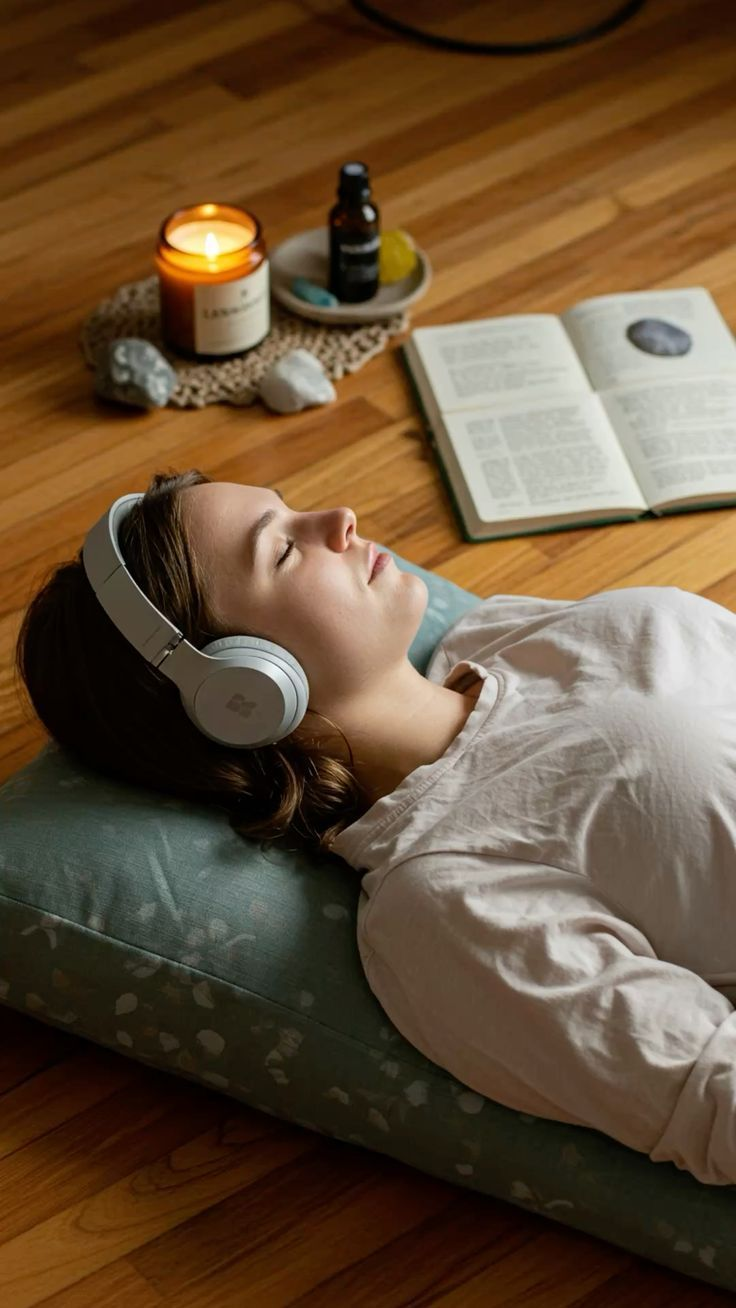
At the end of the day, set a time to close your computer, turn off nonessential notifications, and write down the three remaining tasks for tomorrow. Moving tasks out of your memory helps create a clear boundary between work and recovery. When sadness, anxiety, or stress persists, worsens, or affects daily life, speak with a mental health professional or doctor. You can also refer to the article recognizing stress and when to seek support.
Step 7: Track habits without creating pressure
A sheet of paper with 14 boxes is often enough. Each day, check off the action you completed and record your energy level or sleep quality on a scale of 1–5. The data is intended to identify patterns—for example, that a lunchtime walk is often skipped when meetings are scheduled too closely—not to judge yourself.
On especially busy days, switch to the minimum version: walk for two minutes, prepare one simple dish, or take three slow breaths. On the weekend, review your completion rate, obstacles, and your body’s response. If the goal is too demanding, reduce it; if it is easy to maintain and your body responds well, increase it slightly. Regular adjustment is more valuable than a perfect but short-lived streak.
Three mistakes that make health care habits likely to fail
The table below helps identify sticking points and choose specific fixes, rather than attributing every failure to a “lack of discipline.”
Common mistake | Sign | Consequence | How to fix it |
|---|---|---|---|
Goal is too big | Changing your entire routine | Quickly becoming overwhelmed | Choose one action for 14 days |
Waiting for motivation | Only doing it when free | Inconsistent routine | Attach it to a fixed cue |
Ignoring symptoms | Trying to continue when something is abnormal | Delaying the search for support | Stop and seek professional advice |
Proactive care does not mean self-diagnosis. Unusual, persistent, or worsening symptoms should be assessed by a healthcare professional. If using dietary supplements, read the label, check the ingredients, and consult a professional when taking medication. This product is not a medicine and is not intended to replace medicine for treating illness.
Previously, a day packed with commitments may have ended with the feeling that health always had to wait. After 14 days, you can have one clear anchor point and know what level fits your own routine. The bridge to health care for busy people lies in the 15-minute healthy living schedule: activate your body for 3 minutes after waking up, walk for 7 minutes at lunchtime, and wind down for 5 minutes before bed. Today, choose one of the three time points—3, 7, or 5 minutes—write the corresponding action in your schedule, and do it at the time you selected.