

2 ways to use honey in everyday drinks
It is easy to pour in too much honey, making a cup of tea overly sweet, while marinated foods may darken and burn before they cook evenly. The five methods below provide easy-to-follow ratios, from warm drinks to savory dishes, so you can vary your daily menu while keeping portions under control.
However, the World Health Organization still classifies honey as a free sugar in its Guideline: Sugars intake for adults and children. Therefore, start with one teaspoon, taste carefully, and only then add more. This is more practical than pouring by intuition, especially when a drink also contains milk, syrup, or sweet fruit. Honey should be viewed as an ingredient that adds flavor and provides energy, not as a method for weight loss, “detoxification,” or treating illness. When buying and using it over the long term, you should also consult the guide to identifying and storing honey properly.
Method 1: Make warm honey water in 3 variations
The basic recipe is very simple: dissolve 1–2 teaspoons of honey in 200–250 ml of comfortably warm water. Boiling water makes the floral aroma less distinct, whereas warm water helps the honey dissolve evenly and gives it a milder taste. In the morning, add a slice of lemon; on a cool day, use a few lightly crushed slices of ginger; in the evening, sprinkle in a small amount of cinnamon for a different aroma.
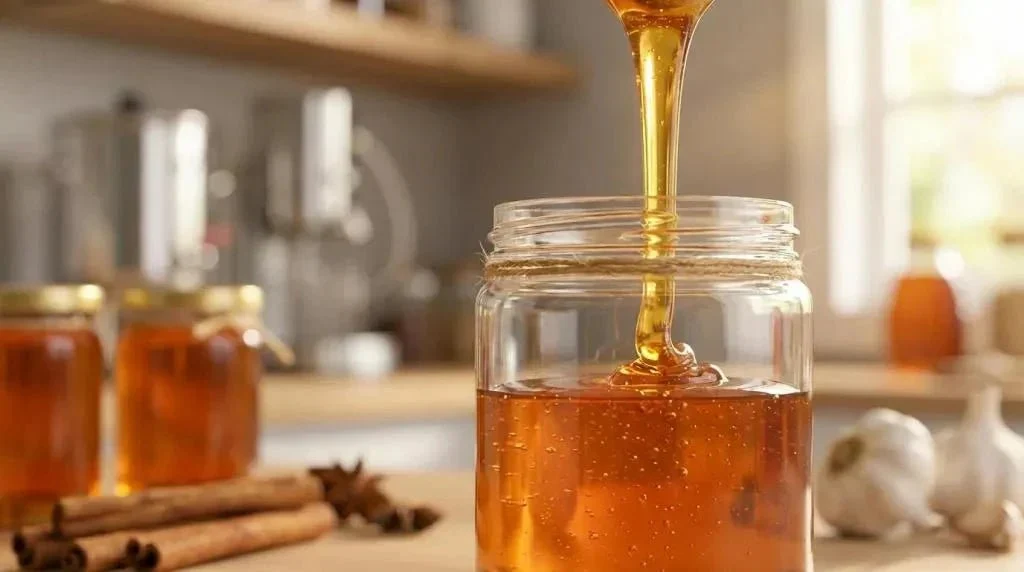
Lemon, ginger, and cinnamon all change the perceived sweetness, so adjust the amount of honey after adding these ingredients. Here, temperature primarily affects solubility, aroma, and flavor; warm honey water should not be interpreted as a treatment for any health condition.
Method 2: Make lightly sweetened honey lemon tea
Brew mild green tea or stronger black tea, then wait until it cools to a warm temperature before stirring in one teaspoon of honey. Squeeze in the lemon a little at a time and taste after each addition. This sequence helps balance the three layers of sourness, astringency, and sweetness, avoiding the need to add more honey to “fix” a cup of tea that is too sour.
Comparison of two easy-to-use tea bases
Tea type | Flavor profile | Best time | Pairings | Note |
|---|---|---|---|---|
Green tea | Light, mildly astringent | Morning or noon | Lemon, mint | Contains caffeine |
Black tea | Bold, malty aroma | Morning or early afternoon | Lemon, cinnamon | Contains caffeine |
Both types contain caffeine, with levels varying according to the tea variety and brewing method; people who are sensitive to caffeine should drink them earlier in the day. Honey lemon tea is a beverage, unlike steamed kumquats with honey, which are commonly used as a folk remedy. A cough accompanied by shortness of breath or fever, or one that persists, requires medical evaluation rather than reliance on home remedies alone.
3 honey dishes to make in the home kitchen
Honey also adds gloss, aroma, and rounded sweetness to both cold and hot dishes. An easy rule to remember is to use a small amount, pair it with sour, salty, or rich flavors, and taste before adding more. A dish containing yogurt, fruit, soy sauce, or bottled sauce already contains sugar or carbohydrates, so the overall total matters more than the amount of honey alone.
And this is the most important point: honey is not an ingredient that can be consumed without limits simply because it is “natural.” The WHO recommendation to limit free sugars still applies when honey is included in breakfast, desserts, or marinades. Measuring it by the spoonful instead of pouring it directly both makes dishes more consistent and makes it easier to record the ratio that suits your taste.
Method 3: Combine yogurt and honey in 3 minutes
Place one container of unsweetened yogurt in a bowl, then add one teaspoon of honey, a serving of fruit, and 1–2 spoonfuls of seeds, nuts, or oats. Mix just before eating so that the seeds or nuts remain crunchy and the fruit does not release too much liquid. This three-minute recipe is easy to adjust: reduce the honey when using ripe bananas or sweet mangoes; with strawberries or mild-flavored dragon fruit, you can keep the amount unchanged.
For chia pudding, banana ice cream, or a fruit platter, drizzle the honey in thin strands instead of covering the entire surface. This finishing touch adds an aromatic accent without overpowering the main ingredients. If you want to plan a more complete serving, you can read the article on building a balanced breakfast with yogurt, grains, and fruit.
Method 4: Make a honey salad dressing
For salads, use a ratio of 3 parts oil, 1 part acid, and 1 part honey. Whisk vinegar or lemon juice with the honey and a little salt first, then slowly pour in the oil while stirring continuously to emulsify the dressing. You can add mustard, toasted sesame seeds, or soy sauce; if using soy sauce, reduce the salt.
Method 5: Use honey to marinate savory dishes
To marinate meat, tofu, or vegetables, start with one part honey, two parts soy sauce, and one part oil or water, then add garlic, ginger, or pepper. Cook over medium heat, brush on additional sauce only toward the end, and turn the food frequently because sugar darkens and burns easily. Marinade that has come into contact with raw meat must be brought to a thorough boil before being reused; it is safer to reserve a separate portion of clean sauce from the start.
4 precautions for using honey properly every day
Avoid excessively high heat when unnecessary
Honey can cause baked or pan-seared foods to darken and burn quickly. Therefore, use medium heat, monitor the food frequently, and only brush on additional honey-based sauce toward the end.
Measure one small spoonful at a time and account for accompanying ingredients
Pouring honey by intuition can easily make drinks too sweet and cause the total sugar content to exceed expectations. Measure one small spoonful at a time and read the ingredients of accompanying foods, especially sweetened yogurt, sweetened cereals, and prepared sauces. Use honey primarily as a flavoring rather than relying on claims about its health benefits. This measured approach helps you maintain a consistent flavor without turning a familiar ingredient into a medical promise.
Store honey away from moisture, heat, and contamination
Keep honey in a clean, dry, tightly sealed jar; place it in a cool, well-ventilated area away from sunlight and a hot stove. Always use a dry spoon to prevent water or food crumbs from getting inside. Honey crystallization can be a natural occurrence and does not automatically mean that the honey has spoiled. The article answering questions about crystallized honey explains how to gently liquefy it with minimal impact on flavor.

Stop using honey if it has an unusual sour smell, fermentation bubbles, a bulging lid, or signs of contamination. Do not taste a suspicious product to test it.
3 groups that should use honey with caution
The U.S. Centers for Disease Control and Prevention advises on preventing infant botulism: do not give honey to children under 12 months of age, including honey mixed with water, steamed with kumquats, or included in food. People who need to manage their blood glucose or total carbohydrate intake should consult a doctor or dietitian. Anyone with a history of allergy to honey or bee products should also avoid it or exercise caution.
If you experience difficulty breathing, swelling of the lips or tongue, or widespread hives, stop using it and seek medical attention immediately. A cough, sore throat, or digestive problem that persists or worsens also requires medical examination. This food is not medicine and is not a substitute for medical treatment.
This week, choose one of the five recipes, measure out one teaspoon of honey, and record the ratio that suits your taste.